
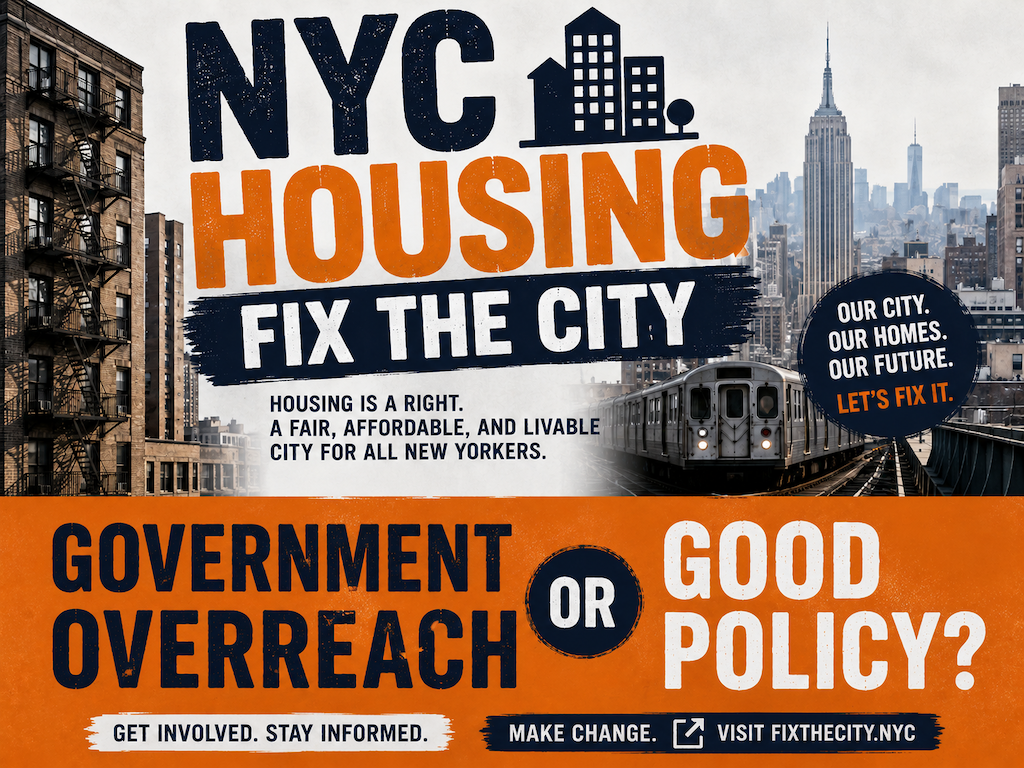
New Housing Proposal Would Bring Back Controversial Property Transfer Tool
New York City Mayor Zohran Mamdani’s newly announced housing strategy is reigniting debate over one of the city’s most controversial affordable housing enforcement tools.
Unveiled on May 26, the administration’s “Block by Block” housing initiative includes a program known as “Fix the City,” an enforcement campaign designed to address chronic building neglect and improve living conditions for tenants. A key component of the proposal would revive New York City’s dormant Third Party Transfer (TPT) program, a policy that was suspended after years of litigation and criticism surrounding previous property seizures.
The proposal has sparked renewed discussion among housing advocates, property owners, legal experts, and policymakers over how far local governments should go when addressing neglected housing stock.
What Is the Third Party Transfer Program?
The Third Party Transfer program was originally created to address severely distressed and tax-delinquent properties. Under the framework, ownership of qualifying buildings can be transferred from existing owners to nonprofit housing organizations or other approved entities that agree to preserve affordability and rehabilitate the properties.
Under Mayor Mamdani’s plan, the program would be revived through legislation known as the SAFER Homes Act, introduced by Council Member Pierina Sanchez.
A companion bill, the Community Opportunity to Purchase Act (COPA), sponsored by Council Member Sandy Nurse, would grant city-certified nonprofit organizations the first opportunity to purchase certain distressed properties before they are sold on the open market.
Both measures must receive approval from the New York City Council before becoming law.
According to the administration, the program would initially focus on a limited number of landlords with extensive records of housing violations and chronic neglect.
How the “Fix the City” Program Would Work
The proposal gives city agencies a significant role in determining both enforcement targets and future ownership arrangements.
The Department of Housing Preservation and Development (HPD), working alongside tenant organizations, would identify properties deemed eligible for intervention based on violation histories and building conditions.
The city would also determine which entities qualify as “responsible stewards” capable of receiving transferred properties. These recipients could include:
- Community land trusts
- Nonprofit housing organizations
- Tenant ownership groups
- Other city-certified housing entities
Supporters argue that tenant involvement and City Council oversight create accountability within the process.
Critics, however, contend that concentrating decision-making authority within government agencies raises concerns about transparency, consistency, and fairness.
Why the Previous Third Party Transfer Program Became Controversial
The current debate stems largely from the program’s previous implementation.
During a major round of property transfers in 2018, several property owners challenged the city’s actions in court, arguing that properties worth substantially more than the underlying debt were taken through foreclosure proceedings.
Among the most cited examples:
Bedford-Stuyvesant Building
A 19-unit rent-stabilized apartment building at 25 MacDonough Street was transferred despite the owners actively paying approximately $120,000 in tax arrears under an agreement with the city’s Department of Finance.
Court records noted that the building’s estimated value was approximately $3 million, leading critics to argue that the enforcement action was disproportionate.
Crown Heights Property
In another widely reported case, a Crown Heights homeowner lost a property reportedly valued at nearly $2 million over a disputed water bill of less than $4,000.
Brownsville Property Owner
Retired machinist McConnell Dorce later discovered that ownership of a building he had held for nearly four decades had been transferred years earlier because of unpaid water and sewer charges.
Housing advocates argued the program was necessary to address neglected buildings. Property rights advocates countered that the city had acquired valuable real estate over relatively small debts.
The controversy ultimately contributed to the program being suspended.
The Legal Battle: Dorce v. City of New York
The legal challenge to the program intensified in 2019 when several Brooklyn homeowners filed the federal lawsuit Dorce v. City of New York.
The plaintiffs argued that the city’s actions violated the Fifth Amendment by taking property without providing just compensation.
The case gained national attention when the U.S. Court of Appeals for the Second Circuit allowed major portions of the lawsuit to proceed. The court noted that any value retained by the government beyond the amount owed could not simply be characterized as a tax collection measure.
The litigation remains ongoing and continues to shape discussions surrounding any effort to revive the program.
Supreme Court Ruling Changed the Legal Landscape
A major development occurred in 2023 when the U.S. Supreme Court issued its decision in Tyler v. Hennepin County.
The Court ruled that when a government seizes property to satisfy tax debt, it generally cannot retain value exceeding the amount actually owed by the property owner.
Legal experts believe the ruling significantly limits how future versions of programs like Third Party Transfer can operate.
Any revived program would likely need to include mechanisms ensuring that property owners receive compensation for surplus equity after debts and related costs are satisfied.
This legal precedent has become a central factor in evaluating the constitutionality of future property transfer initiatives.
Who Could Be Affected?
If enacted, the program would impact several groups:
Property Owners
Owners of distressed or tax-delinquent buildings could face increased enforcement actions and potential transfer proceedings.
Tenants
Supporters argue tenants could benefit from faster repairs, improved building conditions, and potential pathways toward collective ownership.
Nonprofit Organizations
Community land trusts and affordable housing nonprofits could gain opportunities to acquire and rehabilitate troubled properties.
Financial Institutions
Mortgage lenders and other secured creditors may become involved when foreclosure proceedings intersect with transfer actions.
Supporters and Critics Remain Divided
Supporters argue the new proposal differs significantly from previous versions of the program.
They point to:
- Greater tenant participation
- City Council oversight
- Focus on chronic building neglect
- Compliance with recent Supreme Court rulings
- Stronger compensation requirements
Critics remain concerned that government agencies will continue to exercise broad discretion when determining which properties are targeted and which organizations ultimately receive ownership.
Some legal commentators also argue that constitutional concerns surrounding government-directed property transfers have not been fully resolved.
Because the legislation is still pending before the City Council, important details regarding notice requirements, appeal rights, compensation formulas, and due process protections remain under development.
What Happens Next?
The future of New York City’s revived Third Party Transfer program will largely depend on how the City Council structures the final legislation.
As lawmakers debate the SAFER Homes Act and COPA, attention will focus on whether the new framework adequately addresses the legal and constitutional concerns that led to the suspension of the previous program.
For now, the proposal represents one of the most closely watched components of Mayor Mamdani’s broader effort to increase housing accountability, preserve affordability, and improve living conditions in some of New York City’s most troubled residential properties.
Key Takeaways
- Mayor Zohran Mamdani’s housing plan would revive New York City’s Third Party Transfer program.
- The proposal relies on the SAFER Homes Act and the Community Opportunity to Purchase Act (COPA).
- Previous versions of the program faced lawsuits over property seizures that exceeded underlying debts.
- The ongoing Dorce v. City of New York case continues to influence the debate.
- The Supreme Court’s Tyler v. Hennepin County ruling requires governments to return surplus equity in property seizure cases.
- City Council approval is still required before the program can take effect.
- Final safeguards and compensation provisions have not yet been finalized.