
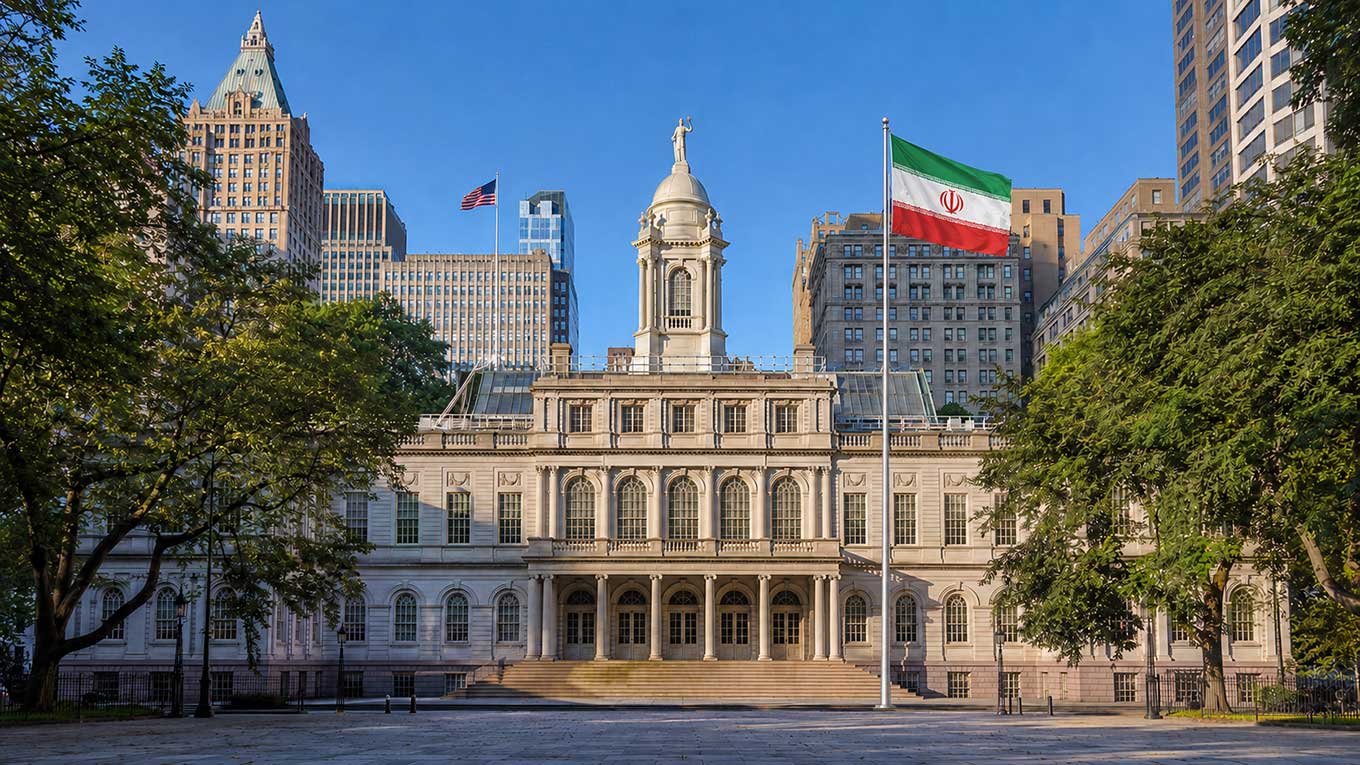
A commissioner in New York City’s municipal government put the ambassador of the Islamic Republic of Iran on her official calendar while the United States and Iran were exchanging fire. The State Department found out about it from someone other than the city. The meeting was scrubbed only after federal officials sat down with City Hall to explain, in the sanitized language of the readouts, what conduct is acceptable.
That is the story in one paragraph, and no amount of context softens it. The federal government should not have to babysit a municipal office to keep it away from a hostile foreign power. But the more interesting question — and the one that determines how seriously to take this — is why it happened at all. Was it deliberate provocation aimed at the Trump administration? Was it a stunt for a progressive audience? Or was it something the reporting actually points toward far more clearly: a political appointee with no diplomatic training freelancing on national security without telling her own mayor?
The available evidence favors the third answer. That is not exculpatory. In some respects it is worse.
What Happened
City Journal first reported that Ana María Archila, commissioner of the Mayor’s Office for International Affairs, was scheduled to meet Amir-Saeid Iravani, Iran’s permanent representative to the United Nations, at 2 United Nations Plaza on the morning of July 7. Two other senior officials from her office were listed on the calendar invitation. The outlet reported it reviewed screenshots of the invite and confirmed the plan with multiple sources, including a State Department official.
The State Department was not notified in advance. Once it learned of the meeting, federal officials met with the Mamdani administration to make clear the engagement was unacceptable, and it was called off. A spokesperson for the mayor’s international affairs office confirmed the meeting “did not and will not take place.” Iran’s UN mission did not respond to requests for comment. According to City Journal, Archila was reprimanded and directed to cancel.
At a press conference on Friday, Mayor Zohran Mamdani said the meeting “did not take place, it will not take place” and that he had not known about it until a reporter asked, Fox News Digital reported. Pressed on whether he would have supported it, he ended the exchange. The State Department, in a statement to the outlet, thanked the mayor for canceling and called it unconscionable that a city official would even consider the meeting. Archila has not publicly explained herself.
In simple terms: a city official scheduled a formal meeting with the representative of a government the United States is currently in armed conflict with, did not tell the federal agency her office is supposed to coordinate with, and — by her own administration’s account — did not tell the mayor either.
Why This Is Out of Line
1. Foreign affairs is a federal power, and that is not a technicality
The Constitution vests the conduct of foreign relations in the national government. This is not a gray area invented for this news cycle. In Zschernig v. Miller (1968), the Supreme Court struck down an Oregon probate statute because its application amounted to state intrusion into the field of foreign affairs. In Crosby v. National Foreign Trade Council (2000), the Court unanimously invalidated a Massachusetts law sanctioning Burma, holding it was preempted by federal policy. In American Insurance Association v. Garamendi (2003), the Court again held that a state law conflicting with the executive’s foreign policy approach must yield.
The through-line is consistent: when a subnational government substitutes its own judgment for Washington’s on how the United States should treat a foreign state, it is acting outside its constitutional lane. A meeting is not a statute, and no one is arguing this particular calendar invite was unlawful. But the doctrine exists because the country speaks to foreign governments with one voice, and every freelance channel is a crack in that.
The Logan Act (18 U.S.C. § 953), which bars unauthorized citizens from corresponding with a foreign government to influence its conduct in a dispute with the United States, gets invoked whenever a story like this breaks. It should be invoked carefully. The statute has produced two indictments in more than two centuries and zero convictions. It is a norm marker, not a live prosecutorial threat, and anyone telling you otherwise is selling something.
2. The office was never designed for this
It is worth being precise about what the Mayor’s Office for International Affairs actually is, because most of the commentary this week has assumed a grander institution than the one that exists.
New York City has this office for one reason: it hosts the United Nations. The office is the city’s liaison to the UN, to 193 permanent missions, and to roughly 113 consulates — the largest diplomatic corps in the world, all of it parked on municipal territory. Per the city’s own published description, the office fosters relations between the international community and city agencies, shares New York’s policies and best practices globally, and responds to requests from foreign governments, the United Nations, and the U.S. Department of State.
Its actual portfolio, as listed on nyc.gov, is closer to protocol and logistics than to statecraft:
- It administers the City of New York / U.S. Department of State Diplomatic and Consular Parking Program — issuing decals and resolving parking disputes for the diplomatic corps.
- It responds to diplomatic incidents and emergencies involving missions and consulates in the five boroughs.
- It advises city agencies on diplomatic and consular matters, and advises the diplomatic community on city matters.
- It oversees the city’s flag policy, mayoral gifts, and the presentation of the Key to the City.
- It works with the NYC Economic Development Corporation to bring foreign business to New York and help New York firms expand abroad.
- It runs civic programming: NYC Junior Ambassadors, which connects seventh graders to the UN, and the Voluntary Local Review, which tracks the city’s progress against the UN Sustainable Development Goals.
- It handles requests from foreign officials who want a meeting with the mayor, an invitation accepted, or a mayoral proclamation.
In simple terms: it is a host-city concierge and protocol shop. Its single largest operational program is co-administered with the State Department. That is not a footnote — it is the structural fact that makes this episode indefensible. The office’s day-to-day existence depends on a working partnership with the federal agency that was not told.
And here the Mamdani administration has a problem of its own making. When the mayor announced Archila’s appointment in February, City Hall’s own press release described her role plainly: she would serve as the city’s chief liaison to the United Nations and the State Department. That is the job as the administration itself defined it. The commissioner whose principal function is to be the city’s channel to the State Department scheduled a delegation-level meeting with Iran’s ambassador and did not use the channel.
It is a liaison office. It is not a shadow department of state. Rep. Claudia Tenney, who called for a federal investigation and demanded Archila’s firing, reached for exactly that phrase. Her further suggestion that this approaches treason is legally baseless — treason has a narrow constitutional definition requiring levying war or adhering to enemies with aid and comfort, plus a two-witness evidentiary rule — and that kind of rhetorical inflation does the underlying criticism no favors. Strip out the hyperbole and the core complaint stands on its own.
3. The timing was not incidental
This was not a quiet diplomatic season. The meeting was scheduled while the United States and Iran were exchanging military strikes, and the man on the other side of the table was no ceremonial figure: before taking the UN post, Iravani spent years as a senior official on Iran’s Supreme National Security Council and served as Tehran’s ambassador to Iraq. Anyone reading a newspaper in the first week of July understood the posture. Scheduling a delegation-level meeting with Tehran’s envoy in that window is either a failure to read the room or a decision to read it and proceed anyway.
4. The process failure is the real scandal
Strip away the ideology and what remains is an accountability breakdown. The State Department — the agency the office is built to coordinate with — was not told. The mayor, per his own account and his own office’s reporting, was not told. A commissioner with no prior diplomatic, national security, or foreign service experience, appointed in February after a career in progressive organizing and a stint co-directing the Working Families Party, put a hostile state’s ambassador on the books on her own initiative.
In any functioning government, that is a management failure before it is a political one.
Theater, Provocation, or Freelancing?
Here is where the commentary has gotten ahead of the facts. Three theories are circulating. They are not equally supported.
Theory one: coordinated theater. The administration wanted the spectacle — a progressive mayor visibly defying a Republican White House on Iran, generating exactly the kind of confrontation that plays well with a base. The problem with this theory is that theater requires an audience, and this meeting was not announced, not publicized, and not defended. It surfaced through a leak to an ideologically hostile outlet. Nobody stages a performance and then hides it. If this was theater, it was theater performed in an empty room with the lights off.
Theory two: deliberate provocation to embarrass Washington. A closely related read — that the point was to force the federal government into an overreach it would look bad for. The evidence cuts against this too. When the State Department intervened, City Hall did not fight, did not litigate, and did not make a public stand. It folded within days, reprimanded the official, and the mayor declined to say he even supported the meeting. That is not the behavior of an administration that laid a trap and watched it spring. State, for its part, thanked the mayor for canceling. Both sides de-escalated. Provocations do not usually end in mutual face-saving.
Theory three: an appointee freelancing. This is what the reporting actually describes. An internal message reportedly circulated within the office on April 16 told staff to weight diplomatic engagement partly on whether foreign officials were, in the memo’s words, “in political alignment/leftist.” That is not a plan to embarrass the president. It is an ideological filter applied to a job that is supposed to be ideologically neutral — the office is meant to serve the entire diplomatic community without regard to party or worldview. Combine that filter with an appointee who has never worked in diplomacy, and a meeting with Iran’s ambassador stops looking like strategy and starts looking like a person who did not understand where the guardrails were.
If theory three is right, the honest conclusion is uncomfortable for both sides of this argument. Mamdani’s critics do not get the grand conspiracy they want. But Mamdani does not get the exoneration he is implicitly claiming either, because “I didn’t know” is a confession, not a defense. He appointed her. He built the office. He set the tone — having himself called the strikes on Iran a catastrophic escalation and an illegal act of aggression. When a mayor signals that foreign policy is a live subject for his administration, he should not be surprised when a commissioner acts on the signal.
The Case for the Defense
An honest accounting requires stating the strongest version of the other side, and there is one.
First, contact with foreign missions is literally the job. The commissioner of international affairs meets ambassadors. That is the description of the role. Meeting Iran’s permanent representative is not, on its face, negotiating with Iran — and the agenda has never been disclosed. It is entirely possible the subject was mundane host-city business: mission security in a period of rising threats, property and tax questions, protocol logistics. The city has an obligation, under the UN Headquarters Agreement, to host every accredited mission, including ones whose governments it despises.
Second, nothing happened. No meeting occurred. No commitments were made. No policy was set. The system caught it, and the correction was swift.
Third, the sourcing deserves a note. The scoop came from City Journal, a publication of the Manhattan Institute, and was amplified through outlets with an established interest in damaging this mayor. That does not make the reporting wrong — the State Department and the mayor’s own office have effectively confirmed the core facts — but it means the framing arrived pre-loaded, and Archila has not yet given her account.
These arguments mitigate. They do not dissolve the problem. Even granting the most charitable agenda imaginable, the failure to notify the State Department is unexplained and inexcusable, and the failure to notify the mayor is worse.
What It Costs
New York City is not an ordinary municipality in this respect. It hosts the UN, it houses the world’s largest diplomatic community, and it depends on a working relationship with federal agencies for everything from counterterrorism intelligence sharing to disaster funding to the security envelope around General Assembly week. That relationship is a form of capital, and it has just been spent on nothing.
This is also the second time in recent weeks that federal action has scuttled one of this administration’s foreign contacts. A planned engagement with Colombian President Gustavo Petro collapsed after the State Department declined to issue him a visa, following his appearance at a Mamdani rally. A pattern establishes a precedent, and the precedent being established is that City Hall’s international outreach requires federal supervision. That is a humiliating position for the largest city in the country to occupy, and it was self-inflicted.
There is a longer-term cost too. A federal administration looking for a pretext to assert authority over New York City now has a real one, handed over free. Every subsequent intervention — warranted or not — will be justified by reference to this episode.
The Answer
So: theater or intent to embarrass the federal government?
Neither, on the evidence available. What it looks like is an administration that treats foreign policy as an expressive activity — a way of signaling values — rather than as a domain of hard federal authority where a city official has no standing to operate. That mindset does not require a conspiracy to produce a meeting with Iran’s ambassador. It only requires an appointee who absorbed the values and never learned the limits.
New Yorkers are owed three answers that no one in City Hall has given: What was the meeting for? Why was the State Department not told? And why does the commissioner still hold the job? Until those are answered, the reasonable conclusion is not that the Mamdani administration was trying to make Washington look bad. It is that it was not thinking about Washington at all — which, for the office that exists specifically to coordinate with Washington, is the whole problem.
Key Takeaways
- NYC International Affairs Commissioner Ana María Archila scheduled a July 7 meeting with Iran’s UN ambassador, Amir-Saeid Iravani; the State Department intervened and the meeting was canceled.
- Neither the State Department nor Mayor Mamdani was notified in advance, according to City Journal; Archila was reprimanded and directed to cancel.
- Foreign affairs is a federal power. Supreme Court precedent — Zschernig, Crosby, Garamendi — has repeatedly barred subnational governments from substituting their own foreign policy for Washington’s.
- The Mayor’s Office for International Affairs is a host-city liaison and protocol shop, not a foreign policy body. Its largest operational program — the diplomatic parking program — is co-administered with the U.S. State Department.
- City Hall’s own February press release announcing Archila described her as the city’s chief liaison to the UN and the State Department — the very agency she did not notify.
- The evidence does not support the theory that this was coordinated political theater or a deliberate attempt to embarrass the federal government: the meeting was never publicized, was not defended, and was abandoned immediately.
- The likelier explanation — an ideologically screened office and an appointee with no diplomatic background acting without a chain of command — is an accountability failure, not a conspiracy, and it remains unexplained.
- This is the second federal action in recent weeks to scuttle a Mamdani administration foreign contact, following the collapsed Gustavo Petro engagement.
Sources
- City Journal (Adam Lehodey) — original reporting: calendar invitation, State Department intervention, internal April 16 staff directive, Archila reprimand. city-journal.org
- Manhattan Institute — republication of the City Journal report. manhattan.institute
- Fox News Digital — U.S. official confirmation the meeting was scheduled; Mamdani press conference remarks; State Department statement; Iranian mission declined comment. foxnews.com
- The Jerusalem Post — corroborating coverage of the State Department intervention and reprimand. jpost.com
- The Times of Israel — corroborating coverage; confirms Archila did not inform Mamdani in advance. timesofisrael.com
- Newsmax — Rep. Claudia Tenney calls for a federal investigation and Archila’s firing. newsmax.com
- NYC Mayor’s Office for International Affairs — office mandate and mission. nyc.gov/site/international/about
- NYC Mayor’s Office for International Affairs — services: Diplomatic and Consular Parking Program, protocol guidance, flag policy, Key to the City. nyc.gov/site/international/services
- NYC Mayor’s Office — February 2026 press release announcing Ana María Archila as Commissioner of International Affairs, describing the role as chief liaison to the UN and the State Department. nyc.gov/mayors-office
- Zschernig v. Miller, 389 U.S. 429 (1968); Crosby v. National Foreign Trade Council, 530 U.S. 363 (2000); American Insurance Ass’n v. Garamendi, 539 U.S. 396 (2003).
- 18 U.S.C. § 953 (Logan Act); U.S. Const. art. III, § 3 (treason).
Note: Commissioner Archila has not publicly commented on the canceled meeting. This piece is analysis and reflects the editorial judgment of the author; all factual claims are attributed and linked to the sources above.