
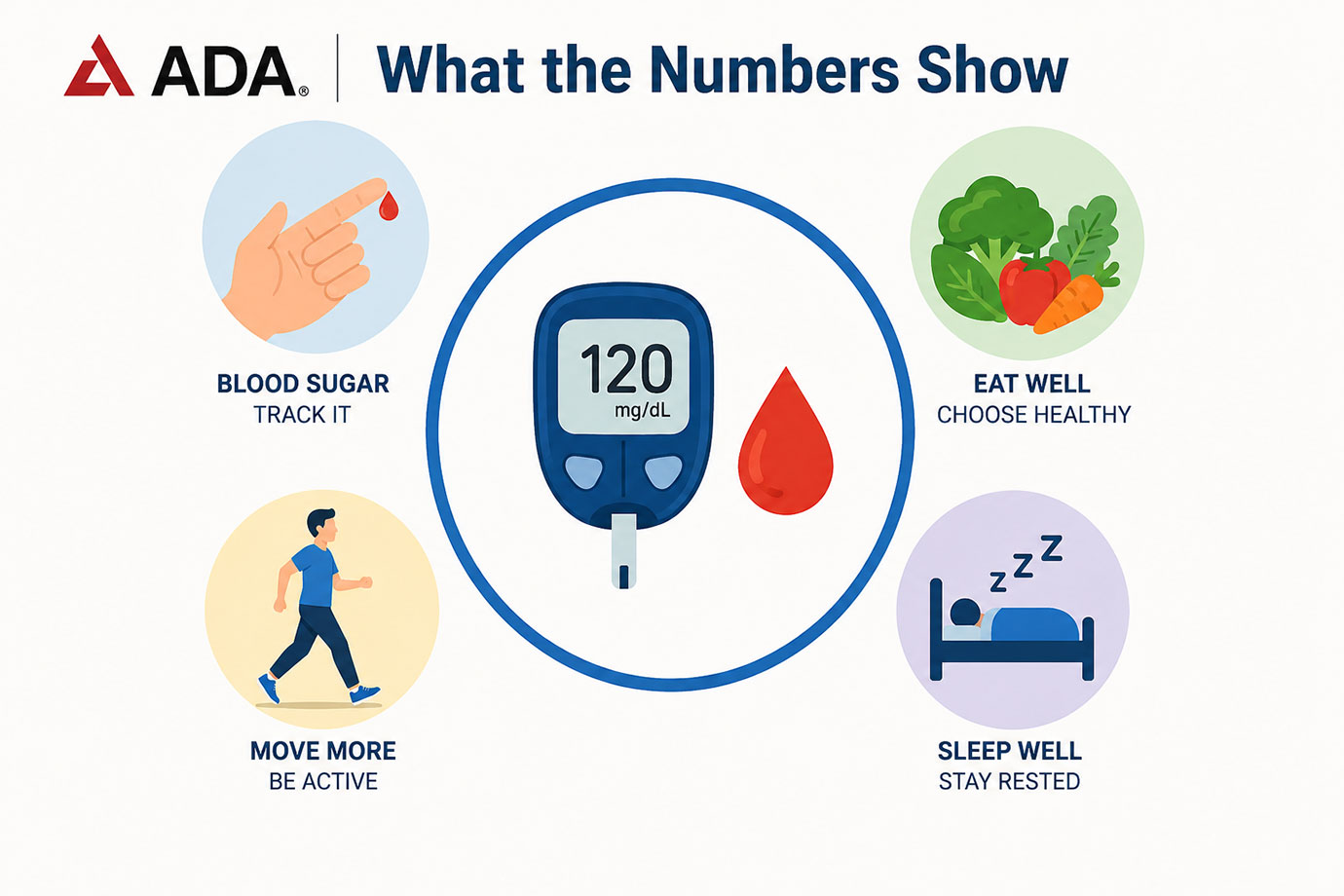
The American Diabetes Association (ADA), one of the largest diabetes-focused nonprofits in the United States, reported $157 million in revenue and $134 million in expenses for its 2024 fiscal year. As the publisher of the annual Standards of Care in Diabetes—the reference document most U.S. clinicians consult to treat the disease—the organization holds significant influence over how diabetes is managed nationwide.
That influence, combined with the group’s longstanding acceptance of funding from pharmaceutical, medical-device, and food companies, has prompted recurring questions from patient advocates, researchers, and journalists about potential conflicts of interest. This article reviews the ADA’s funding sources, how it allocates spending, and the evidence behind the debates surrounding both.
Background
The ADA traces its origins to 1940, when a group of physicians associated with the American College of Physicians formed a committee to establish a national diabetes organization. (Some records, including the organization’s Wikipedia entry, cite a 1939 founding; the ADA generally dates its creation to 1940.) Its stated mission is to prevent and cure diabetes and to improve the lives of all people affected by it.
The scale of the disease is substantial. The Centers for Disease Control and Prevention (CDC) estimated that 38.4 million Americans—11.6% of the population—had diabetes in 2021. The ADA has described diabetes as the nation’s most expensive chronic disease, citing an annual economic cost of $413 billion and noting that roughly one in four U.S. health care dollars is spent on people with diabetes.
In simple terms: the ADA does not treat patients directly. Its influence comes largely from setting the clinical guidelines that doctors follow and from advocating for diabetes-related policy in Washington and state capitals.
How the ADA Is Funded
The ADA draws revenue from individual donations, bequests, program services, investment income, and corporate sponsorships. Corporate money—particularly from drug and device makers—has been a consistent and sizable component.
According to figures compiled from the organization’s disclosures, pharmaceutical and device manufacturers contributed more than $134 million to the ADA between 2017 and 2024, representing roughly 20% of its total funding over that period. Food and beverage companies have also been sponsors over the years, including firms such as Dannon and Kraft, and, in a widely cited example from the 2000s, Cadbury Schweppes contributed slightly more than $1 million across three years.
The ADA has historically defended these arrangements while maintaining guidelines on them. A former chief scientific and medical officer, Richard Kahn, stated that food companies could indicate ADA sponsorship only on products meeting the association’s nutritional guidelines, and asserted that the large majority of the ADA’s contributors are not food companies. Industry groups and many large health nonprofits argue that corporate sponsorship is necessary to fund their missions and does not, by itself, dictate their positions.
Spending: Where the Money Goes
The ADA’s consolidated financial statements report expenses by function rather than by goal. The largest category in fiscal year 2024 was “information,” which the organization describes as the research, creation, and distribution of knowledge, including the Standards of Care. The table below summarizes the major reported categories.
| Expense category (FY2024) | Amount | Share of expenses |
| Information (incl. Standards of Care) | $52 million | 33% |
| Research grants (all diabetes types + obesity) | $25 million | ~19% |
| Advocacy and public awareness | $21 million | ~16% |
| Management and general | $8.4 million | ~6% |
| Total expenses | $134 million | 100% |
Source: ADA Consolidated Financial Statements, FY2024 (Jan. 1–Dec. 31, 2024). Employee costs of roughly $48 million are reported as a cross-functional subcategory distributed across the categories above. Percentages are approximate.
Notably, the statements contain no discrete line for “prevention.” Spending that would relate to preventing new cases of type 2 diabetes is embedded within the research and information categories rather than reported separately. The ADA states that 12% of its research dollars go to type 1 diabetes–specific research, which one analysis calculated at about $3 million, or roughly 2% of FY2024 revenue.
Advocacy and Insulin Pricing
The ADA’s policy work has focused heavily on the cost and accessibility of diabetes care. The organization supports a federal $35 monthly cap on out-of-pocket insulin costs for people with commercial insurance and has urged Congress to pass reform of pharmacy benefit managers (PBMs), the intermediaries that sit between manufacturers, insurers, and pharmacies. It has endorsed measures such as the Insulin Price Reduction Act, the Safe Step Act, and the Chronic Condition Copay Elimination Act.
The backdrop is a steep rise in insulin prices over two decades. Industry analyses and a 2021 U.S. Senate Finance Committee report found that three manufacturers—Eli Lilly, Novo Nordisk, and Sanofi—control roughly 99% of the insulin market and raised list prices substantially without corresponding gains in efficacy. The price of insulin rose by an estimated 700% between 1996 and 2006; individual products such as Sanofi’s Lantus rose several hundred percent over their lifetimes. In 2023, after years of public and political pressure, all three manufacturers announced list-price cuts of 70% to 78% on key products and adopted $35 out-of-pocket caps.
Prevention in Schools and Food Policy: A Comparatively Muted Voice
One concrete test of an organization’s prevention priorities is its engagement on childhood nutrition, because diet in early life is closely tied to obesity and the later onset of type 2 diabetes. On this front, the ADA’s footprint is smaller than that of several peer health organizations.
The ADA’s primary school-focused initiative, the “Safe at School” campaign, is oriented toward students who already have diabetes—ensuring they can monitor blood glucose, receive insulin, and obtain accommodations and protection from discrimination during the school day. It is a program centered on managing existing cases and protecting students’ rights, rather than on changing the food environment to prevent new cases.
In simple terms: the ADA’s main school program helps children who already have diabetes navigate the school day safely; it is not primarily about improving what schools serve to all students.
On the major federal effort to reshape school food—the Healthy, Hunger-Free Kids Act of 2010, which for the first time set nutrition standards for all foods sold in schools and required more whole grains, fruits, and vegetables and less fat, sugar, and sodium—the most visible defenders against later rollback attempts were teachers’ unions, public-health coalitions, and food-policy advocates. Among national health organizations, the American Heart Association, the American Public Health Association, and the American Academy of Pediatrics have been the more prominent voices on school nutrition standards and on taxes targeting sugar-sweetened beverages.
The American Heart Association, for example, maintains an explicit policy position supporting taxes on sugar-sweetened beverages and tighter regulation of such drinks in federal nutrition programs. The ADA has not made comparable food-environment measures a signature advocacy priority. Its engagement with sugar appears primarily in clinical guidance for individuals—its Standards of Care emphasizes water over sweetened drinks and the short-term use of nonnutritive sweeteners in place of sugar—and in independent research published in its journal, Diabetes Care, including a 2024 study finding that city-level beverage taxes were associated with reduced diabetes risk among adults with prediabetes.
It is worth distinguishing two things. Publishing peer-reviewed research that supports a policy is not the same as an organization adopting that policy as an advocacy priority; scientific journals print independent findings. The available record indicates the ADA’s journal has carried evidence favorable to beverage taxes, while the organization itself has not led on the measure the way some peers have. The ADA’s endorsement of nonnutritive sweeteners over sugar also intersects with its funding: as noted above, the sweetener brand Splenda was a six-figure-plus contributor, a point raised in the Hanna litigation.
This pattern—strong advocacy on the cost and accessibility of treatment, lighter engagement on upstream food policy—mirrors the spending allocation described earlier and is consistent with a management-oriented emphasis. As with the funding analysis, this reflects the direction of the organization’s priorities; it does not, by itself, demonstrate intent.
Analysis: The Conflict-of-Interest Question
Critics argue that a structural tension runs through the ADA’s model: the organization that sets diabetes treatment standards and advocates on drug pricing is partly funded by the manufacturers whose products and prices are at issue. The concern is not unique to the ADA; it applies broadly to disease-focused nonprofits that accept industry support.
Some observations supporting that critique are documented. The ADA’s own journal, Diabetes Care, published a 2024 analysis noting that many patient-advocacy groups are heavily influenced by pharmaceutical-industry contributions and that the major insulin manufacturers are among the largest sponsors of leading diabetes advocacy organizations. A 2020 petition signed by members of the diabetes community accused the ADA and a peer organization of being too close to industry; that document used the contested term “complicit” in describing their role in price increases, a characterization the organizations dispute.
More recently, a former ADA nutritionist, Elizabeth Hanna, filed a lawsuit alleging the organization—which receives funding from pharmaceutical, food, and agricultural sponsors—pressured her to approve recipes she believed conflicted with its mission. Reporting on the case noted that the sweetener brand Splenda contributed more than $1 million to the ADA in 2022. The ADA has disputed the characterization of the case.
Critics also point to the allocation of spending. The single largest expense, “information,” is anchored by guidance for people who already have diabetes, and prevention is not tracked as a distinct budget line. From this, some argue that the ADA’s revealed priorities tilt toward the long-term management of diabetes rather than toward reducing the number of new cases—an emphasis that aligns with the commercial interests of companies that profit from ongoing treatment.
What the Evidence Does Not Establish
Several stronger claims that circulate in public debate are not supported by the available data. There is no published, year-by-year accounting of pharmaceutical donations to the ADA that would allow a statistical correlation to be drawn between those donations and insulin prices. Moreover, the trends do not move together in a simple way: insulin list prices flattened after 2017 and were cut sharply in 2023, while the number of new diabetes diagnoses (incidence) peaked around 2008–2009 and declined thereafter, even as the total number of people living with diabetes (prevalence) continued to rise.
In simple terms: rising diabetes prevalence is driven primarily by documented factors such as obesity, an aging population, and expanded screening—not by nonprofit funding. Claims that donations “caused” higher prices or more disease, or that the ADA deliberately designed its programs to keep people sick, assert intent and causation that the public record does not demonstrate.
The ADA also engages in prevention advocacy. It has publicly opposed proposed federal cuts to the CDC-run National Diabetes Prevention Program and defended long-running prevention research, including the Diabetes Prevention Program, whose findings indicate that lifestyle changes can reduce the risk of type 2 diabetes by roughly 60%. Watchdog assessments of the organization’s overall efficiency have generally been favorable, including a four-star rating from Charity Navigator as of 2024.
Conclusion
The strongest, best-documented questions about the ADA concern structure and emphasis rather than proven misconduct. The organization accepts significant funding from industries with a financial stake in how diabetes is treated and priced; it does not separately track prevention spending; its largest expenditures support the management of existing cases; and on upstream food policy that bears on prevention, it has been less assertive than some peer organizations. At the same time, the ADA produces clinical guidance widely regarded as valuable, advocates for lower patient costs, supports prevention programs, and scores well on standard nonprofit-efficiency measures.
Whether that combination amounts to a compromised mission or a reasonable set of trade-offs for a large health nonprofit is a matter of interpretation. The factual record supports scrutiny of the ADA’s funding relationships and spending priorities; it does not support claims of a deliberate scheme to perpetuate the disease.
Key Takeaways
- The ADA reported $157 million in revenue and $134 million in expenses for fiscal year 2024.
- Pharmaceutical and device makers contributed more than $134 million from 2017–2024, about 20% of funding; food companies have also been sponsors.
- The largest expense category, “information” ($52 million, 33%), centers on the Standards of Care for people who already have diabetes; prevention is not a separate budget line.
- The ADA advocates for a $35 insulin cap and PBM reform, but critics note its pressure has focused less on the manufacturer list prices set by its sponsors.
- The ADA’s own journal acknowledges that insulin makers are among the largest sponsors of leading diabetes advocacy groups.
- On childhood-nutrition prevention—school food standards and sugary-drink taxes—the ADA has been a comparatively muted voice; its “Safe at School” program centers on students who already have diabetes, while organizations such as the American Heart Association have led on food-environment policy.
- Available data do not establish a statistical correlation between ADA donations and insulin prices, nor that the ADA intentionally works against prevention.
Sources
- American Diabetes Association, Standards of Care in Diabetes—2025 and Consolidated Financial Statements (FY2024), diabetes.org.
- Juvenile Diabetes Cure Alliance, “ADA Financial Overview” (2025) — analysis of ADA audited statements.
- Diabetes Care, “City-Level Sugar-Sweetened Beverage Taxes and Incident Diabetes” (2024), diabetesjournals.org.
- American Heart Association, policy position on sugar-sweetened beverage taxation, heart.org.
- JAMA, “Healthy, Hunger-Free Kids Act and Dietary Quality” (2020) — school-meal nutrition standards analysis.
- American Diabetes Association, 2026 National Board of Directors announcement, diabetes.org.
- Centers for Disease Control and Prevention, National Diabetes Statistics Report and incidence/prevalence trends, cdc.gov.
- U.S. Senate Finance Committee, bipartisan insulin pricing report (2021), finance.senate.gov.
- OpenSecrets, American Diabetes Association lobbying profile (2023–2024), opensecrets.org; Charity Navigator rating (FY2024), charitynavigator.org.
- Contemporary news reporting on the Elizabeth Hanna lawsuit and the 2023 manufacturer insulin price cuts (CNBC and others).