
Intro
For the first time in more than three decades, Texas will have a Democratic governor. State Rep. Gina Hinojosa defeated Republican Gov. Greg Abbott on Nov. 3. The Associated Press called the race for Hinojosa; as of Nov. 10 at 1:58 p.m. ET, AP’s count showed her with 52.8% of the vote to Abbott’s 45.7%, with an estimated 99% of votes counted. Those figures may have changed since.
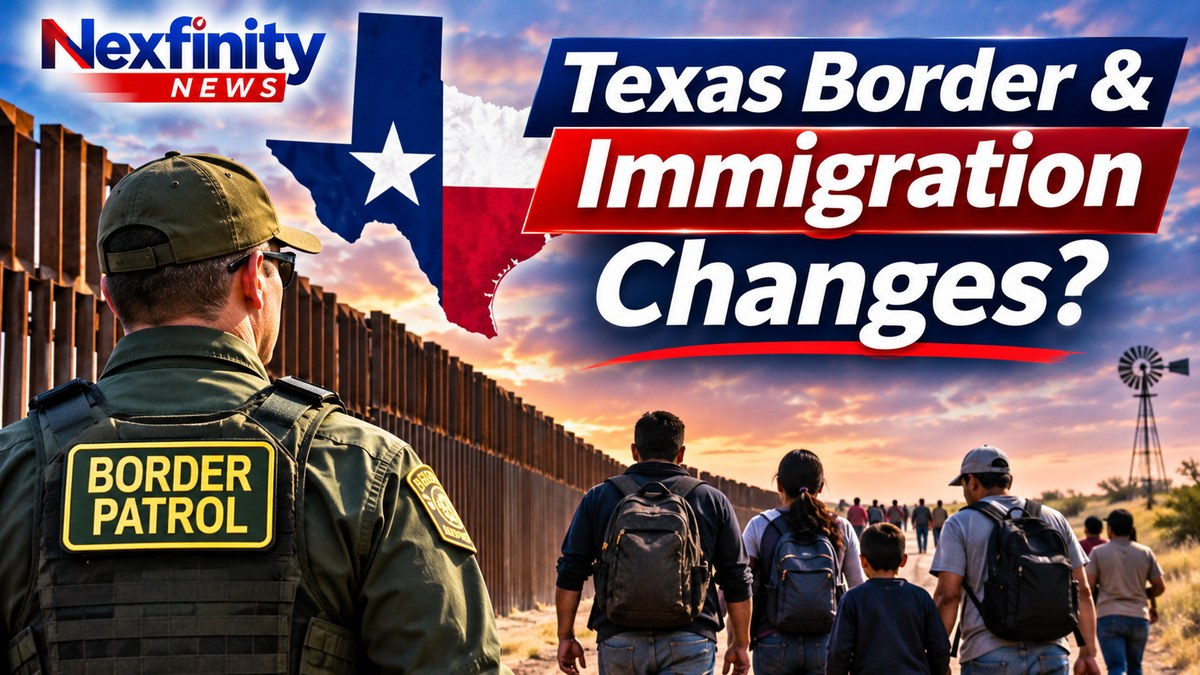
The result arrives as new migrant caravans move north through southern Mexico, some of them openly citing the U.S. midterm results as a reason to try. That raises the question many Texans are asking: once Hinojosa is sworn in, how much can she actually change about border security and illegal immigration?
The short answer is that she can change a great deal about what Texas does at the border, and very little about what the federal government does there.
Background
Abbott launched Operation Lone Star in March 2021, deploying Texas Department of Public Safety (DPS) troopers and Texas National Guard soldiers to the Rio Grande during the Biden administration. The operation has cost Texas more than $11 billion, covering wall construction, river buoys, fencing and personnel. In September 2026, the Department of Homeland Security approved $7.5 billion to reimburse the state for part of that spending.
The Legislature built a legal framework around the mission as well:
- SB 4 (2023) makes illegal entry from Mexico a state crime and lets state judges order people removed. After years of litigation, the full Fifth Circuit allowed enforcement in April 2026 on standing grounds without ruling on whether the law is constitutional; a district judge blocked key provisions again in May, and the Fifth Circuit lifted that block on May 29.
- SB 8 (2025) requires sheriffs in counties that operate jails to request and enter 287(g) agreements with U.S. Immigration and Customs Enforcement (ICE). It took effect Jan. 1, 2026, with a compliance deadline of Dec. 1, 2026 weeks before Hinojosa takes office.
In simple terms: a 287(g) agreement lets local officers perform certain immigration-enforcement functions under ICE supervision.
The state’s own border wall program has wound down. The Texas Facilities Commission declared the project complete after roughly 82 miles of barrier were installed.
Where Hinojosa Stands
Hinojosa has been a consistent critic of Operation Lone Star but has not committed to ending it. As a legislator, she voted against the 2017 sanctuary-cities ban and against the first round of Operation Lone Star appropriations. She has called for a review of the program and described it as political theater, while saying she supports a secure border.
She has also credited President Donald Trump for slowing illegal crossings, while criticizing ICE. Her campaign pledge, in her own words, was to secure the border and “not waste working Texans’ money on political theater.”
As of this writing, she has not announced a plan for the Guard, DPS or intelligence assets now assigned to the border, and her office did not respond to questions from The Texas Tribune after the election.
Policy Explanation: What a Governor Controls
The Texas Constitution says a new governor is installed on the first Tuesday after the Legislature organizes, which puts Hinojosa’s swearing-in on or after Jan. 19, 2027. From that point, her powers fall into three tiers.
Tier 1 Things she can do on day one
- End the border disaster declaration. Abbott’s border-security disaster proclamation has been renewed 69 times since 2021 and is the legal basis for sending troopers and Guard members to apprehend people crossing the Rio Grande. Hinojosa can simply stop renewing it.
- Rescind Abbott’s executive orders, including the one directing troopers and Guard members to return migrants to ports of entry.
- Redeploy the Texas National Guard and reset DPS priorities. The Guard in state status answers to the governor; roughly 5,000 Texas Guard members were serving under Operation Lone Star at the last public count, in 2025. Since a February 2025 agreement with Washington, designated Texas Guard soldiers have been authorized to make immigration arrests under federal supervision. Whether Texas continues offering soldiers for that role is a state decision.
- Direct state agencies’ cooperation with ICE, to the extent state law does not already require it. Hinojosa called on Abbott in January to stop supplying state resources to ICE operations.
Tier 2 Things that need the Legislature
- Repealing SB 4 or SB 8. Democrats have already filed bills (HB 123 and SB 99) to repeal SB 8’s 287(g) mandate.
- Operation Lone Star funding. The 2026–27 state budget includes $6.5 billion for border security across 13 state agencies. That money runs through the current two-year cycle; continuing it after fall 2027 requires lawmakers to renew it.
The math here is the key constraint. Democrats won a majority of the Texas House, but Republicans hold the Senate 19-12. The 2027 budget bill will originate in the House. In simple terms: Democrats can block new border spending, but they cannot repeal existing border laws without Republican senators.
The governor’s veto, including the line-item veto on appropriations, cuts the same way: it can stop new measures or strip specific spending lines, but it cannot repeal laws already on the books.
Tier 3 Things she cannot change
Immigration law, the Border Patrol, ICE, federal troops on the border and the federal wall all belong to Washington. As Kristin Etter of the Texas Immigration Law Council put it, “a new state governor can’t rewrite immigration laws.”
There is an important legal distinction here. Under the Supreme Court’s anti-commandeering doctrine, a state can generally decline to assist federal enforcement. It cannot lawfully obstruct it. A Hinojosa administration could pull state resources; it could not stop federal agents from doing their jobs.
Washington also holds a direct counter-move: the president can federalize the National Guard, transferring command from the governor to the Department of Defense. Asked about a possible pullback of state troops, Trump said, “I’m confident the new governor will want to maintain security at the Texas border,” according to a White House video, while signaling he would enforce federal policy if necessary.
Examples: The Caravans
The timing has drawn attention. On Nov. 6, a caravan estimated at 300 to 1,000 migrants, mostly Hondurans, crossed from Guatemala into southern Mexico near Ciudad Hidalgo and Suchiate, Chiapas. Estimates vary by outlet: Political.org reported 300 to 500, while the Rio Times reported 900 to 1,000 and called it the third Honduran caravan to enter Mexico since September. Migrants interviewed said they hoped U.S. policy would soften.
Two facts put those caravans in context:
- Mexico has stopped them before. Since Claudia Sheinbaum took office in October 2024, Mexican authorities have dissolved at least 16 caravans leaving Tapachula, typically between Chiapas and Oaxaca, using bus transfers and transit paperwork. The trek to the U.S. border covers well over 1,000 miles.
- Crossings are at historic lows. DHS reported 98,708 southwest border apprehensions in fiscal 2026 (preliminary), which it called the lowest annual total on record.
Whether a given caravan reaches the border depends first on Mexico’s National Migration Institute, and then on federal enforcement at the line. Texas troopers and Guard soldiers sit behind both.
Impact
For border counties: State-funded patrols, trespass arrests and barrier maintenance are the most likely to change first. Lone Star Defenders, which handles indigent defense for Operation Lone Star cases, has represented about 20,000 people and has roughly 1,000 cases still pending. Its director expects the operation to scale back but says the caseload will continue for years.
For county sheriffs: SB 8 remains state law. Sheriffs who reach 287(g) agreements by the Dec. 1 deadline will still have them when Hinojosa takes office. Enforcement of the mandate runs through the attorney general’s office, which in January passes to Democrat Nathan Johnson. Johnson has said the office should assist federal enforcement where appropriate and challenge federal actions that go too far.
For taxpayers: The $7.5 billion federal reimbursement offsets much of past spending. The live question is the next budget, and whether the $6.5 billion two-year border appropriation is renewed at a time of record-low crossings.
For federal-state relations: For the past five years, Texas has been the federal government’s most active state partner on border enforcement. That partnership now becomes a negotiation.
Analysis
The caravans make the border feel like an emergency. The data suggests otherwise for now. Crossings are near multi-decade lows, and the agencies that actually stop crossings, CBP and Mexican immigration authorities, are not under Austin’s control.
What Hinojosa does control is the state’s contribution: thousands of soldiers and troopers, the arrest-and-prosecute model under trespass and SB 4, and the state’s willingness to supply manpower to ICE. Those are real levers, and pulling them would be felt most in the interior and in county jails, not at the river.
Her choices are also boxed in politically. She won while praising the federal drop in crossings, and a Republican Senate will be watching every dollar. The most likely near-term path, based on her own statements, is a review followed by a drawdown rather than an abrupt shutdown: ending the disaster declaration, shrinking the deployment, shifting money toward local public safety and pressing for further federal reimbursement.
The real test will come if a caravan, or a sustained rise in crossings, reaches the Texas line after January. A governor who has scaled back the state mission will face pressure to restore it, and the White House has already signaled it is ready to fill any gap with federal forces.
Conclusion
Hinojosa cannot open or close the border. She can decide how much of Texas’s money, troops and police power go toward enforcing it. With SB 4 and SB 8 on the books and the state Senate in Republican hands, the most dramatic changes will come from the governor’s own orders rather than new law. The caravans moving through Chiapas are more likely to test Mexico and Washington first, and Austin second.
NexfinityNews requested comment from Gov.-elect Hinojosa’s office, Gov. Abbott’s office, the Texas Department of Public Safety, the Texas Military Department, U.S. Customs and Border Protection, the Department of Homeland Security and Attorney General-elect Nathan Johnson. Responses will be added if received.
Key Takeaways
- Gina Hinojosa defeated Greg Abbott on Nov. 3 and will be sworn in on or after Jan. 19, 2027.
- On her own authority, she can end Abbott’s border disaster declaration, rescind his orders and redeploy the Texas Guard and DPS.
- Repealing SB 4 (state illegal-entry crime) or SB 8 (mandatory 287(g)) requires the Legislature, where Republicans hold the Senate 19-12.
- Federal immigration enforcement is outside a governor’s control; a state can decline to help but cannot lawfully obstruct it.
- New caravans have entered Mexico, but Mexico has dissolved at least 16 since late 2024, and FY2026 southwest border apprehensions were the lowest on record.
Sources
- The Associated Press Texas governor election results, as of Nov. 10, 2026, 1:58 p.m. ET
- Texas Tribune What happens to Operation Lone Star when Dems take over (Nov. 6, 2026)
- NewsNation What Texas’ next governor has said about the border
- Community Impact Democrats swept Texas statewide races
- KXAN Democrat-held House, GOP Senate in 2027
- Office of the Texas Governor $7.5B reimbursement (Sept. 18, 2026)
- KSAT Feds reimburse Texas $7.5B
- Legislative Budget Board SB 1 (2026–27) summary
- FOX 7 Austin Fifth Circuit lifts SB 4 block (May 29, 2026)
- Texas Policy Research SB 8 and 287(g) agreements
- Texas Scorecard Bills filed to repeal SB 8
- NewsNation Texas Guard deputized under Title 8
- Hungarian Conservative Texas Guard immigration-arrest authority
- Texas Public Radio Who controls the National Guard
- CubaHeadlines Trump remarks on Texas border (Nov. 6, 2026)
- Political.org Caravan crosses into Mexico (Nov. 7, 2026)
- Rio Times Honduran caravan enters Mexico (Nov. 8, 2026)
- Mexico Solidarity / La Jornada INM dissolves caravans
- New Kerala DHS FY2026 apprehensions