
Introduction
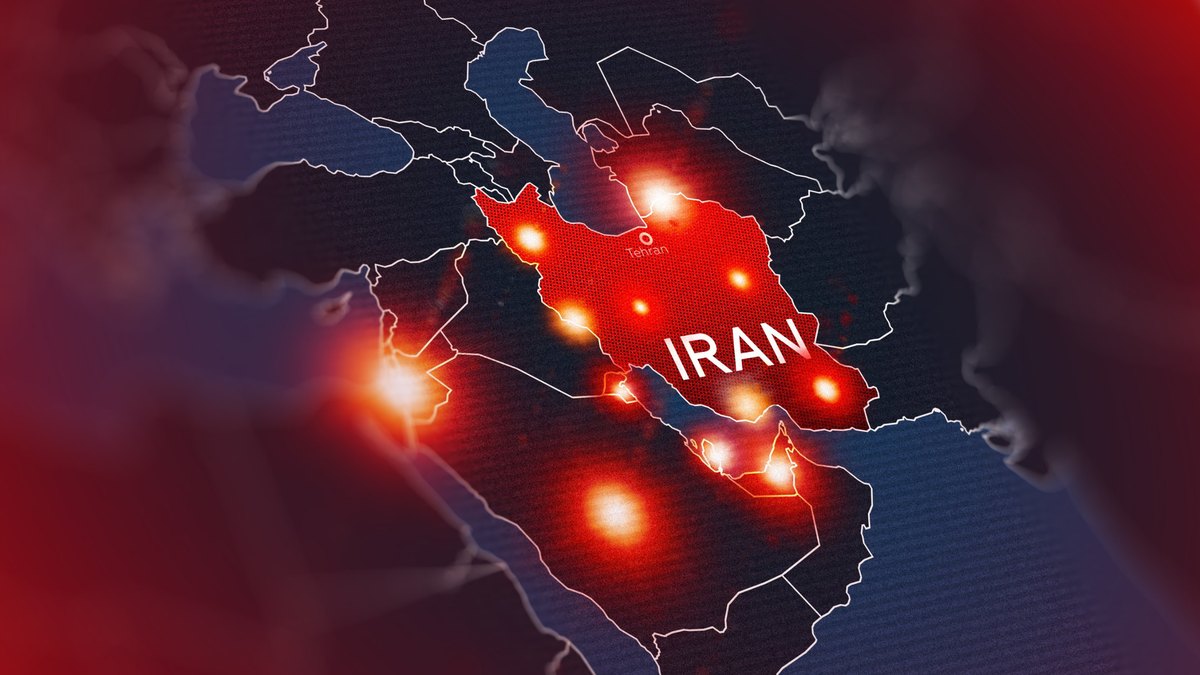
The United States has now been at war with Iran for eight months. The White House projected four to five weeks.
That gap is not new. Before the 2003 invasion of Iraq, senior officials predicted a short war and a grateful population. In Afghanistan, two decades of military plans assumed a Taliban that would weaken and a partner army that would hold. Neither happened.
The pattern is consistent enough to ask a direct question: why does Washington keep misjudging how long its adversaries in the region are willing to absorb punishment?
This analysis looks at the record across all three wars, the evidence for and against the claim, and what the pattern suggests as Washington and Israel weigh renewed strikes on Iran around the Nov. 3 midterms.
Background
The U.S. and Israel launched strikes on Iran on Feb. 28, 2026, under the name Operation Epic Fury. Supreme Leader Ayatollah Ali Khamenei was killed in the opening airstrikes. Within nine days, Iran’s Assembly of Experts named his son, Mojtaba Khamenei, as successor.
A memorandum to end the fighting was signed in June, followed by a June 28 ceasefire. That ceasefire collapsed on July 8 after Iran resumed attacks on commercial shipping in the Strait of Hormuz.
As of Oct. 10, the Pentagon counts 21 U.S. service members dead and 865 wounded. On Oct. 22, the Revolutionary Guard claimed strikes or mine hits on seven vessels in the Gulf, and Washington has ordered families of U.S. government personnel out of Saudi Arabia.
Policy Explanation: What Washington Expected
The administration’s stated aims have shifted over the course of the war.
On the first day, President Donald Trump told Iranians that “the hour of freedom is at hand,”according to Al Jazeera, framing the campaign as an opening for the Islamic Republic to fall. By late March, Trump argued that killing successive layers of leadership already amounted to regime change. By June 16, he said he never cared about regime change.
The White House’s formal position, restated in an April 1 release, was narrower and military: no nuclear weapon, no navy, and the dismantling of Iran’s missile program and defense industry.
The working assumption behind the early campaign, according to multiple analysts, was that decapitation would break the system. Analysts cited by Al Jazeera described the approach as removing the head and enough of the body that whatever remained could not recover.
In simple terms: the plan assumed that if you remove enough of a regime’s leaders fast enough, the regime stops functioning or gives in. Iran’s system was built specifically so that would not happen.
Examples: Three Wars, One Pattern
Iraq, 2003
On March 16, 2003, Vice President Dick Cheney said on NBC’s Meet the Press that U.S. forces would be “greeted as liberators” and that the war would go relatively quickly.
Three weeks earlier, Army Chief of Staff Gen. Eric Shinseki told the Senate Armed Services Committee that stabilizing postwar Iraq would take several hundred thousand soldiers. Deputy Defense Secretary Paul Wolfowitz publicly called that estimate wildly off the mark. Shinseki retired that summer.
Saddam Hussein’s army collapsed in weeks. The insurgency that followed lasted years. The Army’s own two-volume, 1,300-page official history, written by retired colonels Joel Rayburn and Frank Sobchak and released in 2019, concluded that an emboldened and expansionist Iran appeared to be the war’s only victor. The study also found the U.S. never developed an effective strategy against the Iranian-backed militias that killed and wounded American troops.
Afghanistan, 2001–2021
The Special Inspector General for Afghanistan Reconstruction (SIGAR) documented the same blind spot for more than a decade. A 2017 SIGAR lessons-learned report found that U.S. military plans, built on politically constrained timelines, consistently underestimated the resilience of the Afghan insurgency and overestimated Afghan government forces.
SIGAR’s final lessons-learned report, released in August 2021 as Kabul fell, found that the U.S. had spent $83 billion building Afghan security forces while the Taliban expanded its territory. It concluded that Washington repeatedly underestimated how long rebuilding would take and set timelines that could not be met.
Iran, 2026
The opening weeks produced what U.S. officials described as overwhelming tactical results. The Center for Strategic and International Studies reported that Iranian missile launches fell by roughly 90 percent within the first week, that the U.S. military claimed to have sunk more than 90 percent of Iran’s navy, and that Israel had killed more than 250 Iranian leaders.
The regime did not fall. Director of National Intelligence Tulsi Gabbard told a Senate hearing in March that it appeared intact but largely degraded.
An analysis from the American Enterprise Institute, a conservative think tank, found that Tehran had prepared for a long war by decentralizing command and building layered succession plans, and estimated Iran may have preserved as much as 70 percent of its prewar missile force. The Council on Foreign Relations noted that Iran struck all six Gulf Cooperation Council states on the first day, well beyond the narrower retaliation many planners had assumed.
An Old Lesson About Air Power
The belief that bombing alone can force an enemy to give in is older than any of these three wars. So is the evidence against it.
London, 1940–1941
From September 1940 to May 1941, the German Luftwaffe bombed British cities in a campaign known as the Blitz. London was hit nearly every night for months. The goal was to break British morale and push Britain toward a negotiated settlement.
According to the U.S. Holocaust Memorial Museum, the Blitz killed more than 40,000 civilians and caused heavy damage to housing, but did not significantly impair British war production or break British morale. Britain stayed in the war.
In simple terms: the bombing was meant to make the British public demand peace. It gave them a common enemy instead.
Germany, 1942–1945
The Allies then tested the same idea in reverse. U.S. and British bombers struck German cities on a far larger scale than the Blitz.
After the war, the U.S. government commissioned the Strategic Bombing Survey to measure the results. Its morale division, drawing on interviews with 3,711 German civilians, found that bombing seriously depressed German morale, producing fear, fatalism and war weariness. It also found that morale in the most heavily bombed towns was no worse than in towns bombed far more lightly. Discontent rose, but under a police state it did not turn into revolt.
The survey’s Summary Report, published by the War Department in September 1945, concluded that Allied air power was decisive in Western Europe. But its decisive effects came from destroying fuel, transport and the German air force, alongside an invasion by ground armies. Bombing cities did not cause the regime to collapse from within.
Kosovo, 1999
The best modern case for air power alone is NATO’s 78-day air campaign against Serbia. It ended with Slobodan Milosevic withdrawing his forces from Kosovo.
Even there, a RAND assessment for the U.S. Air Force found that other pressures likely contributed: Serbia’s growing international isolation, and Milosevic’s awareness that a NATO ground invasion was becoming more likely. NATO’s goal was also limited. It sought a withdrawal from one province, not the removal of the government in Belgrade. Milosevic stayed in power.
What it means for Iran
The 2026 campaign was not the Blitz. Germany deliberately targeted British civilians, while the stated U.S. targets in Iran were military, nuclear and leadership sites. The shared element is the underlying assumption that enough punishment from the air will make an adversary’s leaders give in or its population turn on them.
The early evidence from Iran fits the historical record. Foreign Affairs reported large, sustained pro-government demonstrations after the war began, despite deep public dissatisfaction with the regime beforehand. Analysts writing in Breaking Defense argued that for a government fighting what it saw as an existential war, losses hardened its resolve rather than breaking it.
The lesson from 1940 to 1999 is consistent. Air power has worked when the goal was limited and paired with other pressure. It has not, on its own, broken a government determined to survive.
Impact
The financial and human costs of the two earlier wars are well documented. Brown University’s Costs of War Project estimates the post-9/11 wars cost more than $8 trillion. Its 2021 accounting recorded 4,598 U.S. military deaths in Iraq and 2,324 in Afghanistan.
The Iran war is smaller in U.S. casualties but larger in economic reach. The Defense Department’s estimated cost reached $43.6 billion as of September. The more significant cost has been Iran’s leverage over the Strait of Hormuz, through which a large share of the world’s seaborne oil passes.
Writing in Breaking Defense, analysts described two separate air wars: a high-altitude war of destruction the U.S. won decisively, and a low-altitude war of disruption, fought with drones, mines and fast boats, that Iran was better postured to fight. The disruption war, they argued, was the one that mattered.
The war has also become a domestic political variable. The Financial Times reported that Trump blocked an Israeli plan for renewed strikes before the midterms, while The New York Times reported that U.S. and Israeli militaries have drawn up plans for strikes after Nov. 3.
Analysis
What the pattern actually is
The record does not show that Washington misjudged its adversaries’ armies. Saddam’s forces collapsed in three weeks. The Taliban government fell in 2001 within two months. Iran’s conventional navy was largely destroyed in days.
What the U.S. misjudged each time was the second war: the one that begins after the conventional fight is won. That war is measured in endurance, not firepower.
The logic is captured in a line often attributed to Henry Kissinger about Vietnam, cited in a Small Wars Journal analysis of the Iran war: the guerrilla wins if he does not lose. An Observer Research Foundation analysis published Oct. 21 made the same point about Tehran directly: Washington needs to win, while Iran only needs to avoid losing.
In simple terms: the U.S. keeps planning for the fight it is best at, and its adversaries keep choosing a different fight.
Where the warnings came from
In each case, the dissenting estimate existed before the decision. Shinseki gave his troop estimate under oath. SIGAR published its readiness findings for years. In March 2026, Matthew Duss of the Center for International Policy told Al Jazeera there was no historical example of air power alone achieving regime change.
The common failure was not a lack of information. It was that the optimistic estimate matched what decision-makers wanted to hear, and the cautious one did not.
The case against the pattern
There are serious arguments that the comparison is overstated.
Capability versus resolve. The administration’s formal objectives were military, and by that measure it claims success. A senior official described Iran as having suffered a generational military defeat. A March Al Jazeera opinion piece by a former State Department adviser argued Iran’s ability to project regional power was being systematically degraded and that its Hormuz leverage was a wasting asset.
Different wars. Iraq and Afghanistan were ground occupations aimed at rebuilding governments. Iran has been an air and naval campaign with no occupation. The failure mode in Iran, if it is one, is different from nation-building.
Not every case fits. The 1991 Gulf War and the territorial defeat of ISIS’s caliphate were limited-aim campaigns that ended roughly as planned. That suggests the problem may be maximal goals, such as regime change or state-building, rather than a universal misreading of the region.
Recent precedent. In June 2025, Iran’s response to U.S. strikes on its nuclear facilities was limited and largely telegraphed in advance. Planners who assumed a similar restraint in 2026 were working from recent evidence, even if it proved wrong.
Too early to judge. Iran’s economy has been severely damaged and its conventional forces gutted. Whether the regime emerges stronger, as Foreign Affairs has argued, or weaker over the long run, remains contested.
Conclusion
The United States did not lose the opening phase of any of these three wars. It lost control of what came after.
In Iraq, the regime fell and Iran’s influence expanded. In Afghanistan, the partner government fell the moment U.S. support ended. In Iran, the leadership was killed and a successor was installed within nine days.
The question for policymakers is not whether the U.S. can destroy an adversary’s military. It has shown, repeatedly, that it can. The question is whether its plans account for an enemy whose definition of victory is simply still being there when Washington goes home.
With renewed strikes reportedly planned for after the midterms, that question is no longer historical.
Key Takeaways
- The White House projected a four-to-five-week war with Iran. It has now lasted eight months, with 21 U.S. service members killed and 865 wounded.
- In Iraq and Afghanistan, official U.S. reviews later found that planners underestimated insurgent resilience and the time required to stabilize the country.
- The Army’s own Iraq War history concluded Iran appeared to be the only victor of that war.
- The common error across all three conflicts was not misjudging enemy armies, but misjudging the endurance phase that follows conventional victory.
- Defenders of the Iran campaign argue its military objectives were met and that Iran is far weaker than before the war.
- Cautionary estimates existed before each war, from Gen. Shinseki in 2003 to SIGAR’s Afghanistan reports to analysts in March 2026.
- From the Blitz to the Allied bombing of Germany to Kosovo, air power has succeeded when goals were limited and paired with other pressure, but has not by itself broken a government determined to survive.
Sources
- AEI, “Trump’s Iran Blunder Shows Strategy Can Defeat Firepower”
- Al Jazeera, “What is Trump’s endgame in Iran” (Mar. 9, 2026); “Trump’s endgame in Iran” (Mar. 4, 2026); opinion, “The US-Israeli strategy against Iran is working” (Mar. 16, 2026)
- Army Times, “Army’s long-awaited Iraq war study finds Iran was the only winner” (Jan. 18, 2019)
- Breaking Defense, “Iran was the most successful failure in US airpower history” (July 2026)
- Brown University Costs of War Project, Overview (Sept. 2026); Boston Globe (Sept. 1, 2021)
- CBS News, “Trump’s goals for the Iran war and what he’s saying now”
- CFR Global Conflict Tracker (updated Oct. 23, 2026); CFR, “How the Iran War Confirmed, Contradicted, and Complicated U.S. Policy”
- CSIS, “Who Is Winning the Iran War?”
- Defense Security Monitor, “Tactical Success and Strategic Ambiguity in the Iran War” (Mar. 20, 2026)
- Foreign Affairs, “How the War Saved the Iranian Regime”
- Observer Research Foundation Middle East, “For Iran, Not Losing Is Winning” (Oct. 21, 2026)
- PBS NewsHour / AP, Mojtaba Khamenei succession (Mar. 8, 2026)
- RAND, “Operation Allied Force: Lessons for the Future” (2001)
- SIGAR, CSIS speech on ANDSF lessons learned (Sept. 21, 2017); Air & Space Forces Magazine on SIGAR final report (Aug. 2021)
- Small Wars Journal, “Iran Didn’t Need to Win the War. It Needed to Outlast It” (July 8, 2026)
- Stars and Stripes, “Pentagon raises official death toll from Iran war to 21” (Oct. 10, 2026)
- The National, “Will the Iran war resume before the US and Israeli elections?” (Oct. 22, 2026)
- U.S. Holocaust Memorial Museum, “The Blitz Begins”
- U.S. Strategic Bombing Survey, Summary Report (European War), War Department, Sept. 30, 1945, via National Library of Medicine
- U.S. Strategic Bombing Survey, “The Effects of Strategic Bombing on German Morale,” Vol. I, War Department Morale Division (1947), via University of Michigan Institute for Social Research
- War on the Rocks, “Tactical Success, Strategic Failure?”
- White House, “President Trump’s Clear and Unchanging Objectives” (Apr. 1, 2026)
- Wikipedia, “2026 Iran war” (secondary; replace before publication)