
Introduction
When U.S. and Israeli forces struck Iran on Feb. 28, 2026, the administration predicted the campaign would last four to six weeks. Energy Secretary Chris Wright told CNN the price spike was, in the worst case, “a weeks, not months, thing.”
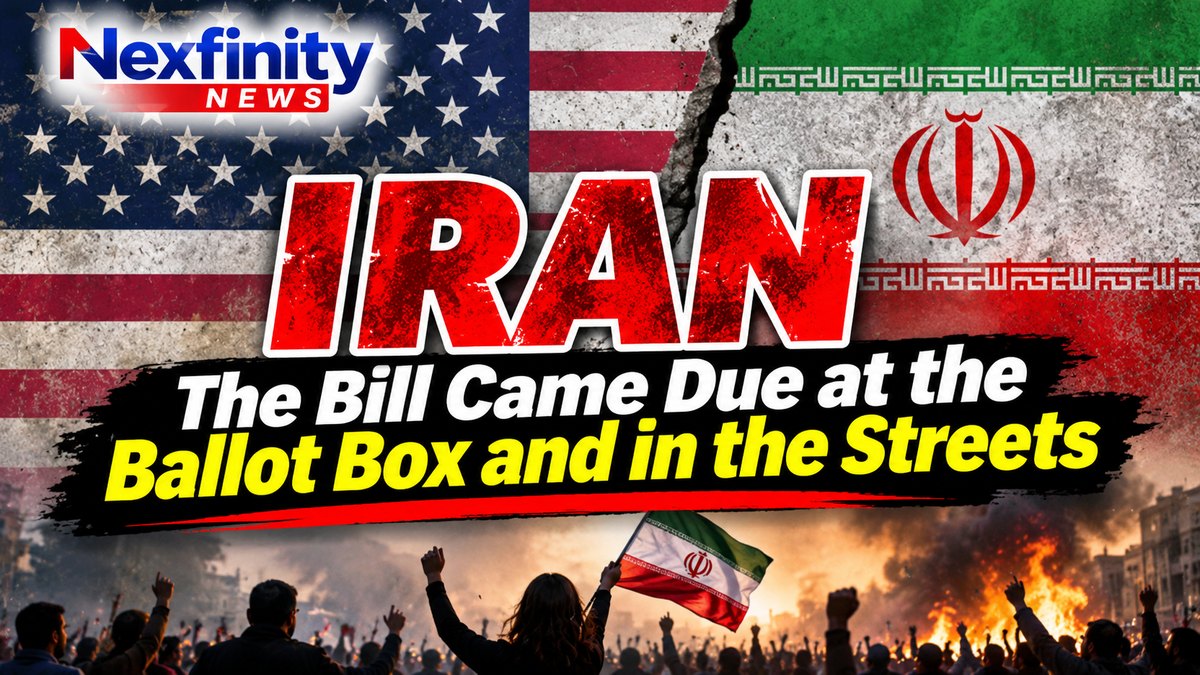
Eight months later, the conflict is unresolved. U.S. inflation has climbed back toward 4%. And on Tuesday, voters handed Democrats control of both chambers of Congress in a midterm that Fox News, CBS and NBC all described in part as a referendum on gas prices and the war.
The same energy shock has rippled outward. Fuel and cost-of-living protests have hit Europe, Africa, South Asia and Latin America — some peaceful, some violent, and not all of them caused by the war alone.
This piece examines what the administration expected, what happened instead, and how much of the political and economic fallout can fairly be traced to that gap.
Background: The Forecast vs. the Outcome
The core assumption behind the short-war forecast was that Iran could not sustain a disruption of the Strait of Hormuz, the channel that normally carries roughly a fifth of the world’s oil.
That assumption did not hold. As CNN reported in September, the administration blew past its initial four-to-six-week prediction after Iran proved capable of effectively halting traffic through the strait. The International Energy Agency has called it the largest oil supply disruption in history.
The public forecasts shifted repeatedly:
- March 31: President Trump said the U.S. could leave in “two to three weeks” and that prices would fall. “All I have to do is leave,” he said (Washington Times).
- April 20: Trump said his energy secretary was “wrong” to project that gas prices would not fall until 2027 (Reuters via GV Wire).
- July 2: Treasury Secretary Scott Bessent said prices might return to $3 or less by Labor Day (Daily Beast).
- Sept. 9: Trump acknowledged oil prices likely would not come down until after the midterms, as Brent crude crossed $100 for the first time since July (AP).
- Oct. 18: At a CBS News town hall, Vice President JD Vance acknowledged “a lot of mistakes and a lot of fundamental failures” in the handling of the war, while arguing the U.S. had “in some ways” won decisively.
In simple terms: the plan assumed a short disruption. The disruption was long, and the forecasts kept being revised to match.
How an Oil Shock Becomes Inflation
Energy is an input to nearly everything — freight, farming, manufacturing and heating — so a sustained oil shock spreads beyond the gas pump.
The U.S. numbers show both the scale and the limits of that spread:
- Gasoline: Gasoline prices rose 34.2% over the year ended September, according to the Bureau of Labor Statistics. On Sept. 9, AAA’s national average hit $4.22 a gallon, more than a dollar above a year earlier, and diesel hit a record $5.94 (AP).
- Headline inflation: September CPI rose 0.6% for the month and 3.7% year over year (BLS). Gasoline jumped 9.1% in September and accounted for more than half of the monthly increase. April’s reading had already hit 3.8% (AP).
- Core inflation: Excluding food and energy, September CPI was 2.6% year over year — elevated but well below the headline figure.
- Strategic reserve: The U.S. Strategic Petroleum Reserve fell below 300 million barrels in early August, down more than 100 million barrels since the start of the year (AP).
In simple terms: the inflation spike is overwhelmingly an energy story. The gap between 3.7% headline and 2.6% core is roughly the war’s fingerprint on the index.
Examples: The Ballot Box
The results. Democrats flipped seven Republican-held Senate seats, at least two dozen House districts, five governorships and as many as 12 state legislative chambers, according to CNBC. The CNBC Election Desk projected Democrats would win at least 250 House seats. Democrats also took the Texas House for the first time in more than two decades.
What voters said beforehand. In an AP-NORC poll conducted Oct. 8–12, 62% of registered voters named the Iran war as one of the most important issues, and approval of the president’s foreign policy fell to 33%. A Fox News poll in the same window found six in 10 voters opposed U.S. military action against Iran — and those voters favored Democratic candidates by 56 points. Both polls placed the war behind the economy, government corruption and health care, but ahead of immigration and crime.
What Republicans said. Before the election, Texas Attorney General Ken Paxton, the GOP Senate nominee, was caught in leaked audio attributing his campaign’s problems largely to the war and its effect on gas prices.
The morning after, Vice President JD Vance wrote on X: “The reason we lost is the war. The president himself said so last night.” He said “many people who voted for Trump/Vance in 2024 voted for Democrats in 2026” and challenged the war’s defenders: “If you’d like to argue it was worth it, that losing the Senate for the next 6 years was worth it, then do so.”
Vance also listed the cost of living and inflation, putting America first, and the U.S.-Israel relationship among the reasons Trump voters defected. Bloomberg noted the post distanced Vance from some of Trump’s policies ahead of a possible 2028 bid.
The White House view. On election night, President Trump told The New York Times the war was a “very wise decision” and said Republicans lost largely because he was not on the ballot. He told Fox News “a part of it was Iran” and added, “If I were on the ballot, we would have won.”
Asked about Vance’s post on Wednesday, Trump called it “largely true” but stood by the war: “If I had it to do again, I’d have to do it again because long term, it’s the only answer.”
Examples: Europe
Europe imports most of its oil and gas, which leaves it more exposed than the U.S. to a Gulf supply shock.
The European Commission estimates the conflict has cost Europe roughly €100 billion, with gas prices up about 140% and diesel prices doubled (Reuters). Eurozone inflation rose from 1.9% in February to 2.5% in March as the war began (AP). In Germany, energy inflation reached 14.9% in September.
The protests that followed varied widely in cause and intensity:
- France: Unrest that began over school conditions in Paris’s northern suburbs grew into some of the country’s worst in decades (Reuters). During nationwide demonstrations on Oct. 17, rioters set fire to Limoges’s 1883 town hall, collapsing its roof and belfry; anti-terror police joined the investigation and a suspect was arrested Oct. 20 (Euronews). Reported nationwide arrest totals range from more than 1,200 to about 2,400, depending on source and date. President Emmanuel Macron acknowledged “legitimate demands” over living and fuel costs while condemning the violence.
- Italy: Police clashed with protesters in Milan, and farmers, truckers and steelworkers set up roadblocks in the south, contributing to local fuel shortages (Reuters). The government said it would deploy 500 army troops alongside police in Milan through the end of 2026 (Sky News).
- Ireland: Fuel protests brought the country to a standstill.
- Portugal and Spain: Large marches focused on wages, rents and housing. Spain’s wave was triggered by the eviction of an 87-year-old woman — a housing story more than an energy one (Reuters).
The political effect is visible in the polls. Marine Le Pen is the frontrunner for France’s April presidential election, Germany’s AfD leads national polling, and far-right parties in Italy and Poland are campaigning on restoring Russian energy ties (Reuters).
Examples: Africa, Asia and Latin America
Poorer import-dependent countries have absorbed the sharpest blows. An ActionAid analysis found the war-driven fuel shock pushed prices up 70% across parts of Africa and Asia.
- Kenya: On May 18, public transport was largely shut down and protesters barricaded roads over a war-linked fuel price hike.
- Pakistan: Jamaat-e-Islami supporters protested in Islamabad on May 15 against rising fuel prices.
- Syria, Guatemala and the Philippines: The Soufan Center documented road blockades in Aleppo and Idlib after a roughly 40% diesel hike, trucker blockades in Guatemala, and transport strikes in the Philippines (Soufan Center).
- Asia more broadly: South Korea imposed its first fuel-price cap in three decades and Bangladesh rationed fuel (Pulse). The Asian Development Bank warned regional inflation could exceed 5%, versus its pre-war projection of 2.1%.
This pattern is not new. IMF researchers studying 101 developing countries from 2000 to 2020 found a clear association between fuel-price increases and protests.
Impact
At home: Democrats now control Congress for the final two years of the term, giving them leverage over war funding, energy policy and the president’s broader agenda.
Abroad: The Soufan Center notes that anger is landing on local governments rather than Washington or Tehran — governments with limited Middle East relevance are becoming targets of public anger. Subsidies and price caps can ease pressure, but they cannot fix a supply shock with an external cause.
In Europe: With elections in France, Italy and Poland next year, energy prices are reshaping the political map — and putting pressure on the continent’s support for Ukraine, as parties on both the hard right and hard left argue for restoring Russian energy supplies.
Analysis: How Much Is the War, and How Much Is Everything Else?
The evidence supports a direct line from the war to higher energy prices, and from energy prices to headline inflation in the U.S. and Europe. That link is well documented by government data.
The link from the war to the election result is real but not exclusive. Several caveats matter:
- Midterm history already favored Democrats. The president’s party has lost House seats in 20 of the past 22 midterms, and Democrats were winning special and off-year elections in 2025, before the war began.
- Voters ranked other issues higher. ABC News’ Voter Poll of House voters found the war was “crucial” to 34%, versus 49% for the cost of living and 55% for government corruption; 59% were very concerned about health care costs. As Brookings economist Ben Harris put it, voters were promised lower prices on gas, food and housing and did not receive them.
- The die may have been cast. A Politico poll found that 46% of voters said ending the war before the midterms would not change how they voted.
The link from the war to global unrest is strongest where fuel is the trigger — Kenya, Pakistan, Syria, Guatemala, Ireland and Italy’s road blockades. It is weaker where the protests began over something else and absorbed energy anger along the way, as in France’s school-conditions riots and Spain’s housing protests.
The word “riots” also needs care. France and Milan saw rioting and looting. Most of the unrest elsewhere has taken the form of strikes, marches and road blockades.
The administration’s case. The White House maintains the war’s purpose — preventing an Iranian nuclear weapon — justified a temporary price shock. President Trump called it “a very small price to pay” for safety and peace, and Vance has argued Iran, not Washington, controls when the conflict ends. Whether the security gains outweigh the costs is a judgment readers will make for themselves. What the record shows clearly is that the timeline and the price forecasts were wrong.
Conclusion
The central miscalculation was not the decision to strike, which is a policy judgment, but the forecast attached to it: that Iran could not hold the Strait of Hormuz long enough to matter. It did.
That single error shaped everything downstream — a 34% one-year jump in gasoline prices, the return of near-4% inflation, a midterm in which the war ranked among voters’ top concerns, and a wave of fuel protests on four continents.
The war did not create America’s affordability anger or Europe’s housing and wage grievances. It poured fuel on both. And in the countries least able to absorb the shock, it has turned a distant conflict into a domestic political crisis.
Key Takeaways
- The administration forecast a four-to-six-week war; it has now lasted more than eight months after Iran effectively closed the Strait of Hormuz.
- U.S. gasoline prices rose 34.2% in the year to September, and September CPI hit 3.7% — with gasoline driving more than half of the monthly increase. Core inflation is a more modest 2.6%.
- Democrats flipped seven Senate seats and at least two dozen House districts, and are projected to hold at least 250 House seats.
- Vance: “The reason we lost is the war.” Trump called that “largely true” but said he would do it again.
- The war was a major factor, but not the only one: in ABC’s Voter Poll, cost of living and corruption ranked ahead of it.
- Europe’s energy bill has risen roughly €100 billion; rioting hit France and Milan, while fuel protests spread to Ireland, Kenya, Pakistan, Syria, Guatemala and the Philippines.
- Not all unrest traces to the war — France’s riots began over schools and Spain’s over housing — but energy costs amplified both.
Sources
- Washington Times — Trump says U.S. could leave Iran in two weeks (Mar. 31, 2026)
- Rolling Stone — Trump shrugs off gas prices; Wright “weeks, not months”
- CNN — Trump says war will end after the midterms (Sept. 9, 2026)
- AP — Oil prices likely won’t come down until after midterms (Sept. 9, 2026)
- Agencies via Express Tribune — Vance acknowledges “failures” (Oct. 19, 2026)
- BLS — Consumer Price Index, September 2026 (Oct. 14, 2026)
- BLS — Gasoline up 34.2% over the year ended September 2026
- CNBC — Democrats sweep 2026 midterms (Nov. 4, 2026)
- CNBC — Midterm results live updates (Nov. 4, 2026)
- NBC News — Vance says the “real reason” for GOP rout was anger over Iran war (Nov. 4, 2026)
- ABC News — Vance blames Iran war; Trump says he would “do it again” (Nov. 4, 2026)
- Military Times — “The reason we lost is the war” (Nov. 4, 2026)
- JTA — Vance blames Israel and Iran war for GOP defeats (Nov. 4, 2026)
- Bloomberg — Vance blames war in Iran, Israel ties for GOP midterm loss (Nov. 4, 2026)
- NBC Washington — Midterm live updates (Nov. 4, 2026)
- Responsible Statecraft — AP-NORC and Fox polls on the Iran war
- Brookings — The pressures shaping the 2026 midterms (Oct. 20, 2026)
- Reuters — As France erupts, Europe’s far right gains from fuel-price anger (Oct. 20, 2026)
- Euronews — France arrests man linked to Limoges town hall fire (Oct. 20, 2026)
- Al Jazeera — How the war on Iran is causing havoc in Europe (Oct. 25, 2026)
- Soufan Center — Fallout from Hormuz: global fuel protests (Sept. 22, 2026)
- Arab News — Hormuz crisis and poorer nations (June 4, 2026)
- Majalla — The US-Iran war has thrown Asia into crisis
- Roll Call — Midterm history and the House