
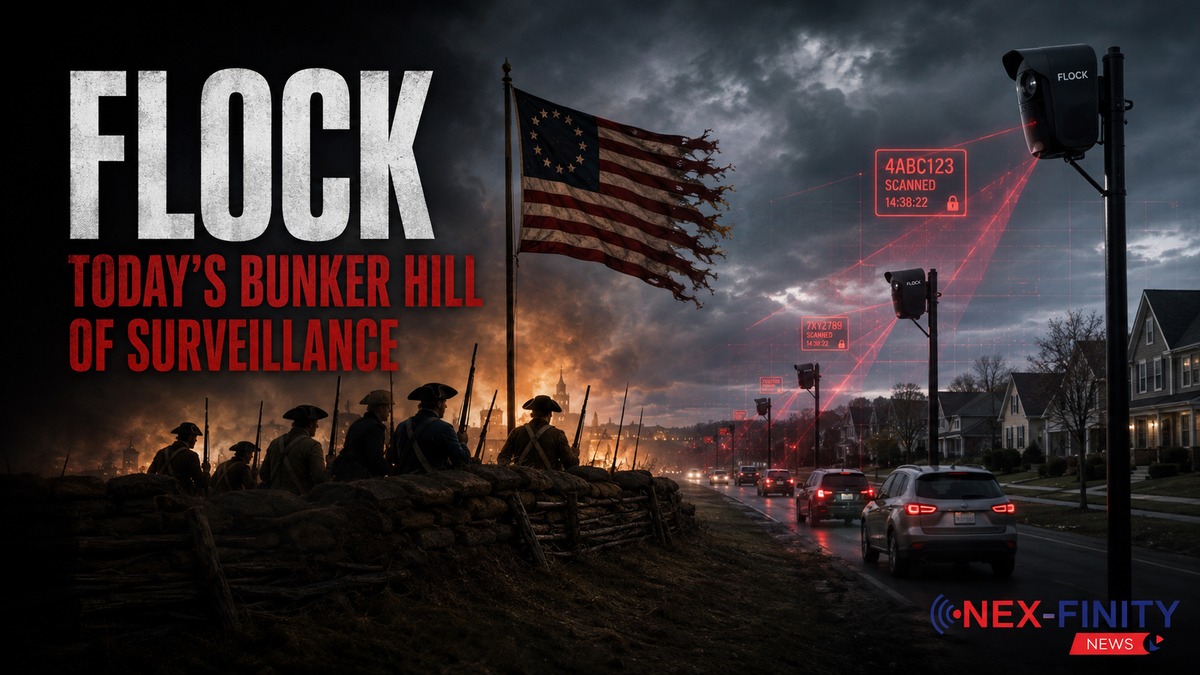
In February, Denver told Flock Safety it would not renew the contract for the license plate readers used by its police department. Mayor Mike Johnston, who had unilaterally approved that contract a year earlier over public objection, reversed himself.
The city then hired Axon to do the same job.
Denver’s replacement contract is genuinely tighter than what it replaced: 50 cameras instead of 100, 21-day retention instead of 30, no access to a vendor-run national database, mandatory audit trails on every query, and a bar on sharing city data with federal authorities. Access for other agencies in the state is conditioned on those agencies accepting Denver’s standards.
The camera count fell by half. The surveillance continued.
That transaction is the whole story of what has happened to Flock Safety over the past eighteen months, and it explains something the coverage has mostly missed: the company is absorbing the reputational cost of an entire industry’s practices while the industry itself is largely untouched.
Background
Flock Safety was founded in Atlanta in 2017 by Garrett Langley, Matt Feury, and Paige Todd. It sells solar-powered cameras that photograph passing vehicles, convert the plate images into searchable records, and make those records available to law enforcement through cloud software. It has since added gunshot detection, video, and drone-as-first-responder products.
By this year the company reported operations in more than 5,000 communities across 49 states, more than $300 million in annual recurring revenue, and roughly $1 billion raised across eight to ten rounds depending on whose count you use. Its April 2026 valuation was $8.4 billion. Nexfinity News examined how that network was assembled in our earlier investigation.
It is also, by a wide margin, the most hated brand in American public safety technology.
Why Flock and Not the Others
There are more than 130,000 automated license plate readers deployed across the United States, according to the crowdsourced database DeFlock.org. Flock did not build most of them. Motorola Solutions has sold plate readers for years through its Vigilant line. Genetec, Verkada, and Rekor all compete in the category. Axon, a company with a market capitalization in the tens of billions, ended its Flock reseller partnership in early 2025 and launched two direct competitors: Axon Outpost, a pole-mounted camera, and Axon Lightpole, a streetlight retrofit built with Ubicquia — the same smart-streetlight vendor Flock uses.
So why is the movement called DeFlock and not something broader?
Matthew Guariglia of the Electronic Frontier Foundation offered the most persuasive explanation to NPR: the cameras are visible. Once a person learns to identify the distinctive black box on its narrow pole, they cannot stop seeing them. Recognition breeds awareness, awareness breeds objection.
Compare that to what Axon is selling. Lightpole is a retrofit designed to disappear into existing street furniture. Outpost attaches to poles already in place. A resident who has learned to spot a Flock camera has not learned to spot those, and will not be able to count them at a city council meeting.
Three other factors compound the visibility problem.
The name became generic. “Flock camera” now functions the way “Juul” came to function for teen vaping — a brand name doing the work of a category noun. That is a marketing catastrophe with no available remedy. Every article about plate reader abuse anywhere in the country attaches to one company’s name.
The procurement is local and public. Flock sells to municipalities, which means the buying decision happens at a council meeting on a published agenda that residents can attend and speak at. Very few surveillance technologies are purchased that way. Most are bought through federal grants, state contracts, or private commercial relationships with no local vote attached.
The national lookup tool created a national story. By restricting nationwide search access to agencies that contribute their own data — roughly 75 percent opted in, per the company’s disclosure to Congress — Flock turned thousands of separate local decisions into one shared system. When reporting surfaced that federal agencies had run searches against local camera data, every participating town became part of the same controversy at once.
What Nobody Is Protesting
The Bunker Hill comparison is apt in a way that is worth taking seriously. That battle was fought where it was fought because of terrain, not because the hill was strategically decisive. The British took the ground. The war continued elsewhere.
Automated plate readers are one node in an apparatus that includes commercial data brokers assembling movement profiles from mobile advertising exchanges; connected-vehicle telematics, where automakers have sold driving behavior data to insurance analytics firms; state motor vehicle departments selling driver records at scale, as Nexfinity News documented in Florida this week, where the state has taken in more than $490 million over fifteen years; toll systems that photograph every plate at every gantry; retail and parking-garage plate readers operating with no public procurement at all; consumer doorbell camera networks; acoustic gunshot detection; facial recognition vendors; and law enforcement aggregation platforms that stitch these feeds into single search interfaces.
Almost none of it is subject to a city council vote. Almost none of it has a recognizable physical form. There is no DeLexisNexis movement.
This is not an argument that the objection to Flock is misplaced. The misuse cases are real — officers running plate searches on estranged spouses, hundreds of times, over months. The federal access question is real. The concern is that a movement organized around one vendor produces vendor-level remedies, and vendor-level remedies survive exactly as long as the vendor does.
Two January 2026 rulings, Schmidt v. City of Norfolk and State v. Simonson, upheld limited plate reader use while identifying scale, retention period, and sharing scope as the constitutionally decisive variables. Those are precisely the terms a contract can set and a successor contract can unset. New Hampshire’s three-minute deletion requirement and Vermont’s approval process are statutes; they survive a vendor swap. Most states have neither, a gap we have examined separately.
What the Backlash Has Actually Cost
The numbers depend entirely on who is counting, and the spread is instructive.
DeFlock the USA’s tally, cited by Newsweek in late August, breaks down as 46 canceled contracts, 20 rejected proposals, 19 deactivations, eight physical removals, and 12 paused or suspended programs. NPR and OPB have used a rounded figure of about 100 cities. A tally from the group Social Justice, cited in Florida coverage, put the number above 200 cities and counties. Financial data aggregators tracking the company for investors have used a much smaller figure — at least 30 localities since the start of 2025.
Against a base of more than 5,000 agencies, even the highest of those numbers is roughly four percent. Against the roughly 18,000 law enforcement agencies in the United States, Flock’s remaining addressable market is larger than the portion it has lost.
That is the bull case, and it is not a weak one. Subscription revenue from government customers is sticky and annually budgeted. Switching costs are real. The company kept growing through the worst of the coverage.
The bear case is that the composition of the loss matters more than the count. Jacksonville is a city of a million people. Denver is a state capital. Florida’s Department of Transportation just revoked every permit in its highway rights-of-way and eight sheriffs shut down entirely rather than relocate equipment. These are not marginal accounts, and once a sheriff has taken public heat for a contract, the political cost of reinstating it is higher than the cost of never signing it was.
There is also evidence of commercial partners pricing in reputational risk independently. Ring announced an integration with Flock in October 2025 and terminated it in February 2026 without ever launching, citing time and resource requirements. Whatever the stated reason, a consumer brand walking away from a public safety integration is a signal about association cost.
The Valuation Question
Flock’s valuation history is a straight line up: unicorn status in July 2021 after a Series D, $3.5 billion on a $150 million Series E in February 2022, $4.8 billion in 2024, $7.5 billion on a $275 million Series F led by Andreessen Horowitz in March 2025, and $8.4 billion in April 2026.
That last number deserves scrutiny, and not because anyone is doing anything improper.
The April 2026 event was not a priced primary round. The company authorized roughly $200 million in new shares at a per-share price about six percent above the March 2025 mark, structured so existing investors and employees could transact against it. With more than $300 million in ARR, Flock did not need the capital. It was a liquidity mechanism — and it had the secondary effect of establishing a higher mark.
At $8.4 billion against $300 million in ARR, the multiple is roughly 28 times recurring revenue. That number is only defensible if growth continues at something near the roughly 70 percent the company has reported. It is priced for expansion, not for maintenance.
Now look at what the secondary market thinks. Nasdaq Private Market estimated a share price of $12.40 as of August 18. Another platform showed $11.35. Forge listed the company at $8.25 billion. Several trackers still carry $7.5 billion as the current mark. PitchBook shows total funding of $1.17 billion; other sources say $957.6 million; others say approximately $960 million or “close to $1 billion.”
These are not small discrepancies, and they are not evidence of anything sinister. Private company shares are Level 3 assets — hard-to-value, marked by model rather than by market. When platforms disagree by nine figures on a company this well covered, it means there is no consensus price, only a range of estimates produced by parties with varying access and varying incentives.
That last point deserves emphasis for readers evaluating any figure in this section. A substantial share of publicly available Flock valuation data originates with pre-IPO marketplaces and research firms whose business model depends on accredited investors transacting in exactly these shares. That does not make their numbers wrong. It does mean they are not disinterested, and it means no figure here should be treated as audited. Flock is private. Its financials are not public. Nobody outside the cap table knows the current burn rate, and burn rate is the number that would actually settle the question of how much pressure the company can absorb.
The IPO Problem Nobody Is Discussing
The structural signals point toward a public offering. Flock hired a chief financial officer, Brandon Simins, in April 2025. A 2024 round was reportedly structured to consolidate small stakes and clean up the cap table. The April 2026 tender gave employees and early investors partial liquidity. Analysts covering the pre-IPO market have projected an offering or strategic sale in the 2026-2027 window. The company has never announced a timeline, and Langley has publicly emphasized independence.
Here is the complication that valuation coverage keeps skipping.
Going public means filing an S-1. An S-1 requires the company to disclose, under securities law, the things it currently is not obliged to say: net revenue retention, gross churn, customer concentration, the specific regulatory proceedings it faces, pending litigation, and a risk factors section that must candidly describe the possibility that state legislatures restrict or prohibit its core product.
Right now, the churn figures in public circulation are estimates compiled by activist groups from local news reports. An S-1 would replace those estimates with audited numbers that the company itself certifies. If the activists’ tallies are roughly right, the disclosure is survivable. If the revenue-weighted picture is worse than the count suggests — because the accounts lost skew large — the S-1 becomes the single most damaging document ever published about the company, and it would be published by the company.
That is a meaningful disincentive to file in a year when Florida just cleared its highways and the Federal Trade Commission has an open referral from a sitting senator and a sitting representative regarding the company’s security practices.
The more likely path is that Flock stays private longer than its capital structure would otherwise suggest, funds liquidity through periodic tenders rather than a listing, and waits for either regulatory clarity or a growth reacceleration that makes the disclosure look better. Private markets have gotten considerably better at providing exits without public listings, which is precisely what makes waiting affordable.
Analysis
Bankruptcy is the wrong risk to be watching, and it comes up constantly in the commentary.
Flock is equity-financed, not debt-financed. Roughly a billion dollars raised, no meaningful creditor class, and recurring subscription revenue from government customers who budget annually. Insolvency generally requires creditors who can force the question, and Flock does not have them at scale. A company in this position can lose a great deal of revenue before Chapter 11 becomes the operative mechanism. What happens instead is recapitalization: the operating business continues and the equity holders absorb the loss.
The real exposure is the mark, and it runs through growth rate. At 70 percent growth, 28 times ARR is aggressive but arguable. At 25 percent growth, it is indefensible, and the correction is not gradual. That scenario impairs the investors who came in at $7.5 and $8.4 billion, puts employee equity underwater, and triggers the talent departures that follow. None of that is bankruptcy. It is bad enough that people reach for the word anyway.
The genuine tail risk is categorical rather than corporate. If ten states pass what Florida’s Legislature declined to pass — statutory retention limits, query justification requirements, audit mandates, restrictions on cross-jurisdictional sharing — the addressable market contracts structurally. That scenario damages Axon, Motorola Solutions, Genetec, and Verkada on the same terms. It is the one outcome the vendor-swap dynamic cannot route around, which is why the companies benefiting from Flock’s troubles should be reading Florida’s memo more carefully than they appear to be.
And there is an irony worth recording. When Axon terminated its Flock partnership in February 2025, an analyst downgrade citing Flock-as-competitor knocked more than eight percent off Axon’s stock in a single session. Eighteen months later, Axon’s chief executive is telling investors that agencies are converting to his company specifically because of its privacy controls. The same event was priced as a threat and is now being sold as an advantage. That is a reasonable description of how much the market actually knows about where this category is heading.
Conclusion
Flock’s brand damage is real, largely irreversible, and substantially disproportionate to its share of the surveillance apparatus. The company built the most visible product in a category that mostly operates invisibly, gave it a memorable name, sold it through public meetings, and connected it to a national database. Each of those decisions was commercially sound and each one made the company the obvious place to make a stand.
Whether that stand accomplishes anything depends on what follows it. If the outcome is that Denver, Jacksonville, and a hundred other cities swap one vendor for a quieter one, the movement will have won a brand war and lost a policy war. If the outcome is that legislatures write retention, audit, and sharing rules that bind whoever holds the contract, then Flock’s role will have been to make an invisible question visible enough to legislate.
The company will probably survive either way. That is the part most of the coverage has backwards.
Key Takeaways
- Denver dropped Flock in February 2026 and hired Axon for the same function, with a smaller camera count and tighter contract terms. The vendor changed; the surveillance continued.
- Flock is one vendor among many — Axon, Motorola Solutions, Genetec, Verkada, Rekor and others — in a national fleet exceeding 130,000 plate readers.
- Flock drew the backlash largely because of visibility: recognizable hardware, a name that became generic, local public procurement, and a national lookup tool that linked thousands of towns into one story.
- Cancellation tallies range from about 30 to more than 200 depending on the counter. Even the highest figure is roughly four percent of Flock’s 5,000-plus agency base.
- The $8.4 billion April 2026 mark came from a tender-style share authorization, not a priced primary round. Secondary platforms currently disagree on the company’s value by well over a billion dollars.
- Bankruptcy is unlikely — Flock is equity-financed with no significant creditor class. A down round or recapitalization is the realistic financial risk.
- An IPO would require an S-1 disclosing audited churn, customer concentration, and regulatory risk. That disclosure requirement may itself be the strongest argument for staying private.
Editor’s note: This article is journalism, not investment advice, and Nexfinity News does not recommend the purchase or sale of any security. Flock Safety is a private company; its financial statements are not public and none of the figures cited here are audited. Several valuation figures originate with pre-IPO marketplaces and research firms that have a commercial interest in secondary trading of these shares.
Sources
- NPR — Flock competitors seek to benefit from public backlash (Guariglia; Axon CEO Rick Smith)
- NPR — Flock Safety alternatives: new names, same surveillance
- OPB — As Flock battles public scrutiny, other police surveillance companies see an opening
- Newsweek — Flock’s major rivals as cameras spark increasing backlash (DeFlock the USA; Civic IQ)
- 404 Media — Cities are ditching Flock, immediately replacing it with Axon license plate readers
- Axios Denver — Denver cuts ties with Flock, Feb. 24, 2026
- Gadget Review — Denver contract terms; Schmidt v. Norfolk and State v. Simonson
- Yahoo News — syndication of the above
- TSG Invest — Flock Safety research coverage: valuation history and risk factors
- Nasdaq Private Market — Flock Safety share price estimate, Aug. 18, 2026
- Forge Global — Flock Safety valuation and secondary marketplace listing
- Notice.co — competing Flock Safety share price estimate
- PitchBook — Flock Safety company profile and total funding
- StockAnalysis — Flock Safety private company news, incl. Ring integration termination
- The Motley Fool — Axon stock decline on Northcoast downgrade, Feb. 2025
- Office of Sen. Ron Wyden — letter to Garrett Langley, Oct. 16, 2025
- Rep. Krishnamoorthi & Sen. Wyden — FTC referral, Nov. 3, 2025
Related Coverage
- Florida Pulled the Cameras Off Its Highways. The State Still Sells Your Driver Data.
- Big Brother on Every Corner: How Flock Safety Built America’s Largest Covert Surveillance Network
- Cities Drop Flock Cameras, Replace With Axon ALPR — Who Owns Axon?
- License Plate Surveillance and Private Camera Networks
- The Right to Privacy Isn’t in the Constitution — The Surveillance Consent Gap