
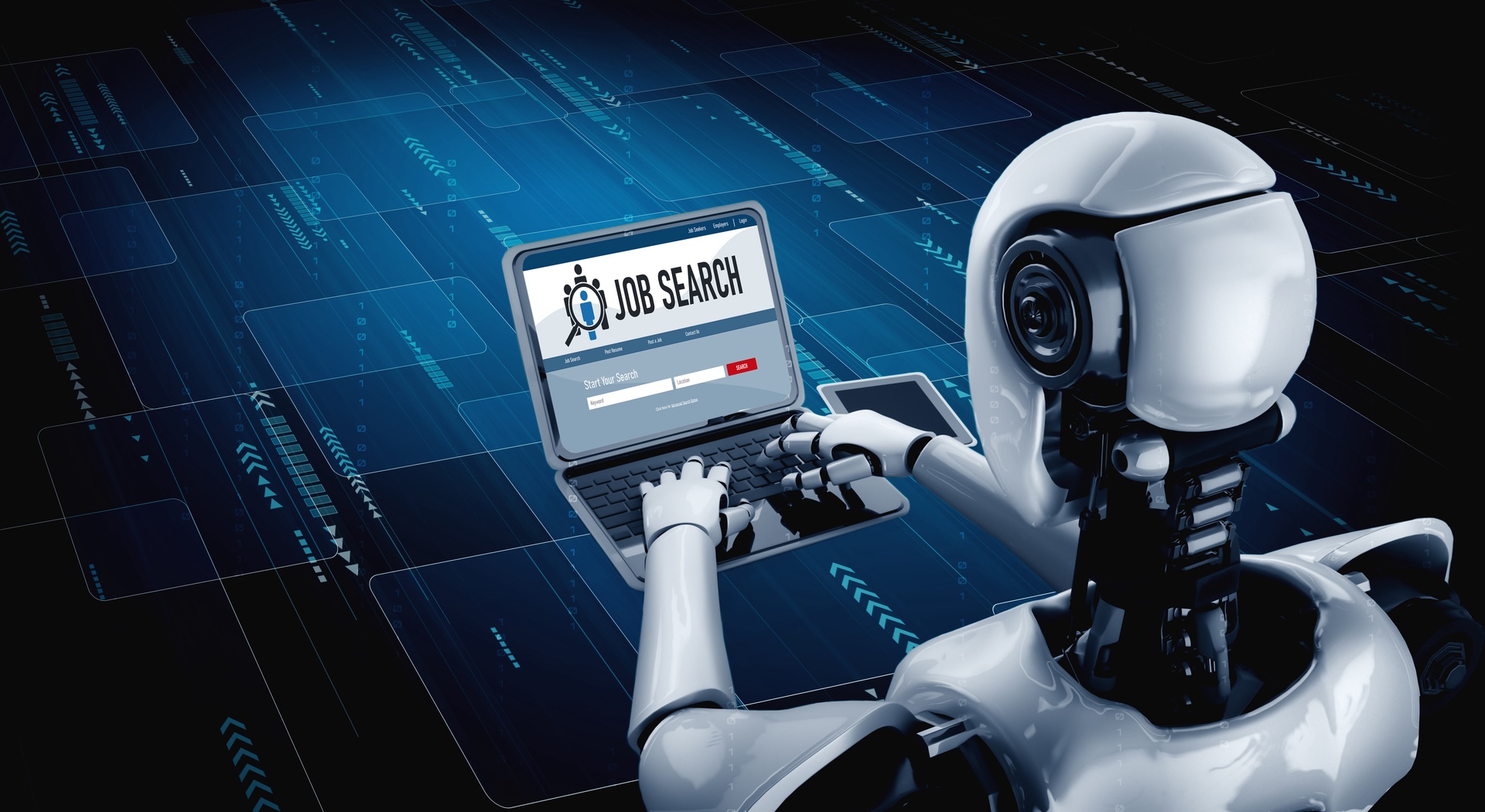
Let’s start with a number: 4,000. That’s how many people Jack Dorsey just told to clean out their desks at Block — the company behind Square, Cash App, and Afterpay. Forty percent of the entire workforce, gone in a memo. And here’s the kicker: the company’s business is doing just fine. Gross profit up 24% year-over-year. Stock jumped 24% on the news. Shareholders are thrilled.
That’s not a rescue operation. That’s not a company fighting for survival. That’s capitalism doing exactly what capitalism does — optimizing for profit with ruthless efficiency. And this time, it has a new co-pilot: artificial intelligence.
So let’s have the conversation nobody on CNBC really wants to have. At what point does AI-driven “restructuring” stop being innovation and start being something closer to a moral crisis? And do public companies owe their employees anything more than a severance check and a LinkedIn recommendation?
The Promise and the Pitch
First, let’s be fair to Dorsey and the executives like him. The pitch isn’t entirely wrong. AI tools are genuinely extraordinary right now. What used to take a team of engineers a week can now happen in hours. What required layers of middle management to coordinate can be handled by an AI orchestration system at a fraction of the cost. The productivity gains are real, and in a competitive global economy, companies that ignore them will eventually be eaten by competitors that don’t.
Dorsey put it plainly in his letter to shareholders: “A significantly smaller team, using the tools we’re building, can do more and do it better.” He’s not wrong. The question isn’t whether AI can do more with less. It clearly can. The question is what we, as a society, decide to do with the “less” part — specifically, the human beings on the other end of that equation.
Capitalism’s Oldest Tension
Here’s the thing: capitalism has always had this tension baked in. The Industrial Revolution displaced artisans. Automation gutted factory towns. The internet wiped out travel agents, video rental stores, and newspaper classifieds. In each of those cases, economists would say the same thing — short-term pain, long-term gain. New jobs emerge. Markets adapt. Progress marches on.
But here’s where AI is different, and where that comfortable historical argument starts to wobble.
Previous waves of automation largely replaced physical labor or narrowly defined repetitive tasks. AI isn’t just replacing the assembly line worker or the data entry clerk. It’s coming for software engineers, financial analysts, paralegals, marketers, writers, and customer service professionals. It’s encroaching on the cognitive middle class — the jobs that people spent four years and $80,000 in student loans to qualify for. The breadth and speed of this disruption is categorically different from anything that came before it.
And when Dorsey says “Within the next year, I believe the majority of companies will reach the same conclusion and make similar structural changes” — that’s not just a business forecast. That’s a warning shot across the bow of the entire labor market.
The Public Company Problem
This is where things get philosophically interesting — and legally murky.
A private company can arguably operate by whatever values its owner wants. If you’re a small business and you decide to keep your employees through a rough patch out of loyalty, that’s your prerogative. But public companies are different animals. They exist, in the eyes of the law and decades of shareholder primacy doctrine, to generate returns for investors. CEOs who fail to do that get fired. Boards that ignore it get replaced.
The Business Roundtable made noise in 2019 when they issued a statement suggesting that corporations should serve all stakeholders — employees, communities, and customers, not just shareholders. It was widely applauded as a cultural shift. It was also, functionally, largely ignored. Because when the quarterly report hits and analysts are watching, the pressure to perform for Wall Street doesn’t care about your stakeholder pledge.
Block’s stock jumping 24% on news of 4,000 layoffs tells you everything you need to know about where the true accountability in public markets actually lives.
So When Does It Go Too Far?
There’s no clean legal line. But there are a few markers worth watching.
The first is the ratio of executive enrichment to employee harm. When a company cuts thousands of workers while executives receive AI-efficiency bonuses or see their stock options balloon in value, something has broken down in the social contract. That’s not restructuring for survival — that’s wealth transfer dressed up as innovation.
The second marker is speed and honesty. Dorsey actually gets some credit here. He was blunt. He didn’t hide behind vague “organizational realignment” language. He said: we’re doing this because AI means we need fewer people, and other companies are going to do the same thing. That transparency matters. The version that goes too far is the executive who lays off workers while publicly denying it’s about AI, or who strings along workers with false reassurances while quietly automating their roles from underneath them.
The third marker is the question of investment in transition. Are companies simply cutting and moving on, or are they investing in retraining, re-skilling, and genuine support for displaced workers? A $5,000 transition fund and 20 weeks of severance for a displaced software engineer in their 40s is not a plan. It’s a gesture.
Do Public Companies Have a Moral Obligation to Employees?
Short answer: yes. But the system isn’t built to enforce it.
The longer answer is that companies don’t exist in a vacuum. They draw from communities for talent. They rely on public infrastructure — roads, the internet, educated workers produced by public schools and universities. They operate under legal frameworks that protect their intellectual property and their right to exist as legal entities. They benefit from the social stability that employed, economically secure people create. A company that systematically destabilizes the very ecosystem it depends on is, ultimately, undermining itself.
Henry Ford understood this, at least in one dimension, when he raised wages so his workers could afford to buy his cars. The logic still holds. A nation where AI captures all the productivity gains while displacing workers into unemployment isn’t a nation of consumers anymore. And a nation that isn’t consuming is a nation where the market collapses.
The moral obligation isn’t just ethical — it’s strategic. Companies that treat their workforce as a pure cost variable to be optimized will eventually discover that the community and consumer base they depend on has been hollowed out.
What a Responsible AI Transition Could Look Like
This isn’t an argument against AI. That ship has sailed. The technology is here, it’s extraordinary, and pretending otherwise is its own kind of irresponsibility. But the manner of transition matters enormously.
Responsible AI integration in a public company context looks something like this: genuine investment in retraining programs at scale, not token gestures; extended transition support that reflects the actual time it takes to pivot a career; transparent communication with employees well in advance of cuts, not a memo on a Thursday afternoon; and executive compensation structures that are tied to workforce health metrics, not just stock price.
There’s also a policy dimension that companies alone cannot solve. The United States has no serious national framework for managing technological labor displacement at this scale. We’re going to need one. Whether that looks like portable benefits, universal basic income pilots, sector-specific retraining funds, or a tax on AI productivity gains that flows back into workforce transition programs — something needs to fill the gap that the private sector won’t fill on its own.
The Bottom Line
Jack Dorsey isn’t a villain. He’s playing by the rules of the game as they currently exist. His investors are delighted. His board is presumably pleased. His remaining employees will inherit a leaner, AI-native organization that may well outperform its peers. By every conventional metric, this was a smart business decision.
But we’re at an inflection point where “smart business decision” and “right thing to do” are diverging fast — and if that gap keeps widening, no amount of AI efficiency will be able to paper over the social fractures that follow.
The real question isn’t whether AI will restructure the workforce. It will. The question is whether we have the collective will — in boardrooms, in legislatures, and in the public square — to make sure the gains are shared broadly enough that the system doesn’t eat itself.
History is watching. And history, unlike a stock ticker, doesn’t forget.
―
Published by NexfinityNews.com | Investigative Journalism for a Complex World