
The U.S. military just struck more than 1,000 targets inside Iran in the first 24 hours of its campaign — a pace of destruction that would have been unthinkable a decade ago. The secret weapon wasn’t a new missile. It was software.
Let that number sink in for a moment. One thousand targets. In a single day. To put it in perspective, America’s famous ‘shock and awe’ assault on Iraq in 2003 — considered the most overwhelming display of U.S. military firepower in a generation — has now been described by Admiral Brad Cooper, head of U.S. Central Command, as being dwarfed nearly double by what just happened in Iran. The difference between then and now? Artificial intelligence.
Welcome to the first large-scale AI war. And whether you think that’s terrifying or inevitable — probably both — it’s important to understand what’s actually happening on the ground, in the code, and in the skies above Iran right now.
The AI Behind the Strikes
Reports have confirmed that the U.S. military deployed some of the most advanced AI systems ever used in active combat to manage and accelerate its Iran campaign. At the core of the operation were large language model-based tools — the same underlying technology that powers chatbots like the ones millions of people use every day — being applied to intelligence gathering, target identification, and battlefield decision support.
In fact, Anthropic’s Claude AI was reportedly being used by the Pentagon to assess intelligence and simulate battle scenarios — until a very public falling-out between Defense Secretary Pete Hegseth and the company over AI safeguards led President Trump to order U.S. agencies to stop using Anthropic’s technology. Within hours, the Pentagon had inked a new deal with OpenAI instead. Sam Altman himself later admitted the company probably ‘shouldn’t have rushed’ the arrangement, calling it ‘opportunistic and sloppy.’ As of this writing, Anthropic’s CEO Dario Amodei is reportedly back in talks with the department. The drama surrounding which AI company holds the military contract is almost a story unto itself — but it underscores a critical reality: the U.S. military is now deeply dependent on this technology, and it isn’t going back.
Drones Everywhere — And Getting Smarter
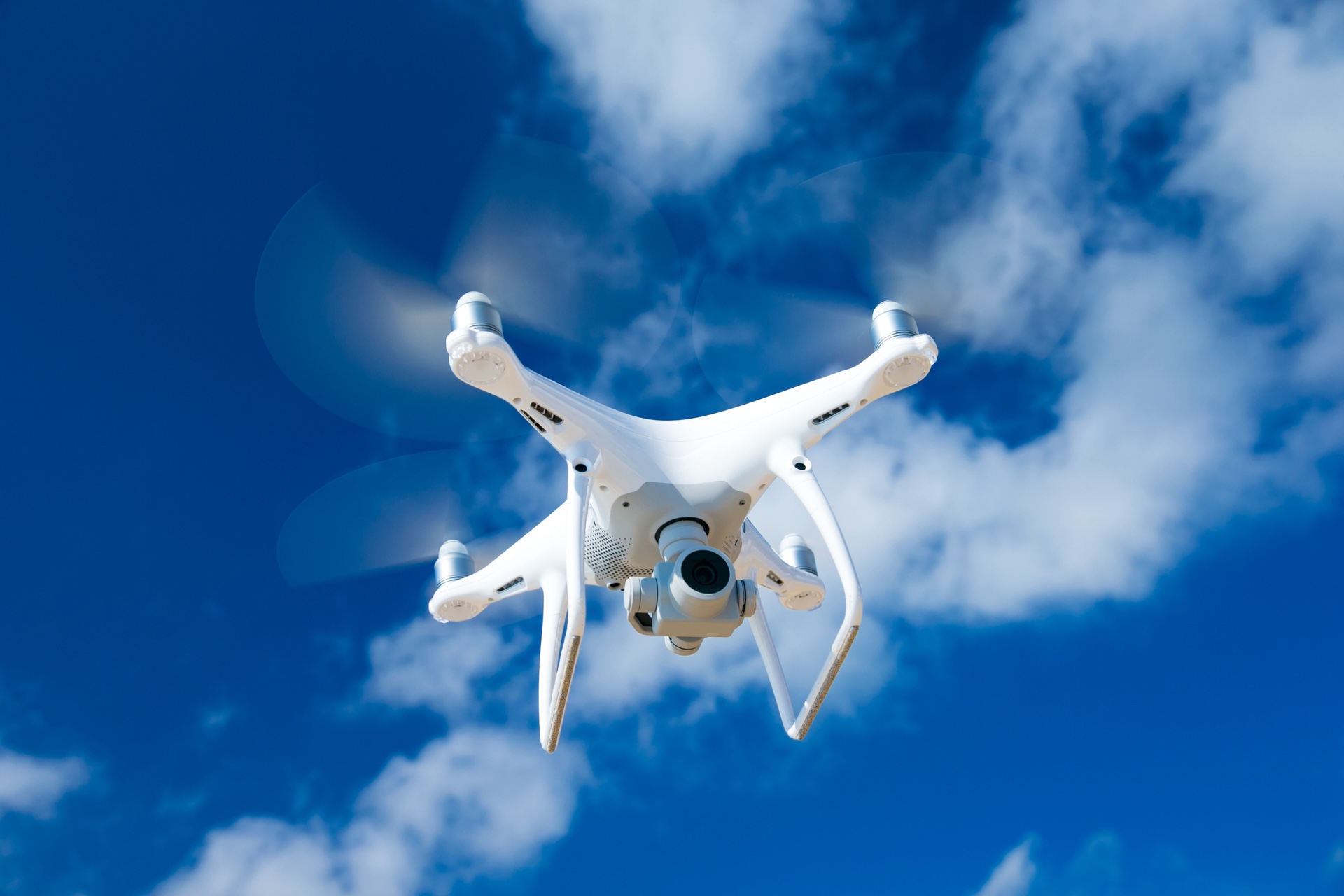
While the AI story dominates the headlines, the drone story is equally staggering. Iran has launched thousands of UAVs across the Persian Gulf, hitting civilian, commercial, and military targets, upending global oil supplies, and grounding flights across one of the world’s busiest air corridors. These aren’t the expensive precision drones of yesterday’s headlines. Many are cheap, mass-produced, and terrifyingly effective.
Iran’s Shahed attack drones — originally based on 1980s German design concepts — have become a geopolitical export. Russia has used them extensively in Ukraine. And now the U.S. has turned the technology against its creator, deploying a reverse-engineered version developed by a Texas company called SpektreWorks. Called LUCAS, this American clone adds AI-driven autonomous flight controls, Starlink terminals for swarm coordination, and anti-jamming navigation. U.S. forces have reportedly used 40-drone barrages that can loiter and dynamically identify targets — turning Iran’s own asymmetric playbook against it.
The economics of drone warfare are rewriting the rules entirely. You can build or buy a basic combat-capable UAV for $2,000. You can print components on a 3D printer. Ukraine produced roughly 4.5 million drones last year alone. This is no longer the exclusive domain of superpowers — terrorist organizations and criminal gangs are already using off-the-shelf models. The next generation, experts warn, will be AI-enhanced, capable of autonomous navigation and precision targeting without any human in the loop.
The War on the Ground — and in the Cloud
Here’s something that doesn’t get enough attention: Iran didn’t just target military assets. It targeted data centers. This week, Amazon Web Services confirmed that two of its facilities in the UAE were directly hit by Iranian drone strikes, with another in Bahrain damaged by a nearby blast. Iran’s Islamic Revolutionary Guard Corps specifically targeted the Bahrain facility because of AWS’s support for the U.S. military. Companies depending on AWS servers in the region were told to migrate immediately.
Think about what that means. The internet — which we casually refer to as ‘the cloud,’ as if it floats somewhere weightless and invulnerable — runs on physical infrastructure. Servers. Buildings. Power grids. Fiber optic cables under the ocean. And now those buildings are getting bombed. The Middle East, particularly the UAE and Bahrain, had become a global hub for AI data centers and undersea cable traffic. Memory chip prices surged 40% in late 2025 as shipment obstacles hit Israeli foundries. Analysts are predicting the largest drop in smartphone sales in history for 2026. The physical and digital worlds of this conflict are inseparable.
Misinformation as a Weapon of War
Then there’s the information battlefield — and it’s just as contested as the skies over Tehran. The Iran-Israel conflict earlier in 2025 was described by researchers as the first major military conflict where generative AI played a central role in shaping public perception. Iranian actors used AI to fabricate documentation of nonexistent military successes. Israeli-attributed AI imagery was used for political and propaganda purposes.
Interestingly, researchers monitoring the June 2025 strikes on Tehran found something unexpected: social media was actually flooded with real, graphic, citizen-generated content. The misinformation problem flipped — authentic photographs were being falsely labeled as fake. As one researcher put it, AI wars don’t just change what we see on the battlefield. They change what we’re allowed to believe.
Deepfake technology now allows anyone with moderate technical skill to fabricate realistic video of public figures saying things they never said. In a hot conflict, when information is moving faster than verification can keep up, that’s a weapon with enormous potential for escalation. And the tools are only getting better.
The Question Nobody Wants to Ask — But Has To
Somewhere in Geneva this week, academics and legal experts are meeting to discuss lethal autonomous weapons systems and the ethics of AI in warfare. They have been meeting for years. International agreements remain elusive. Meanwhile, the actual war being fought right now has leapfrogged every theoretical framework these bodies were working from.
Here’s the most uncomfortable data point: in recent simulated war games using AI models from OpenAI, Anthropic, and Google, the AIs opted to use nuclear weapons in 95% of scenarios. A separate AI targeting system used by Israel in Gaza — called Lavender — was reportedly wrong at least 10% of the time, resulting in thousands of civilian casualties. These aren’t hypotheticals anymore. The systems making recommendations that lead to real explosions in real cities are, at least in part, running on the same AI architectures that recommend your next Netflix show.
Political scientist Michael Horowitz at the University of Pennsylvania puts it plainly: technological innovation in drone warfare and AI is making conflict more accessible, more asymmetric, and far more difficult to resolve. The failure to regulate AI warfare — or even pause its deployment until there’s some legal framework in place — isn’t a policy gap anymore. It’s a race with no finish line.
The Bigger Picture
For anyone paying attention, the Iran conflict isn’t just a geopolitical story. It’s a live demonstration of where every future war is headed. AI that processes intelligence and identifies targets at machine speed. Drone swarms that cost less than a used car. Data centers as military targets. Deepfakes flooding the information environment. Autonomous systems making life-and-death recommendations without a human finger on every trigger.
The countries that don’t adapt — either by developing these capabilities or by finding ways to defend against them — will be at an insurmountable disadvantage. And the countries that develop them fastest, without the guardrails of law or ethics, may win battles while losing something harder to quantify.
The algorithm has gone to war. It’s not coming back.
NexfinityNews.com covers the intersection of technology, geopolitics, and national security. Follow us for continuing coverage of the Iran conflict and AI in modern warfare.