
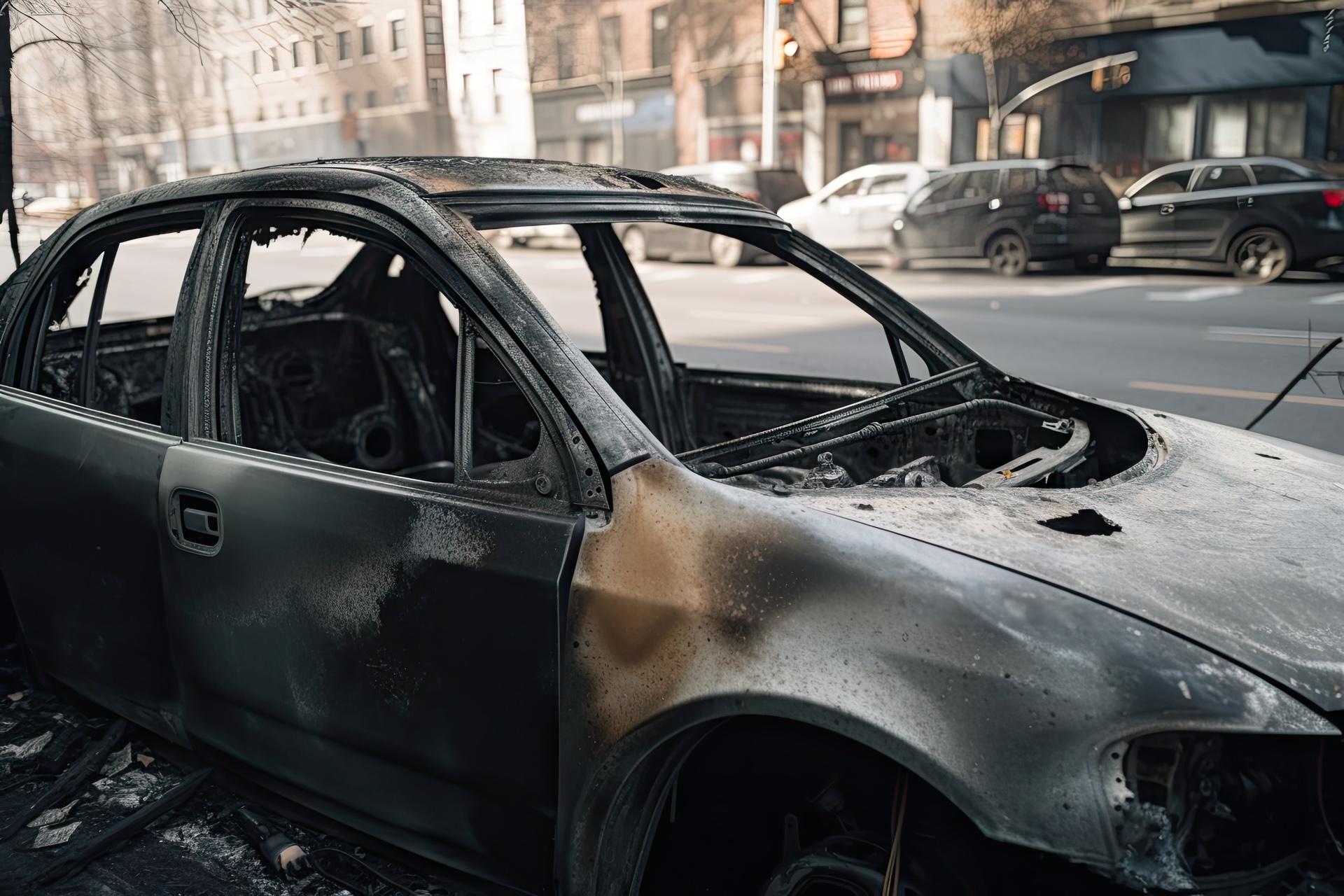
The images coming out of Puerto Vallarta this weekend look like something from a war film — burned-out vehicles blocking highways, plumes of black smoke rising over what was, just days ago, one of Mexico’s most beloved tourist destinations. American tourists were dodging charred cars to get to the airport. Airlines including Delta, American, Alaska, and Air Canada cancelled flights entirely. The U.S. State Department issued shelter-in-place warnings not just for Jalisco, but for Cancún, Tulum, and Playa del Carmen — the crown jewels of Mexico’s tourist economy.
All of this because on Sunday, February 22nd, Mexican special forces killed Nemesio Rubén Oseguera Cervantes — better known as “El Mencho” — the leader of the Jalisco New Generation Cartel, or CJNG, widely considered the most powerful and ruthless drug trafficking organization in the Western Hemisphere. Within hours, the cartel’s retaliation machine roared to life, with more than 250 roadblocks set ablaze across 20 Mexican states. Twenty-five members of Mexico’s National Guard were killed. Guadalajara turned into a ghost town. And millions of American tourists suddenly found themselves trapped, terrified, or simply booking the first flight home they could find.
Here’s the question nobody in Mexico City wants to answer out loud right now: Is this the moment Mexico’s economy begins to unravel?
The Numbers Tell a Scary Story
To understand the gravity of what’s happening, you need to understand how deeply Mexico’s economy depends on two specific revenue streams — tourism and remittances — and how both are now under simultaneous, serious attack.
Tourism accounts for approximately 8.6% of Mexico’s GDP. That’s not a rounding error — that’s the fourth-largest contributor to the entire national economy, behind manufacturing, commerce, and real estate. In 2025, Mexico welcomed a record 47.8 million international tourists and generated roughly $31.7 billion in revenue. The sector employed nearly 2.8 million people directly, with millions more benefiting indirectly across hotels, restaurants, transportation, and crafts.
Now add remittances. In 2024, Mexicans living — and working — in the United States sent home $62.5 billion, representing approximately 3.5% of Mexico’s GDP. For families in states like Michoacán, Guerrero, and Oaxaca, those wire transfers aren’t supplemental income. They are the income. They fund school supplies, medications, groceries, and rent.
Put those two numbers together and you’re looking at roughly 12% of Mexico’s entire economic output suddenly sitting on very shaky ground.
The Tourism Wound Is Already Bleeding
Even before El Mencho’s killing sent shockwaves through every resort city in the country, American tourism to Mexico was operating against a backdrop of steadily worsening travel advisories. The U.S. State Department had already placed significant portions of the country at Level 3 (“Reconsider Travel”) and Level 4 (“Do Not Travel”) — the same rating given to active war zones.
Now, the optics have gotten dramatically worse. The images of burned vehicles in Puerto Vallarta’s tourist corridor, panicked travelers sprinting across airport tarmacs in Guadalajara, and convoys of smoke rising over beach towns will be on American television for days. Those images linger in the minds of travel planners and travel agents for months, sometimes years. Ask anyone who booked a vacation to Acapulco a decade ago how that perception changed things.
To be fair, security analysts are pointing out that Mexico’s Caribbean corridor — Cancún, the Riviera Maya, Los Cabos — has so far been geographically insulated from the worst of the CJNG’s retaliation. Cartel organizations have historically avoided directly targeting tourists because tourism infrastructure functions as a money-laundering ecosystem. Hitting it too hard hurts their own operations. But the State Department’s shelter-in-place advisories extending to Cancún and Quintana Roo signal that even the government isn’t confident the situation is contained.
And here’s the thing — it doesn’t matter if the beaches of Tulum are technically safe right now. Perception drives bookings. When a family in Ohio sits down to plan their spring break trip to Mexico and the first thing they see on the news is burning cars and stranded tourists, that family books somewhere else. The economic damage from cancelled bookings, flight suspensions, and the broader chilling effect on tourism could dwarf the immediate physical destruction from the CJNG’s retaliation.
The Remittance Noose Is Tightening Too
While the cartel violence dominates today’s headlines, Mexico’s remittance lifeline was already under strain long before this weekend’s chaos — and that’s almost entirely Washington’s doing.
As part of the Trump administration’s “One Big Beautiful Bill,” a 1% excise tax on cash and check remittances from the U.S. took effect on January 1st, 2026. It applies to green card holders, visa holders, and undocumented migrants alike — essentially anyone without U.S. citizenship who sends money home. For Mexico, which is the single largest recipient of U.S. remittances in the world, this is not a trivial policy footnote.
The effects were already showing up before the tax even took effect. Deportations, reduced border crossings, and a softening U.S. labor market had already driven remittances to Mexico down 5.7% in November 2025 alone — the eighth consecutive month of decline. BBVA Research estimates total remittances to Mexico closed 2025 at around $61.7 billion, down nearly 5% from the prior year.
Now layer the 1% tax on top of those deportation-driven declines, and economists project Mexico could lose somewhere in the range of $1.5 billion annually in formal remittance flows. That figure sounds almost manageable in isolation — but it comes on top of an already-declining baseline, in an already-stressed economy, at exactly the moment tourism is also taking a massive hit.
The states that stand to suffer most from diminished remittances — Michoacán, Guerrero, Oaxaca, Puebla — are also some of the states where CJNG has its deepest roots and where economic desperation historically fuels cartel recruitment. It’s a feedback loop nobody wants to talk about.
Is Collapse the Right Word?
Let’s be honest — “collapse” is a strong word, and the Mexican economy is not about to fall off a cliff tomorrow. It has shown real resilience over the past several years, growing through the pandemic, navigating U.S. tariffs, and maintaining a functioning central bank and monetary policy framework. The Mexican peso will take a hit, and it likely already has. Investor confidence will wobble. But a full-blown economic collapse requires a cascade of failures that hasn’t fully materialized yet.
What this moment does represent, however, is something almost as dangerous as collapse: a structural pressure test arriving from multiple directions at once. Tourism threatened by cartel violence. Remittances squeezed by U.S. immigration policy and taxation. U.S. tariffs already weighing on Mexican manufacturing exports. A fiscal deficit the government has been struggling to narrow. And now, the potential for a prolonged internal cartel power struggle following El Mencho’s death — with no clear successor and regional bosses already eyeing the throne.
Al Jazeera’s correspondent in Mexico City put it plainly: what happened when El Chapo was arrested could happen again. A civil war between Sinaloa factions nearly tore that cartel apart. The same dynamic could now play out within CJNG, spreading violence more broadly, for longer, and with less predictability than a single unified organization would produce.
That kind of extended instability doesn’t just scare tourists — it scares foreign direct investment, it scares nearshoring deals, and it scares the multinational companies that have been increasingly looking at Mexico as a manufacturing alternative to China.
The Bottom Line
Mexico is not collapsing. But it is standing at one of the most economically precarious moments in recent memory, with approximately 12% of its GDP under simultaneous pressure from cartel violence and U.S. policy — and with the fallout from El Mencho’s death potentially extending the insecurity for months or longer.
For the millions of ordinary Mexicans whose livelihoods depend on tourism dollars and family remittances, the question of whether this rises to the level of “collapse” is somewhat academic. For them, the erosion is already real. The hotel worker in Puerto Vallarta who lost two weeks of tips because tourists cancelled. The family in Michoacán receiving a smaller wire transfer because their relative in California is making less money and now pays a tax on top of it. The restaurant owner in Cancún watching booking inquiries dry up because the news cycle is running images of burning cars 1,500 miles away.
Mexico’s government just handed the Trump administration a significant political win by killing one of the most wanted men on the planet. The question now is whether it can survive the aftermath — economically, politically, and on the streets — before those wins are consumed by consequences no one fully planned for.