
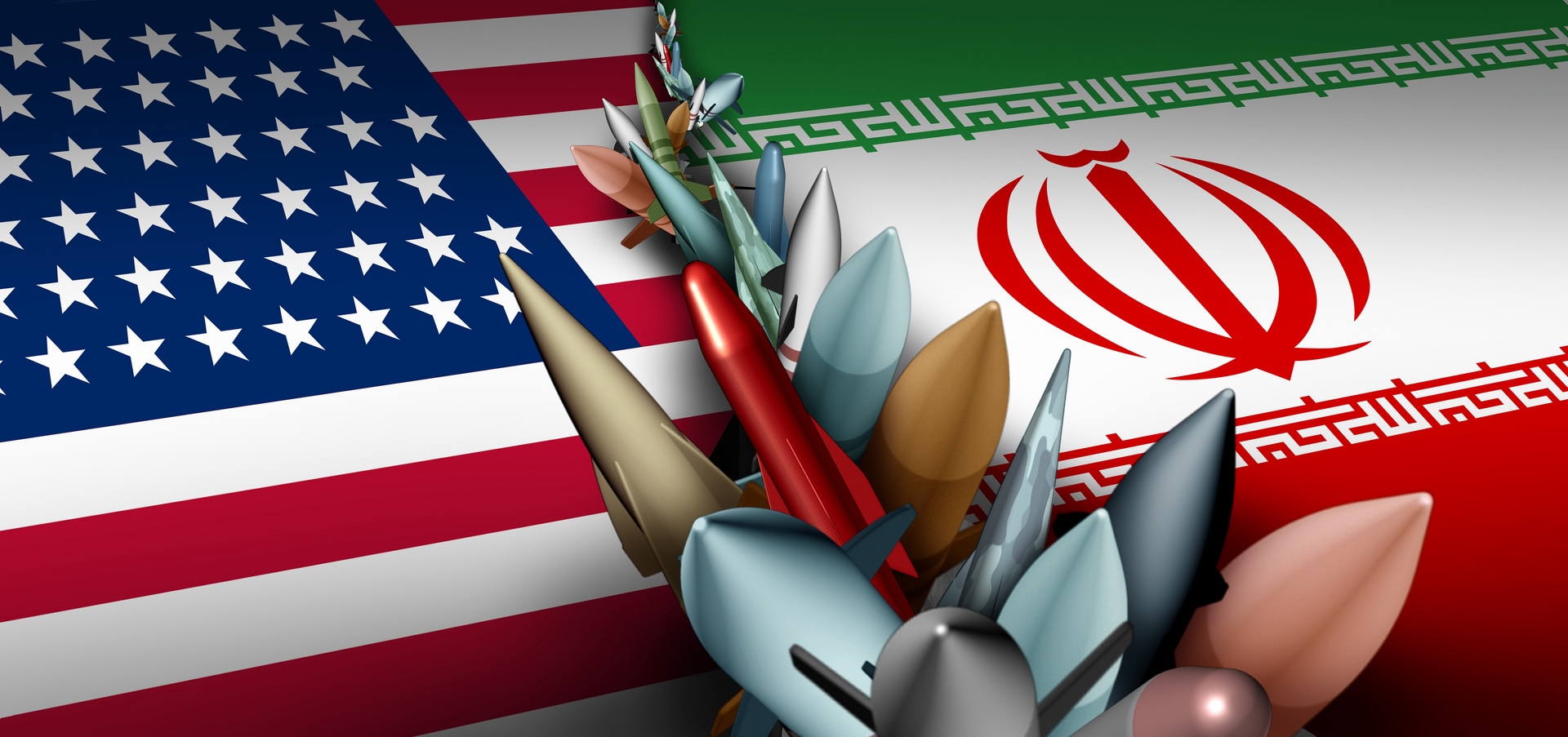
Operation Epic Fury
They got him. Early Saturday morning, February 28, 2026, in a joint U.S.-Israeli military operation dubbed “Operation Epic Fury,” a missile found Ayatollah Ali Khamenei in his own compound in Tehran — reportedly while he was at his desk, carrying out the duties of a man who believed himself untouchable. Within hours, Iranian state TV confirmed what Trump had already posted on Truth Social: the 86-year-old Supreme Leader of the Islamic Republic of Iran, the man who had ruled with an iron fist for nearly four decades, was dead.
Four members of his family died with him. Daughter. Son-in-law. Daughter-in-law. A grandchild.
The celebrations in the streets of Tehran — and in Los Angeles — started almost immediately.
But here’s the thing about toppling a dictator: the hard part isn’t the killing. The hard part is what comes next. And if history has taught us anything about the Middle East, it’s that “what comes next” can be far worse than what came before.
Who Was Khamenei, and Why Did It Come to This?
To understand what Iran faces now, you have to understand what Khamenei built over 36 years in power. He wasn’t just a political leader. He was the Supreme Leader — a position that in Iran’s theocratic system sits above the president, above the parliament, above the courts, and above the military. He held authority over the judiciary, state media, and all security forces, including the Islamic Revolutionary Guard Corps — the IRGC — Iran’s most powerful and feared institution.
He took power in 1989 after the death of revolutionary founder Ayatollah Ruhollah Khomeini, and he spent three and a half decades making himself nearly impossible to remove. He crushed the 1999 student protests. He crushed the 2009 Green Movement. He crushed the 2019 uprising. He crushed the Mahsa Amini protests. And just months ago, when nationwide protests erupted across all 31 Iranian provinces over economic collapse and political repression, he killed thousands more.
Over 7,000 Iranians were killed in that most recent crackdown alone, according to the Human Rights Activists News Agency.
His foreign policy was equally aggressive — fueling proxy wars through Hezbollah in Lebanon, Hamas in Gaza, the Houthis in Yemen, and militias across Iraq and Syria. He was the architect of the Axis of Resistance. He chased a nuclear program that brought Iran to the edge of weapons capability. And when Israel finally struck Iran’s nuclear facilities in June 2025 during a 12-day war, killing scientists and generals, it only delayed the inevitable confrontation — it didn’t stop it.
Eventually, the bill came due. On February 28, 2026, it came due in full.
The Immediate Crisis: Who’s in Charge?
Here’s where it gets complicated — and dangerous.
Khamenei had no officially declared successor. The position of Vice Supreme Leader was abolished in 1989. Under Iran’s constitution, when a Supreme Leader dies, an interim leadership council assumes authority while the Assembly of Experts — a body of 88 Islamic clerics — selects a replacement.
But Israel’s opening strikes didn’t just kill Khamenei. They decimated the chain of command. Seven senior defense and intelligence officials were killed. Forty top commanders were reportedly eliminated in under a minute. The armed forces chief of staff, Abdolrahim Mousavi, is confirmed dead. This wasn’t just a decapitation strike — it was an attempt to cut off the head and most of the body simultaneously.
One senior civilian figure who appears to have survived is Ali Larijani — former parliament speaker and secretary of Iran’s Supreme National Security Council, one of Khamenei’s closest confidants. He’s already emerged as the most senior civilian official still standing. On the night of the strikes, Larijani announced the formation of a temporary leadership structure comprising the president and senior officials. Within hours, he was vowing that Iran would deliver an “unforgettable lesson” to Israel and the United States.
The interim leadership council has already named Ayatollah Alireza Arafi to its ranks — a sign that the clerical establishment is moving quickly to assert continuity, even as the bombs keep falling.
Who Are the Leading Candidates to Become Supreme Leader?
The Assembly of Experts is now faced with one of the most consequential decisions in Iranian history, made under fire, under pressure, and under the watchful eyes of the IRGC. Here’s who’s in the conversation:
Mojtaba Khamenei — The Supreme Leader’s son was long whispered about as a potential successor, though his father reportedly opposed dynastic succession as a matter of principle. He’s a senior cleric in his own right and has significant influence within the IRGC and hardline circles. Reports suggest Israeli officials targeted him but he may have survived the strikes. If the hardliners consolidate power quickly, he becomes a serious possibility — though a son succeeding his father in a revolutionary theocracy carries its own political baggage.
Ali Larijani — The most pragmatic of the likely candidates. A sophisticated political operator who has navigated decades of Iranian factional warfare. He has the relationships, the institutional knowledge, and the survival instincts. But he’s seen by some hardliners as insufficiently ideological, which could work against him.
Gholam-Hossein Mohseni-Eje’i — Head of Iran’s judiciary and reportedly one of three clerics Khamenei himself privately nominated as potential successors before the strikes. A hardliner with deep security state credentials.
Hassan Khomeini — Grandson of the Islamic Republic’s founder, Ruhollah Khomeini. He represents a very different ideological strain — more reformist, more open. If Iran’s internal power struggle swings toward the reformist faction, he becomes relevant. But in the current climate, with the IRGC likely to dominate the transition, he may be sidelined.
The IRGC Wild Card — Perhaps the most consequential player isn’t a cleric at all. The CIA’s pre-strike assessment concluded that “hardline figures” within the IRGC were the most likely power behind whatever new leadership emerges. The IRGC controls Iran’s missile forces, its proxy networks, its economy, and much of its domestic security apparatus. Any Supreme Leader who doesn’t have IRGC backing won’t last long. And a Supreme Leader who IS the IRGC’s choice will be a Supreme Leader beholden to the most militant, most anti-Western force in the country.
The Hard Part: History’s Grim Warning
This is where we need to be honest with ourselves — and history is very honest about this.
The killing of Saddam Hussein didn’t bring democracy to Iraq. It brought sectarian civil war, the rise of Al-Qaeda in Mesopotamia, and eventually ISIS. The country was governed by corrupt, factional chaos for years. Millions were displaced. Hundreds of thousands died.
The killing of Muammar Gaddafi didn’t bring stability to Libya. It brought a decade-plus of competing militias, rival governments, and foreign powers pouring weapons into the chaos. Libya is still not a unified state today.
The fall of Bashar al-Assad in Syria — only a few months ago — brought cautious hope but also uncertainty about what fills the vacuum left by a regime that, for all its brutality, at least knew where all the guns were.
Egypt’s Arab Spring moment briefly toppled Hosni Mubarak, only to eventually cycle back to a military strongman. Different face, same playbook.
The pattern is consistent, uncomfortable, and important: when you remove a totalitarian system by force, without a credible alternative government waiting in the wings, the vacuum doesn’t fill itself with enlightened leadership. It fills with whoever is most organized, most armed, and most willing to be ruthless about seizing the moment.
In Iran, that’s the IRGC.
The Exiled Opposition: Hope or Illusion?
Iran’s exiled former Crown Prince Reza Pahlavi — son of the Shah who was overthrown in 1979 — has already called on Iranians to take to the streets and urged security forces to “join the nation” rather than sink with the Islamic Republic. He’s an articulate, Western-educated advocate for a democratic Iran, and he has genuine support among parts of the Iranian diaspora.
But history is unkind to exiled royalty returning to power after decades away. The Iranian people have vivid memories of what the Shah’s regime looked like. A significant portion would not welcome the return of monarchy, however modernized its proponents claim it has become. And Pahlavi has no army, no intelligence apparatus, no bureaucracy waiting to govern.
Trump has called on Iranians to “take over your government” once the bombing stops. That’s a nice sentiment. But governments aren’t taken over by sentiment. They’re taken over by whoever has the guns and the organization to hold territory and control institutions.
What Now?
The next few weeks will be critical, chaotic, and potentially very bloody. The IRGC has already threatened its “most-intense offensive operation in the history of the armed forces” against Israel and American bases. That’s not just bluster — it’s an institutional reflex. The IRGC exists to fight. Without a Supreme Leader reigning it in, it may be more dangerous, not less.
Inside Iran, the question is whether the internal factions — reformists, hardliners, pragmatists, the clerical establishment, the military brass — can reach a power-sharing arrangement before they start fighting each other. President Masoud Pezeshkian warned in parliament just months ago that harm to Khamenei could cause internal factions to turn on each other and trigger regime collapse without any external intervention at all.
He may have been right about the diagnosis. Whether the cure is worse than the disease remains to be seen.
The strikes were precise. The objective was clear. Trump is calling it justice. Netanyahu is calling it a historic moment. The Iranian people celebrating in the streets deserve their moment of relief after decades of brutal repression.
But the Marine in me has seen enough of how these things actually unfold to know: removing a dictator is the beginning of the story, not the end. The hard work — building something that lasts, something that gives those celebrating Iranians the free and dignified life they deserve — is a project of years, maybe decades, and it requires a plan that goes far beyond where the next missile lands.
The killing was the easy part.
The author is Editor-in-Chief of NexfinityNews.com. This article reflects analysis based on breaking news coverage from Reuters, CNN, Al Jazeera, NPR, Axios, The Times of Israel, and Wikipedia’s live coverage as of March 1, 2026.