
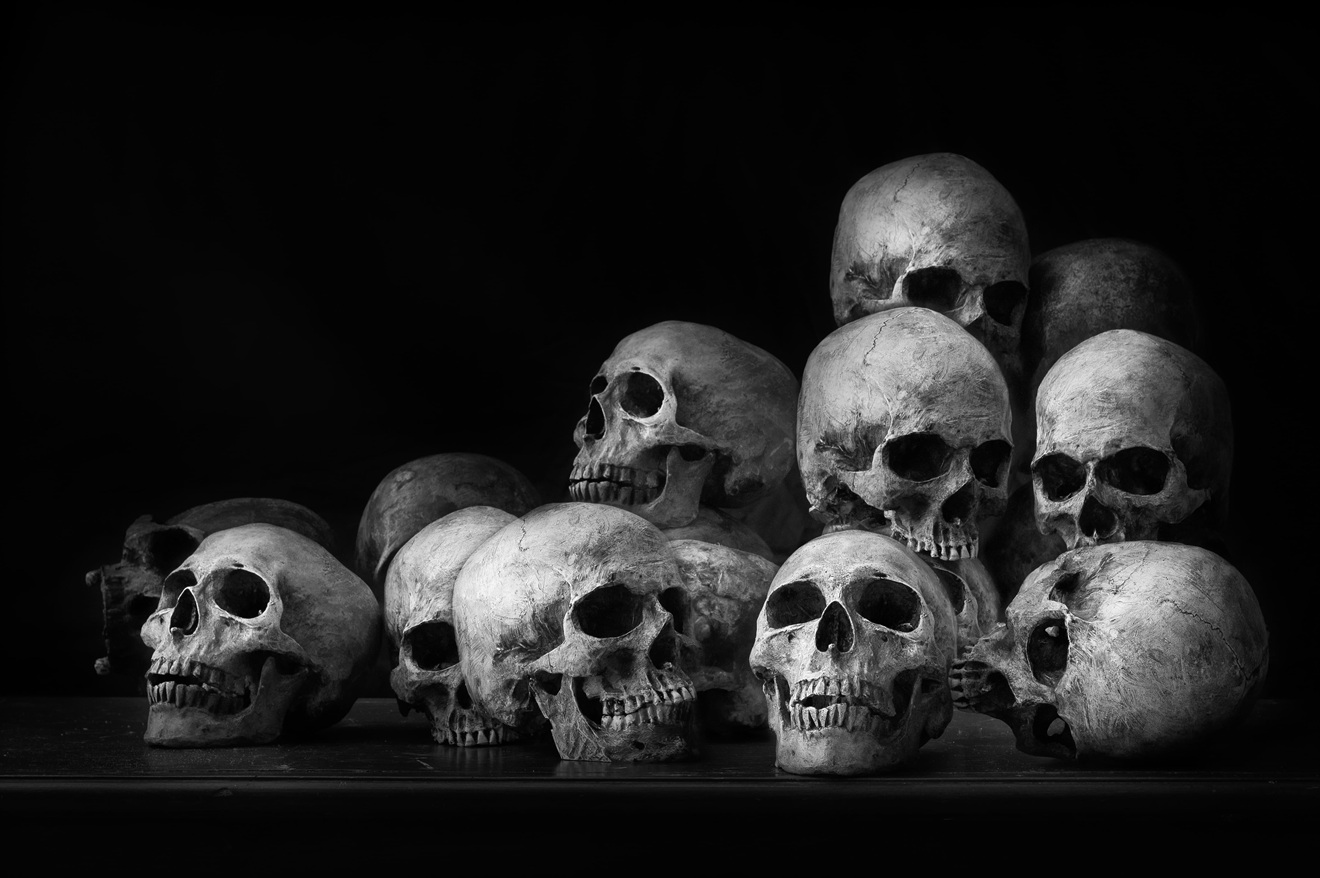
The Uncomfortable Truth About Genocide: Why We Only Remember Some Mass Atrocities
We all know about the Holocaust. It’s taught in schools, memorialized in museums, and referenced constantly in our cultural conversations. But ask the average American about the Rwandan genocide, the Armenian genocide, or the mass killings in Bangladesh, and you’ll get blank stares more often than you’d expect.
And if you mention the systematic killing of Christians across parts of the Muslim world right now—happening in real time while we scroll through our phones—you’ll likely get either complete ignorance or accusations of pushing a political agenda.
This isn’t about diminishing any tragedy—every genocide represents an unfathomable moral catastrophe. But there’s something deeply troubling about how selectively we apply our outrage and our memory. Let’s talk about what actually happened throughout history, what’s happening now, and why some atrocities occupy our collective consciousness while others fade into footnotes or are actively ignored.
The List We’d Rather Not Think About
The 20th and 21st centuries have been remarkably bloody, despite our technological progress and supposed enlightenment. Here’s what we’re actually dealing with:
The Holocaust (1941-1945): Six million Jews, along with Roma, disabled people, political dissidents, and others—roughly 11 million total—systematically murdered by Nazi Germany. This is the genocide by which all others are measured, and for good reason: it was industrialized, documented, and followed by an unprecedented international trial.
The Armenian Genocide (1915-1923): The Ottoman Empire killed an estimated 1.5 million Armenians. Turkey still refuses to call it genocide, which tells you everything about how politics shapes memory.
The Holodomor (1932-1933): Stalin’s forced famine in Ukraine killed somewhere between 3.5 to 7 million people. For decades, this was barely discussed in the West because acknowledging it complicated Cold War narratives.
The Cambodian Genocide (1975-1979): Pol Pot’s Khmer Rouge murdered roughly 1.7 to 2 million people—about a quarter of Cambodia’s population. The “Killing Fields” were an attempt to create an agrarian utopia through mass murder.
The Rwandan Genocide (1994): In just 100 days, approximately 800,000 Tutsis and moderate Hutus were slaughtered, often by their own neighbors wielding machetes. The world watched and did nothing.
The Bosnian Genocide (1992-1995): Roughly 100,000 killed during the breakup of Yugoslavia, with the Srebrenica massacre alone claiming 8,000 Bosnian Muslim men and boys.
Darfur (2003-present): Between 200,000 and 400,000 dead in Sudan, and we’re still debating whether to call it genocide while it continues.
Then there are the ones that barely register in Western consciousness: the Bangladesh genocide of 1971 (up to 3 million killed by Pakistan), the Greek genocide by the Ottoman Empire (hundreds of thousands), the mass killings in East Timor by Indonesia (100,000-180,000), and the ongoing atrocities against the Uyghurs in China.
The Crisis No One Talks About: Christians in the Muslim World
And then there’s what’s happening right now to Christians in parts of the Muslim world—a crisis that gets a fraction of the attention it deserves.
Nigeria represents perhaps the clearest case. Boko Haram and other jihadist groups have killed thousands of Christians over the past decade. Entire Christian villages in northern and central Nigeria have been wiped out by Fulani militants. We’re talking about church bombings, mass kidnappings of schoolgirls, and systematic campaigns to eliminate Christian presence from certain regions. Some estimates put Christian deaths in Nigeria at over 5,000 per year in recent years.
Iraq and Syria saw the near-total elimination of Christian communities that had existed since the time of Christ. ISIS explicitly targeted Christians for conversion, enslavement, or death. The Christian population in Iraq has collapsed from 1.5 million in 2003 to fewer than 250,000 today. In Syria, similar devastation occurred. Ancient Christian communities—Assyrians, Chaldeans, Syriacs—have been virtually erased from regions they’d inhabited for 2,000 years. Multiple governments and international bodies have recognized ISIS’s actions as genocide.
Pakistan has seen Christians targeted through blasphemy laws that are weaponized against religious minorities. Christians have been burned alive, bombed in churches, and lynched by mobs over accusations that are often fabricated.
Egypt experiences regular attacks on Coptic Christians—church bombings, village burnings, abductions and forced conversions of Christian girls. While not as systematic as in Nigeria or Iraq, the violence is persistent and state protection is often inadequate.
Does all this constitute “genocide” in the legal sense? ISIS in Iraq and Syria clearly met that threshold—their explicit goal was to eliminate Christian presence through forced conversion, enslavement, or death. Nigeria is harder to classify legally, though the violence is absolutely massive. The question becomes: is this genocide, or is it ethnic and resource conflict that has religious dimensions? Either way, thousands of Christians are being systematically killed, and the international response has been pathetically inadequate.
It’s worth noting that most Muslim-majority countries aren’t engaged in this violence. Indonesia, the world’s largest Muslim country, has Christian minorities that face discrimination but not systematic killing. The perpetrators are often non-state actors like ISIS and Boko Haram—though government failures to protect minorities remain inexcusable. But Christian communities that survived for 2,000 years have been effectively eliminated in our lifetimes, and most people in the West couldn’t tell you where these communities were or even that they existed.
Why Some Deaths Matter More Than Others
Here’s the harsh reality: not all genocides are remembered equally, and not all ongoing atrocities receive equal attention. The reasons have everything to do with power, proximity, and politics.
The Holocaust dominates because the West won the war. Nazi Germany was defeated, documented, and put on trial at Nuremberg. We have meticulous records because the Nazis kept them. We have testimonies because the perpetrators were held accountable. And critically, it happened to a people who had advocates in powerful Western nations. The victims were “like us” in the eyes of those who write the history books and produce the films.
Geographic and cultural proximity matters immensely. Americans and Europeans learn about European atrocities far more than Asian or African ones. The Rwandan genocide happened during the same decade as Bosnia, but Bosnia got far more Western media attention because it was in Europe. We simply care more about people who look like us, live near us, or whose cultures we understand.
Political convenience shapes memory. The Holodomor was downplayed for decades because the Soviet Union was our ally against Hitler, and later because anti-communist rhetoric was seen as right-wing fear-mongering. The Armenian genocide is still denied by Turkey—a NATO ally—so Western governments tiptoe around calling it what it is. We’re still debating what to call what’s happening to the Uyghurs because China is an economic superpower.
Economic interests trump moral clarity. Bangladesh in 1971? Pakistan was a Cold War ally. East Timor? Indonesia was strategically important. Darfur? Sudan has oil, and there’s no economic incentive to intervene. Christian persecution in Pakistan and Saudi Arabia? They’re strategic partners, so we stay quiet. We tell ourselves pretty stories about “never again,” but we keep proving we mean “never again (to people we care about, when it’s politically convenient).”
Media access and advocacy matter. Some genocides have powerful advocacy groups keeping the memory alive. The Holocaust has multiple major organizations, museums, and an entire field of academic study. Others rely on underfunded NGOs and scattered survivors. Middle Eastern Christians don’t have powerful lobbying organizations in Western capitals. A church bombing in Nigeria gets a fraction of the coverage that similar violence in Europe would receive. If there’s no one to tell the story—or if telling it is politically inconvenient—it disappears.
The Hierarchy of Suffering
Let’s be brutally honest: we’ve created a hierarchy of victims. There are first-class tragedies that get museums, memorial days, and mandatory education. There are second-class tragedies that get occasional documentaries and academic papers. And there are third-class tragedies that most people have never even heard of.
This hierarchy isn’t based on the number of dead or the brutality of the methods. It’s based on who had the power to tell the story afterward, who benefits from remembering versus forgetting, and frankly, which victims Western audiences can most easily sympathize with.
The Rwandan genocide should have been a watershed moment—it happened in the age of 24-hour news and global communications. There were no excuses about not knowing. Yet the international response was to evacuate Western personnel and let the slaughter continue. Why? Because Rwanda had nothing we wanted, and intervening would have been politically complex with no clear benefit.
The same calculus applies to Christians in Nigeria today. Thousands dead per year, entire villages wiped out, and the international response is virtually nonexistent. We’ve been largely silent about Christian persecution because the perpetrators are often our allies or strategic partners. Saudi Arabia bans all non-Muslim worship—zero tolerance—yet we sell them billions in weapons. Pakistan receives U.S. aid while Christians are lynched under blasphemy laws. We care about religious freedom when it’s politically convenient.
The Silence That Speaks Volumes
For progressives, acknowledging that religious minorities suffer severely in Muslim-majority countries can feel like feeding into Islamophobia, so the tendency is to downplay or ignore it. For interventionists, it raises uncomfortable questions about whether our Middle East policies have actually made Christians safer (they haven’t—the Iraq War devastated Iraqi Christians). For everyone, it’s easier to focus on historical atrocities we can do nothing about than current ones that would require us to rethink our alliances and interests.
The Chinese government is credibly accused of cultural genocide against the Uyghurs right now—forced sterilizations, mass internment, cultural erasure. But our response has been tepid because we don’t want to jeopardize trade relationships. That’s the calculation we make: Uyghur lives versus cheap consumer goods and economic stability.
This isn’t to say we should care less about well-remembered genocides—the Holocaust deserves every bit of attention it receives. But we need to ask ourselves why we’ve built an entire educational infrastructure around some atrocities while relegating others to elective college courses or special interest documentaries, and why we ignore others happening in real time.
What This Says About Us
Every time we say “never again” while ignoring ongoing atrocities, we reveal that our commitment to human rights is conditional. We care about genocide when it affects people we identify with, when it serves our political interests, or when there’s minimal cost to caring.
We’ve normalized violence in certain parts of the world in a way that would be unconscionable if it happened to communities we identify with more closely. We build entire foreign policies around protecting some groups while we turn a blind eye to others based on political convenience.
The uncomfortable truth is that remembering genocide is easy when the perpetrators lost and we can claim moral high ground. It’s much harder when the perpetrators are our allies, trading partners, or ourselves. It’s even harder when acknowledging the violence conflicts with other political priorities or comfortable narratives.
Breaking the Cycle
If we’re serious about “never again,” we need to acknowledge that our current approach is fundamentally selective and hypocritical. Real commitment would mean:
- Teaching about genocides proportionally to their scale and impact, not their political convenience
- Recognizing that “never again” doesn’t mean much if we add asterisks about economic interests
- Admitting that cultural and racial bias shapes which victims we memorialize
- Understanding that some governments are still denying genocides they committed, and we let them because they’re strategically useful
- Applying the same outrage to ongoing atrocities that we apply to historical ones
- Not dismissing contemporary mass violence against Christians, Uyghurs, or other groups as exaggeration or propaganda when the evidence is overwhelming
The real scandal isn’t just the violence—it’s our selective outrage. Until we’re willing to face that reality, “never again” will remain what it’s always been: a comforting lie we tell ourselves while deciding which mass murders are worth our attention and which can be safely forgotten or ignored because addressing them would be inconvenient.
If “never again” means anything, it should mean we don’t get to pick and choose which religious and ethnic minorities matter based on whether defending them complicates our geopolitical interests or challenges our preferred narratives. The truth is uncomfortable, but it’s the only foundation for actually meaning what we say when we claim to stand against genocide.