
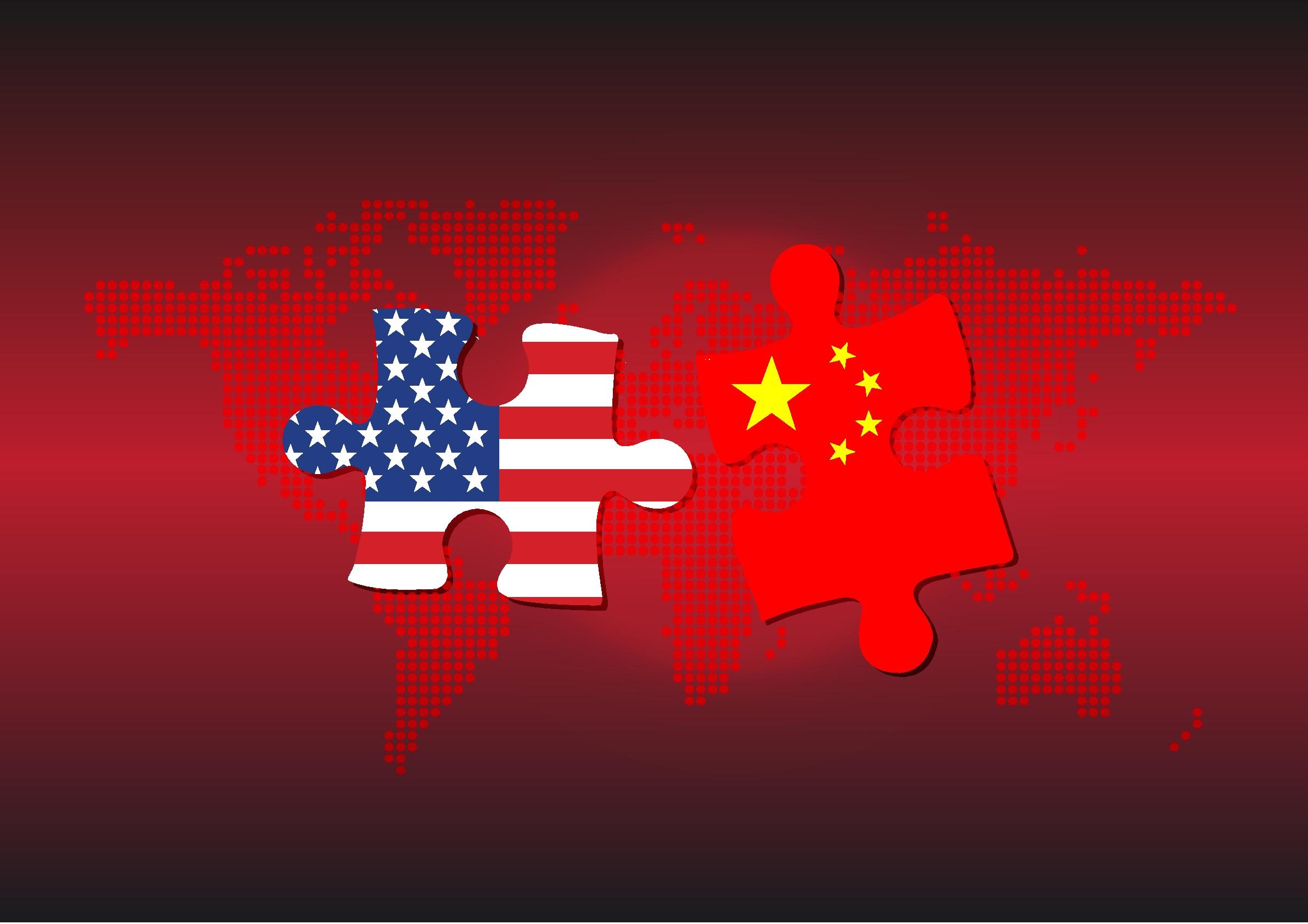
The chess match for Iran’s future didn’t start Saturday. It started the moment Washington, Moscow, and Beijing each decided — separately, quietly, and with cold calculation — that whoever controls the next Iranian government controls the next chapter of Middle Eastern history.
What happened on February 28, 2026 was simply the moment that calculation went loud.
In the pre-dawn hours of that Saturday, the United States and Israel launched a coordinated, high-intensity military operation across Iran, codenamed “Operation Epic Fury” by the Pentagon and “Operation Roaring Lion” by the Israeli Defense Forces, striking leadership compounds, military installations, missile production sites, IRGC command centers, and what remained of Iran’s nuclear infrastructure. Wikipedia Approximately 200 Israeli fighter jets struck roughly 500 military targets — the largest Israeli Air Force operation ever conducted. Opepicfury
By Sunday morning, Iranian state media confirmed what the world had been watching unfold in real time: Supreme Leader Ayatollah Ali Khamenei — the man who had held absolute power over the Islamic Republic since 1989 — was dead. Al Jazeera Also killed were the country’s defense minister, the commander of the Revolutionary Guard Corps, and the secretary of the Iranian Security Council. NPR Khamenei’s daughter, son-in-law, grandchild, and daughter-in-law were killed alongside him. Wikipedia
Thirty-seven years of theocratic iron rule, ended by precision munitions over Tehran.
Now comes the part nobody has a clean answer for.
The Three Powers Circling the Wreckage
Before the smoke had cleared over Tehran, three capitals were already doing the math.
Washington’s bet is the boldest — and the most historically loaded. Trump was explicit about it. He called on the Iranian people to “take over your government” and declared “the hour of your freedom is at hand.” NBC News That is not the language of a counter-terrorism operation. That is the language of regime change. The administration is wagering that decapitating the Islamic Republic creates the space for something new — something friendlier, more stable, and perhaps open to the kind of regional integration that could reshape the Middle East entirely.
It’s a vision with real strategic logic. An Iran no longer funding Hezbollah, no longer supplying drone technology to Russia, no longer racing toward a nuclear weapon, and no longer strangling its own people — that Iran would be transformative for global security. The question is whether a bombing campaign can actually produce it, or whether history is about to repeat itself in the most expensive way possible.
Moscow is watching this with barely concealed fury — and existential concern. Russia had spent years building Iran into a critical strategic partner. Tehran supplied Moscow with the Shahed drones it used in Ukraine. Russia provided diplomatic cover at the UN Security Council and economic oxygen as Western sanctions squeezed both nations. Intelligence reports indicated that Khamenei had even developed a contingency plan to evacuate to Moscow if his regime collapsed. Wikipedia He never got the chance to use it. With Khamenei gone and the IRGC command decimated, Russia’s southern strategic flank has just been dealt a devastating blow. Expect Moscow to move aggressively into the political vacuum — backing hardline IRGC remnants, flooding money into loyalist factions, and doing everything possible to ensure that whatever emerges from this crisis is not friendly to the West.
Beijing is playing the longest game of all, and it may be playing it best. China signed a sweeping 25-year strategic partnership with Iran in 2021 — infrastructure investment, energy cooperation, deeply discounted oil — and has been Tehran’s economic lifeline through years of Western sanctions. But here’s the thing about China’s approach: it’s never ideological. Beijing doesn’t care about Khamenei’s legacy or the IRGC’s theology. It cares about stability, resources, and access. If a new Iranian power structure offers better terms and more reliability, China will pivot — smoothly, without apology, and with a checkbook ready. No lectures on human rights. No conditions on governance. Just business. That posture has earned Beijing enormous goodwill among Iranian technocrats and business interests who are exhausted by Western moralizing, and it will serve China well no matter what government eventually takes shape.
The Succession Crisis Nobody Can Control
Here is the uncomfortable truth at the center of all of this: Khamenei had no officially appointed successor, and CIA assessments produced in the days before the strikes concluded that “hardline figures” of the IRGC would be most likely to fill the void. Wikipedia
Constitutionally, the Assembly of Experts is tasked with selecting the next Supreme Leader Wikipedia — but that’s the constitutional theory. The operational reality is messier. A temporary leadership structure has reportedly been assembled, comprising the president, the speaker of parliament, and senior establishment figures CNN — a council of survivors trying to project stability while the country absorbs the shock of losing its entire security leadership in a single morning.
The IRGC itself is not finished. Its surviving commanders have already vowed retaliation. The corps declared it would launch “the most intense offensive operation in the history of the armed forces of the Islamic Republic.” Fox News Iran’s proxy network across Iraq, Lebanon, Yemen, and Syria remains operational. This war did not end on Saturday. It entered its most unpredictable phase.
The Iranians Themselves
Here is what every foreign power keeps underestimating — and keeps paying a brutal price for ignoring: Iranians are not passive participants in their own story.
As Khamenei’s death was confirmed, celebrations broke out in Tehran, Isfahan, Karaj, Kermanshah, Qazvin, Sanandaj, and Shiraz. Wikipedia Iranians played music from their windows. They cheered in the streets. This was a man who oversaw the killing of more than 7,000 of his own citizens during weeks of mass protests that started in late December 2025. NPR For millions of Iranians, this was not a tragedy. It was a reckoning decades in the making.
But grief was real too — and that matters. Supporters mourned near the Imam Reza shrine in Mashhad, with videos showing people collapsed in grief. Wikipedia Iran is not a monolith. It is a nation of 90 million people with ancient civilizational pride, a sophisticated middle class, an educated diaspora, and a young population that is — despite everything — among the most instinctively pro-Western in the entire Muslim world. Not because of American policy, but largely in spite of it.
Any foreign power that tries to install a government in Iran rather than support an authentically Iranian political movement will fail. The 1953 CIA-backed coup that overthrew Prime Minister Mohammad Mosaddegh is not ancient history in Tehran — it is a living wound that colors every conversation about outside intentions. Washington has the most to gain from a genuinely free Iran. It also has the worst track record of getting out of its own way long enough to let that happen.
The Honest Reckoning
Airpower can destroy hardened facilities, degrade military capabilities, and kill commanders. But history gives little reason to believe that even the most sophisticated bombing campaign can topple a government and replace it with something stable. Stimson Center The administration is betting that this time is different — that the Iranian people are ready, that the regime is brittle enough, and that the combination of military decapitation and popular discontent will do what decades of sanctions could not.
Maybe. But the world has heard that argument before.
What is certain is this: Iran is now the center of gravity for global great power competition. Russia will fight to shape what comes next. China will invest in it. And the United States just went all in on a bet that will define the Trump era — and possibly the next generation of American foreign policy.
The Iranian people will ultimately decide who they trust, who they reject, and what they build from the rubble of 37 years of theocratic rule. Every empire, ancient and modern, has learned the hard way that Iranians make that decision themselves.
The question for Washington, Moscow, and Beijing isn’t whether they can control Iran’s future.
It’s whether any of them are smart enough to know they can’t.