
The Viral Video That Exposed a Larger Policy Problem
A viral video from Georgia has turned a local land dispute into a national debate over property rights and corporate subsidies.
In the footage, a young woman describes how her mother’s home in Coweta County is being taken through eminent domain so that Georgia Power can construct transmission lines serving a new hyperscale data center.
“My mom doesn’t want to move,” she says. “Why should she have to?”
The emotional impact is immediate. But the larger issue is more significant: this outcome was not inevitable.
Georgia policymakers made a series of decisions that allow private companies to externalize infrastructure costs onto homeowners, utility customers, and local communities.
The Real Story: A Policy Choice, Not a Technical Necessity
The central project, known as Project Sail, is an 829-acre data center campus reportedly associated with Prologis and Atlas Development.
The facility is expected to require hundreds of megawatts of electricity—enough to power a small city.
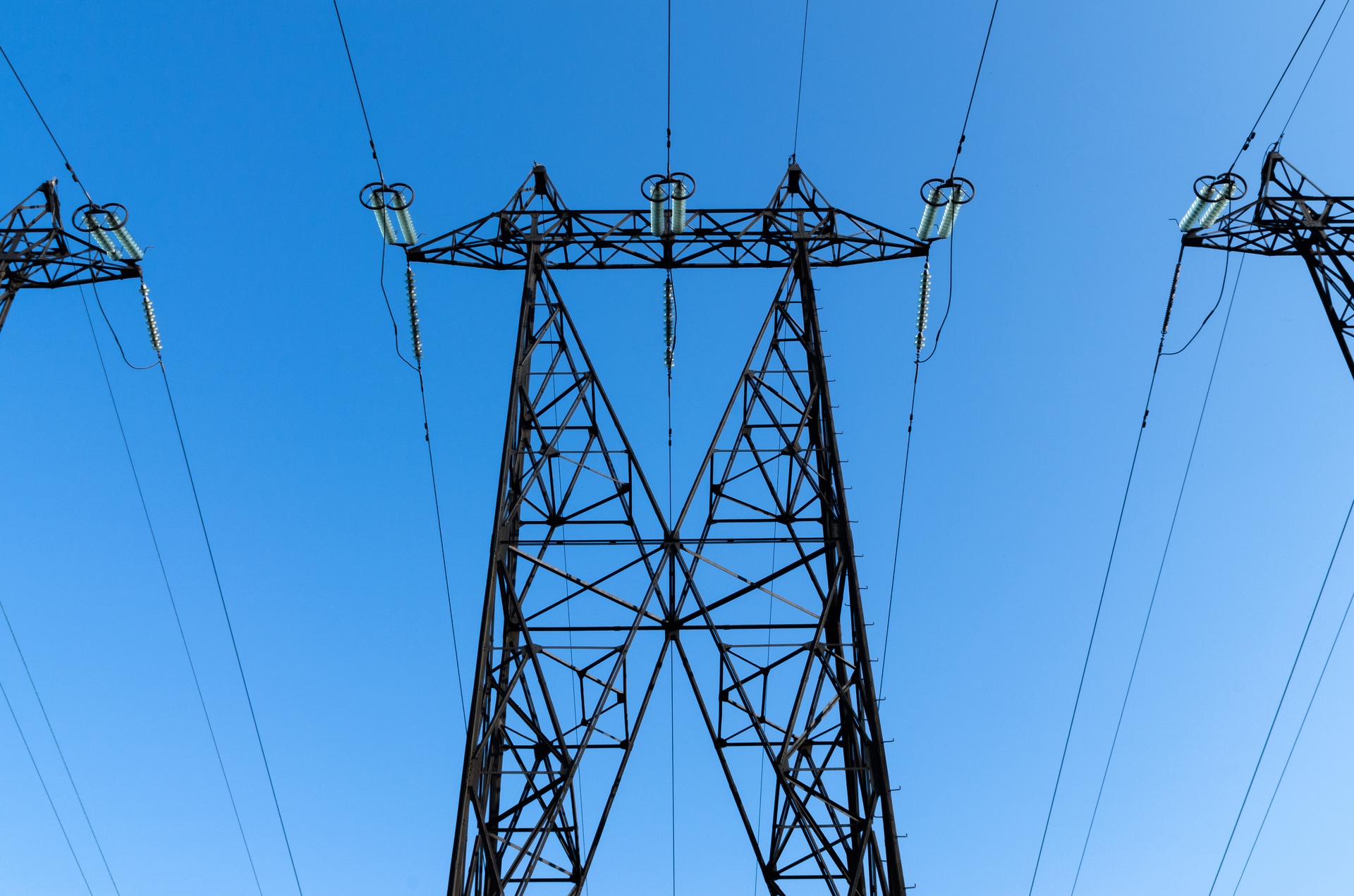
Instead of requiring the developers to build their own generation capacity, Georgia has permitted them to connect to the public grid. That decision has triggered a large-scale transmission expansion and the proposed seizure of more than 330 private properties in Coweta and Fayette County.
Had the state required on-site generation, much of this infrastructure build-out—and the associated land seizures—might not have been necessary.
How Eminent Domain Became a Corporate Development Tool
The Fifth Amendment permits governments to take private property for “public use” with just compensation.
Historically, that power was associated with roads, schools, and public facilities. But following the 2005 Kelo v. City of New London decision, courts broadly accepted economic development as a legitimate public purpose.
That precedent has enabled governments and utilities to support private projects whose primary beneficiaries are corporations rather than the public.
In Georgia, the legal structure allows utilities to invoke eminent domain to build infrastructure classified as necessary for grid reliability—even when the principal purpose is to serve a single large industrial customer.
The Subsidy Structure Behind the Project
Georgia’s data center strategy relies on multiple layers of public support:
- State and local tax incentives
- Preferential electricity pricing
- Utility-funded transmission expansion
- Cost recovery through residential ratepayers
- Eminent domain authority when landowners refuse to sell
Each mechanism reduces the developer’s capital burden while transferring costs and risks to residents.
State Senator Brandon Dolezal has publicly criticized the incentives, arguing that taxpayers are subsidizing projects that impose significant local impacts.
Why Data Centers Rarely Build Their Own Power
Large technology companies—including Microsoft, Google, Amazon, and Meta Platforms—have the financial capacity to build dedicated generation.
Options include:
- Utility-scale solar
- Wind farms
- Battery storage
- Combined-cycle natural gas
- Small modular nuclear reactors
Yet most data centers rely on grid interconnection because utilities build and finance the infrastructure, allowing developers to avoid substantial upfront costs.
The economic incentive is straightforward: when infrastructure costs are socialized, self-sufficiency becomes less attractive.
Impact on Homeowners
For affected residents, the issue is deeply personal.
Families may lose homes they have owned for decades. Others who remain nearby could experience:
- Reduced property values
- Visual degradation
- Persistent noise from transmission lines
- Ongoing vegetation clearing
Even homeowners whose properties are not taken may suffer uncompensated financial losses if adjacent land is converted into utility corridors.
Electricity Costs Shift to Ratepayers
Transmission investments are typically added to a utility’s rate base, allowing costs to be recovered from all customers along with an authorized return.
In practical terms, households across Georgia may help finance infrastructure primarily designed to support a private data center.
This cost-shifting raises a broader question: should residents subsidize industrial expansion that offers limited direct benefits to surrounding communities?
Water and Environmental Demands
Hyperscale data centers can consume hundreds of thousands to millions of gallons of water per day, depending on design and climate.
According to Lawrence Berkeley National Laboratory, data center energy and cooling demands are rising rapidly as AI workloads expand.
Project proponents argue that facilities bring tax revenue and construction activity. Critics counter that the long-term environmental footprint—including electricity demand, water consumption, and land disruption—often exceeds the public benefits.
Jobs vs. Community Displacement
One of the strongest arguments for data center development is job creation.
But modern hyperscale facilities are highly automated. Once operational, they may employ only dozens of full-time workers.
That raises an uncomfortable comparison: if a project permanently displaces hundreds of households while creating a relatively small number of long-term jobs, policymakers must determine whether the trade-off is justified.
A National Pattern Emerging
Georgia is not alone.
Across the United States, states are competing aggressively to attract AI and cloud infrastructure through tax incentives and utility concessions.
As demand for computing capacity grows, similar disputes are likely to emerge in other regions where land, water, and electricity are treated as public resources supporting private development.
Policy Options Under Debate
Critics have proposed several reforms:
- Require large data centers to fund dedicated generation or transmission.
- Restrict eminent domain when infrastructure primarily serves private customers.
- Eliminate preferential tax treatment.
- Recover all project-specific costs directly from developers.
- Impose stricter environmental and water-use standards.
Supporters argue such measures could discourage investment. Opponents contend they would simply require corporations to bear the true cost of their operations.
The Broader Question
The controversy surrounding Project Sail is not only about one family or one county.
It is about whether public institutions should use taxation, utility regulation, and eminent domain to reduce private capital costs.
The policy choices are explicit.
Georgia can continue using public mechanisms to accelerate data center development, or it can require developers to internalize a greater share of infrastructure and environmental costs.
The outcome in Coweta County illustrates the real-world consequences of that decision.
Key Takeaways
- More than 330 properties in Georgia are targeted for acquisition to support transmission infrastructure tied to Project Sail.
- The project highlights how tax incentives and utility policies can shift corporate costs onto residents.
- Transmission investments may increase costs for ratepayers statewide.
- Data centers place substantial demands on electricity and water systems.
- Critics argue that reforms could reduce or eliminate the need for property seizures.
- The dispute reflects a broader national debate over who should bear the cost of the AI infrastructure boom.