
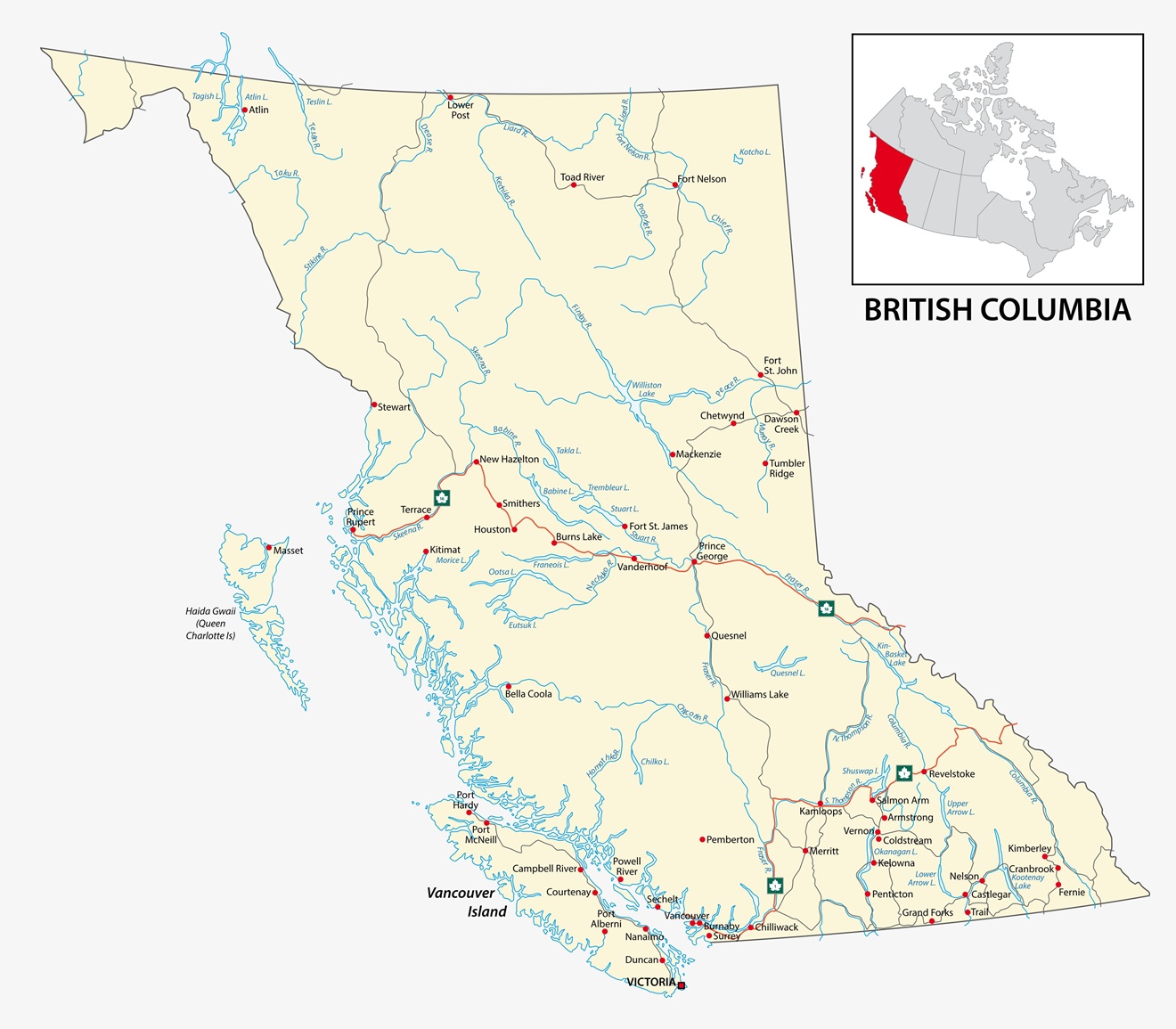
Aboriginal Title and the Public Markets: How British Columbia’s Land Tenure Crisis Reaches the Listed Mining and Oil & Gas Sector
Part Two of a NexfinityNews series. An analysis of who actually owns British Columbia’s minerals and oil and gas, the publicly traded miners and drillers exposed to unresolved Aboriginal title, the securities disclosure obligations now being applied to that exposure, and what it means for public-company audits.
By Dominick Bianco, Editor-in-Chief
NexfinityNews.com
Part One of this series examined the legal and financial implications of British Columbia’s unresolved Aboriginal title framework for individual property owners (Canada’s Indigenous Land Rights Dispute: Legal and Financial Implications for Property Owners in British Columbia, NexfinityNews, April 17, 2026). The reporting focused on a 40-household trailer park in Comox, the August 2025 Cowichan Tribes decision, and the February 2026 Musqueam rights recognition agreement covering Metro Vancouver. Those were retail-level effects.
This installment moves the lens up to the public markets. It examines the publicly traded mining and oil and gas companies whose mines, mills, leases, and producing wells sit on land subject to unresolved Aboriginal title or contested treaty rights in British Columbia. It examines what those companies are now obligated to disclose to investors, what auditors are required to evaluate, and where the legal authority to grant mineral and petroleum rights ultimately resides under Canadian law.
The conclusions are not speculative. They flow from existing securities legislation, existing International Financial Reporting Standards, and three appellate or trial-court decisions that have already been issued: Yahey v. British Columbia (2021), Gitxaala v. British Columbia (Chief Gold Commissioner) (BCSC 2023, BCCA December 2025), and Cowichan Tribes v. Canada (BCSC August 2025).
Who Owns the Minerals: The Crown, the Province, and the Unresolved Title Question
Under Canada’s constitutional division of powers, mineral rights and petroleum and natural gas rights on Crown land are owned by the provincial Crown. In British Columbia, the Province holds title to subsurface minerals and petroleum on more than 99 percent of the land base, and surface and subsurface rights have been granted separately since the 1890s. Most fee simple property titles in B.C. do not include the minerals beneath. Subsurface oil and gas rights on Crown and fee simple land are sold by Crown auction.
Mineral tenure in British Columbia is administered under the Mineral Tenure Act (RSBC 1996, c. 292). Holders of a Free Miner’s Certificate may register mineral claims through the Mineral Titles Online (MTO) system over Crown land deemed open for recording. A registered claim conveys the right to enter, occupy, and develop the surface for exploration, subject to the Mines Act and other permits. Claims must be converted to mining leases before commercial production. Petroleum and natural gas rights are administered under separate legislation and tenure auctions.
The Province has historically operated this system on the assumption that the underlying Crown title to the minerals was clear. The judicial reasoning of the past four years has called that assumption into question across roughly 95 percent of the province.
In simple terms: B.C. owns the minerals on paper. But the province’s authority to grant them was never reconciled with the Aboriginal title that was never surrendered. That is the question the courts are now answering.
Three Court Decisions That Reshaped the Calculus
Yahey v. British Columbia (2021): Cumulative Effects in the Montney
On June 29, 2021, the British Columbia Supreme Court ruled in Yahey v. British Columbia, 2021 BCSC 1287, that the cumulative impact of decades of forestry, oil and gas, hydroelectric, and agricultural authorizations had unjustifiably infringed the Treaty 8 rights of the Blueberry River First Nations. Treaty 8, signed in 1899, covers most of northeastern B.C. — including the Montney shale formation, which produces the majority of the province’s natural gas. The Court ordered the Province to negotiate cumulative-effects management mechanisms with Blueberry River and prohibited further authorizations that would worsen the infringement.
B.C. did not appeal. In October 2021 the Province committed an initial $65 million; in January 2023 it executed a final Implementation Agreement with Blueberry River and consensus agreements with four other Treaty 8 nations — Halfway River, Saulteau, Doig River, and Fort Nelson. The agreements include a $200 million land restoration fund, oil and gas royalty sharing, designated High Value protection areas where new development is barred, and disturbance caps applied to future permits.
Gitxaala v. British Columbia (BCSC 2023, BCCA December 2025): The Free-Entry Mineral Tenure Regime
In Gitxaala v. British Columbia (Chief Gold Commissioner), 2023 BCSC 1680, the B.C. Supreme Court held that the Province owes a constitutional duty to consult First Nations before registering mineral claims under the Mineral Tenure Act. The Court suspended its declaration for 18 months. The Province’s response was the Mineral Claims Consultation Framework, which took effect in March 2025 and provides batched monthly consultation notifications.
On December 5, 2025, the British Columbia Court of Appeal went further. In a 2-1 majority decision, the Court held that British Columbia’s Declaration on the Rights of Indigenous Peoples Act (DRIPA, SBC 2019, c. 44) incorporates the United Nations Declaration on the Rights of Indigenous Peoples (UNDRIP) into provincial positive law with immediate legal effect, and that the consistency of B.C. statutes and regulations with UNDRIP is justiciable in court. The majority issued a declaration that the Chief Gold Commissioner’s automatic-registration system was inconsistent with Article 32(2) of UNDRIP, which addresses free, prior, and informed consent for resource development.
Cowichan Tribes v. Canada (BCSC August 2025): Aboriginal Title Over Fee Simple Land
On August 7, 2025, in Cowichan Tribes v. Canada (Attorney General), 2025 BCSC 1490, the Court declared Aboriginal title over approximately 800 acres in Richmond, B.C., including land underlying private fee simple titles. The Court held that Crown grants of fee simple title issued in infringement of pre-existing Aboriginal title can be “defective and invalid,” and that the indefeasibility provisions of the B.C. Land Title Act do not protect against Aboriginal title. While the Cowichan did not seek to invalidate individual private titles, the legal logic of the decision — that subsurface rights and Crown royalties are part of the bundle of rights subject to reconciliation — reaches resource issuers directly. All parties are appealing.
In simple terms: Yahey froze new permits across the Montney. Gitxaala invalidated the way mineral claims are registered. Cowichan put fee simple itself on a list of things that may be defective. Public-company miners and drillers operate at the intersection of all three.
Publicly Traded Mining Companies with Material Operations in British Columbia
British Columbia is one of the most concentrated mining jurisdictions in Canada. Four of the country’s five largest copper mines are located in the province. The publicly listed companies with the most material exposure to B.C. mineral tenure include the following operators and projects, each of which depends on Crown-granted mineral leases or claims subject to the legal questions identified above:
- Anglo Teck plc — the entity formed by the merger of Anglo American and Teck Resources, which was finalizing in late 2025. Operates Highland Valley Copper near Kamloops, the largest copper mine in Canada by production. Highland Valley produced approximately 114,000 tonnes of copper in 2023 and is currently scheduled to operate to 2040.
- Hudbay Minerals Inc. (TSX: HBM, NYSE: HBM) — acquired Copper Mountain in 2023 and operates the mine south of Princeton, B.C. as Canada’s third-largest copper producer. Received amended permits for the New Ingerbelle expansion in February 2026 with projected lifetime production of 750,000 tonnes copper, 900,000 ounces gold, and 5.5 million ounces silver.
- Centerra Gold Inc. (TSX: CG, NYSE: CGAU) — operates the Mount Milligan copper-gold mine in central B.C. and the Endako molybdenum mine.
- Taseko Mines Limited (TSX: TKO, NYSE American: TGB) — operates the Gibraltar copper-molybdenum mine, the second-largest copper mine in Canada by production, scheduled to operate to 2045. Also holds the New Prosperity and Yellowhead projects.
- Imperial Metals Corporation (TSX: III) — operator of Mount Polley near Williams Lake and a 30 percent partner in Red Chris with Newmont (NYSE: NEM, TSX: NGT) holding the 70 percent operator stake.
- Newmont Corporation (NYSE: NEM, TSX: NGT) — operates Red Chris near Iskut under an Impact Benefit and Co-Management Agreement with the Tahltan Nation.
- Coeur Mining, Inc. (NYSE: CDE) — operates the Silvertip silver-zinc-lead mine in northern B.C. and acquired New Gold in a 2025 transaction valued at approximately US$7 billion, picking up the New Afton mine near Kamloops in the process.
- Skeena Gold & Silver (TSX: SKE, NYSE: SKE) — advancing the Eskay Creek redevelopment in the Golden Triangle.
- Seabridge Gold Inc. (TSX: SEA, NYSE: SA) — holds KSM, one of the largest undeveloped gold-copper deposits globally, in northwestern B.C.
- Artemis Gold Inc. (TSX-V: ARTG) — operates the Blackwater mine, which began commercial production in 2025.
- Ascot Resources Ltd. (TSX: AOT) — redeveloping the Premier mine in the Golden Triangle.
Beyond the operators, royalty and streaming companies including Wheaton Precious Metals Corp. (TSX: WPM, NYSE: WPM), Franco-Nevada Corporation (TSX: FNV, NYSE: FNV), and Royal Gold, Inc. (NASDAQ: RGLD) hold streams or royalties on B.C. assets and carry derivative exposure to any production interruption or asset impairment at the mines underlying those streams.
Publicly Traded Oil and Gas Producers in the B.C. Montney
The Montney shale formation spans approximately 130,000 square kilometres across northeastern British Columbia and northwestern Alberta. The B.C. portion produces the substantial majority of the province’s natural gas and is the focus of the publicly listed energy issuers most exposed to Treaty 8 cumulative-effects litigation:
- Tourmaline Oil Corp. (TSX: TOU) — Canada’s largest natural gas producer. Acquired Crew Energy (C$1.3 billion, including debt), Bonavista Energy (~C$1.5 billion), Todd, and Saguaro between October 2024 and June 2025, and additional Strathcona assets, building a B.C. Montney land position now reported as the source of roughly one-third of new wells in B.C.
- ARC Resources Ltd. — historically the largest pure-play Montney producer; agreed in April 2026 to be acquired by Shell plc (NYSE: SHEL, LSE: SHEL) in a transaction valued at approximately US$14 billion. Operates the Attachie, Sunrise, Dawson, and Parkland complexes in northeast B.C.
- Ovintiv Inc. (NYSE: OVV, TSX: OVV) — Denver-based; expanded its Montney footprint with the November 2025 acquisition of NuVista Energy for approximately US$2.7 billion.
- Canadian Natural Resources Limited (TSX: CNQ, NYSE: CNQ) — holds a major Montney position in addition to its oil sands operations.
- Birchcliff Energy Ltd. (TSX: BIR) — a Montney-focused natural gas producer.
- Advantage Energy Ltd. (TSX: AAV) — one of the earliest Montney gas drillers, with operations centered on Glacier.
- Petronas (state-owned Malaysian; private but a major B.C. Montney operator and partner in LNG Canada).
- Shell plc — separate from the ARC acquisition, a 40 percent partner in LNG Canada Phase 1 (operational since June 2025), the largest private-sector investment in Canadian history.
Midstream and infrastructure issuers — Pembina Pipeline Corporation (TSX: PPL, NYSE: PBA), Enbridge Inc. (TSX: ENB, NYSE: ENB), and TC Energy Corporation’s spin-off South Bow (TSX: SOBO) — carry indirect exposure through volume commitments and right-of-way agreements over land subject to the same legal framework.
In simple terms: Every barrel of Montney condensate, every megawatt from Site C, and every kilogram of B.C. copper concentrate moves through the same legal architecture that the courts are now redrawing. The producers know it. The disclosure standards are starting to catch up.
Securities Disclosure: NI 43-101, NI 51-101, NI 51-102, and the June 2025 CSA Proposal
What the Existing Rules Already Require
Public-company resource issuers in Canada are governed by a layered disclosure regime administered by the Canadian Securities Administrators (CSA), the umbrella body for the provincial and territorial securities commissions. The Canadian Securities Exchange (CSE), the Toronto Stock Exchange (TSX), and the TSX Venture Exchange each apply CSA national instruments as the floor for issuer disclosure, with additional exchange-specific listing requirements layered on top.
The principal instruments relevant to Aboriginal title and treaty rights exposure are:
- National Instrument 43-101 Standards of Disclosure for Mineral Projects — governs all public scientific and technical disclosure by mining issuers, including technical reports, mineral resource and reserve estimates, and prefeasibility and feasibility studies. Disclosure must be supported by a Qualified Person.
- National Instrument 51-101 Standards of Disclosure for Oil and Gas Activities — the parallel regime for oil and gas issuers, governing reserves disclosure, contingent resources, and supporting evaluations.
- National Instrument 51-102 Continuous Disclosure Obligations — the umbrella continuous disclosure regime, which requires issuers to disclose risk factors that would most likely influence an investor’s decision to buy the security. The annual information form (AIF) and management’s discussion and analysis (MD&A) are the primary vehicles.
- National Instrument 52-110 Audit Committees — requires audit committee oversight of financial statements, MD&A, and disclosure controls.
- Multilateral Instrument 52-109 Certification of Disclosure — requires CEO and CFO certification of annual and interim filings.
- Extractive Sector Transparency Measures Act (ESTMA) — requires every Canadian-listed entity that meets the asset, revenue, or employee thresholds to publicly report payments of C$100,000 or more to any government, including Indigenous governments, in each reporting year. Categories include taxes, royalties, fees, production entitlements, bonuses, dividends, and infrastructure payments.
Under existing NI 51-102 risk factor practice, issuers with material B.C. assets routinely disclose Aboriginal rights, duty to consult, and treaty infringement risks in their AIFs. After Yahey, that disclosure became significantly more specific for Montney-focused issuers. After Cowichan, mining issuers with assets in unceded territory began disclosing Aboriginal title litigation risk to fee simple surface holdings and to the validity of underlying tenures.
The June 12, 2025 CSA Proposal: Indigenous Disclosure Becomes a Discrete Category
On June 12, 2025, the CSA published proposed amendments that would repeal and replace NI 43-101, the Form 43-101F1 Technical Report, and Companion Policy 43-101CP. The 120-day comment period ended October 10, 2025, and CSA staff have indicated the package will be progressed in 2026. The most significant change for the purpose of this analysis is the addition of an explicit, mandatory technical-report category covering permits, agreements, and negotiations with Indigenous peoples, rights holders, or communities.
Under the proposal, the technical report (the foundational disclosure document for any material mineral project) would require:
- An itemized list of all permits or agreements required to advance the project, including any required as a matter of law with respect to Indigenous peoples.
- The status and dates of negotiations with Indigenous peoples affecting the project.
- Disclosure of agreements entered into in connection with such negotiations.
- Where the project sits within overlapping or competing land claims, disclosure of the frequency and depth of negotiations with each affected nation.
- A current personal inspection by a Qualified Person, with the prior ability to defer the inspection removed.
In parallel, B.C. continues to operate under its existing Mineral Claims Consultation Framework, and the Province has indicated that broader Mineral Tenure Act reform remains on the legislative agenda following the BCCA decision in Gitxaala. As of the date of this article, B.C. Premier David Eby has signalled the Province may seek leave to appeal Gitxaala to the Supreme Court of Canada or amend DRIPA to limit the role of the courts. Either path would take years.
In simple terms: Mining issuers can no longer treat Indigenous consultation as a footnote in the AIF. Under the proposed NI 43-101 rewrite, every material technical report will need to lay out, in writing, exactly which First Nations have a say, what has been agreed, and what has not.
The Audit Implications: IAS 37, IAS 36, Going Concern, and Key Audit Matters
Canadian public-company auditors apply Canadian Auditing Standards (CAS), which are converged with International Standards on Auditing (ISA). The financial statements they audit are prepared under International Financial Reporting Standards (IFRS) for most reporting issuers. Aboriginal title and treaty cumulative-effects litigation crystallizes a series of specific audit considerations that an engagement partner is already required to evaluate.
IAS 37 — Provisions, Contingent Liabilities, and Contingent Assets
IAS 37 distinguishes between a provision (recognized on the balance sheet when an outflow is probable and reliably measurable) and a contingent liability (disclosed in the notes when an outflow is possible but not probable, or when a reliable estimate cannot be made). Aboriginal title litigation typically falls into the contingent liability category early on and may migrate to a recognized provision as the case advances. Disclosure is required unless the possibility of outflow is remote, generally interpreted as a five to ten percent likelihood threshold.
For a B.C.-exposed issuer, the relevant questions an auditor must work through with management include whether existing or threatened litigation — directly against the Crown, with the issuer joined as an interested or unnamed party — has reached a stage where a contingent liability disclosure is required, and whether the cumulative-effects framework (Yahey-style restoration funds, royalty sharing, capped disturbance) creates a constructive obligation that warrants a recognized provision.
IAS 36 — Impairment of Assets
IAS 36 requires impairment testing of long-lived assets when there is an indicator that the carrying amount may not be recoverable. A court declaration that the underlying tenure is invalid, an injunction halting permitting, or the imposition of disturbance caps are textbook impairment indicators for a mine, a gas plant, or a producing well pad. Recoverable amount is the higher of fair value less costs of disposal and value in use, calculated using forward production curves and discount rates that must reflect the additional risk introduced by the unresolved title question.
After Yahey, several Montney operators reduced or suspended drilling programs in Blueberry River territory pending the Implementation Agreement. After Gitxaala (BCCA), exploration issuers staking new claims in territory that had not been consulted faced an additional impairment test on the carrying value of those claims.
Going Concern (IAS 1, CAS 570)
For smaller pure-play exploration or development issuers — typically CSE-listed or TSX-V juniors — the loss of access to a single material project can constitute a going-concern indicator. Auditors are required under CAS 570 to evaluate management’s assessment of the entity’s ability to continue as a going concern for at least twelve months from the financial statement date. Where Aboriginal title or consultation litigation could remove the issuer’s only material asset, a going-concern emphasis-of-matter paragraph or, in more severe cases, a qualified or adverse opinion may be warranted.
CAS 701 — Key Audit Matters
CAS 701, applicable to listed entities, requires auditors to communicate Key Audit Matters (KAMs) in the auditor’s report. KAMs are the matters that, in the auditor’s professional judgment, were of most significance in the audit. For B.C.-exposed mining and oil and gas issuers, recoverability of mining and petroleum assets, valuation of provisions for environmental and Indigenous-related obligations, and the assessment of contingent liabilities arising from Aboriginal title and treaty infringement litigation are increasingly being identified as KAMs by auditors of TSX, CSE, and TSX-V mining and energy issuers.
IFRS 6 and Exploration Asset Capitalization
Junior exploration issuers that capitalize exploration and evaluation expenditures under IFRS 6 must reassess those balances when title to the underlying claims is challenged. After Gitxaala, claims registered without prior consultation in identified territories carry an additional risk of being challenged or restructured under future MTA reform. Auditors are required to evaluate whether the carrying amount of those exploration assets remains supportable.
In simple terms: Auditors are not lawyers, but they are required to assess the financial-reporting consequences of the legal environment. After 2025, the legal environment in B.C. became materially harder to ignore in any audit of a mining or oil and gas issuer with provincial exposure.
The Mineral Tenure Act Reform and the Mineral Claims Consultation Framework
B.C.’s Declaration on the Rights of Indigenous Peoples Act 2022 Action Plan committed the Province to cooperate with First Nations on modernizing the Mineral Tenure Act. Almost four years on, that work has not produced legislation. In the interim, the Province deployed the Mineral Claims Consultation Framework (MCCF), which became operational in March 2025. Under the MCCF, the Mineral Titles Branch issues batched monthly notifications to potentially affected First Nations of new claim applications in their asserted territory. The Province’s public reporting indicates no claims have been declined for consultation reasons, with declines limited to administrative matters under section 67 of the Mineral Tenure Act.
First Nations and civil society organizations have publicly stated that the MCCF falls short of the constitutional duty to consult and the UNDRIP free, prior, and informed consent standard. Industry associations including the Association for Mineral Exploration have asked for predictability. Both positions appear in the public record on the Province’s consultation portal.
The BCCA decision in Gitxaala has now made the consistency of the existing regime with UNDRIP a justiciable question. The reform path most aligned with that ruling would: register new claims only where affected First Nations have provided consent; allow First Nations-led identification of areas open or closed to claims through land use plans, IPCAs (Indigenous Protected and Conserved Areas), and consent-based decision-making; and provide a legal mechanism for revoking claims previously granted without consent in defined circumstances.
Whether the Province moves toward that model, appeals to the Supreme Court of Canada, or amends DRIPA to constrain the courts is the central regulatory question facing B.C. mining issuers in 2026.
Practical Consequences: Financing, M&A, Royalty Streams, and Investor Diligence
Project Finance and Reserve-Based Lending
Project finance lenders to mines and reserve-based lenders to oil and gas producers rely on the security of underlying tenure. The same title-security analysis identified in Part One in connection with residential mortgages applies, with greater complexity, at the project level. Lenders typically require legal opinions confirming the validity of underlying mineral tenure or petroleum and natural gas leases. After Gitxaala, those opinions in B.C. require additional qualifications regarding consultation status and pending UNDRIP-related challenges. After Cowichan, the analysis extends to the validity of any fee simple surface holdings comprising part of the project footprint.
Mergers and Acquisitions
The B.C. mining sector has been highly active. The Anglo American – Teck Resources merger, Coeur Mining’s acquisition of New Gold, Newmont’s acquisition of Newcrest (and indirectly the 70 percent Red Chris stake), and Hudbay’s 2023 acquisition of Copper Mountain all involved due diligence on First Nations consultation status, existing impact-benefit agreements, and outstanding litigation. The Investment Canada Act review of foreign acquisitions of significant mineral assets includes a national-security review that, in current practice, considers the strategic importance of the asset to Canada’s critical mineral supply chain.
Energy M&A in the Montney has accelerated. Tourmaline’s acquisitions of Crew Energy, Bonavista, Todd, and Saguaro, Ovintiv’s acquisition of NuVista, and Shell’s pending acquisition of ARC Resources all involve due diligence on cumulative-effects exposure under the Yahey framework, including disturbance allocation under any successor regime.
Royalty and Streaming Companies
Wheaton Precious Metals, Franco-Nevada, Royal Gold, and OR Royalties (TSX: OR) hold royalties or streams on B.C. assets. Their financial results depend on production at properties operated by third parties. Where the operator faces a permitting freeze or impairment, the royalty company’s recoverability of its own royalty asset comes under audit scrutiny.
Investor Diligence
Institutional investors performing due diligence on B.C.-exposed issuers now routinely review: First Nations consultation logs and impact-benefit agreement terms; NI 43-101 technical-report disclosure of permits required and agreements in place; AIF risk factor sections; provisions, contingencies, and KAMs in the audited financial statements; and any disclosed litigation in which the Crown is a defendant and the issuer’s tenure could be affected as collateral consequence.
Outlook
The capital markets have generally accommodated the cumulative-effects framework that emerged from Yahey. Production in the B.C. Montney has reached record levels under the Implementation Agreement, and the M&A activity of 2024 and 2025 indicates continued investor confidence. The mining sector has likewise continued to deploy capital, including major M&A and brownfield expansions such as Hudbay’s New Ingerbelle.
What changes in 2026 is the disclosure baseline. Once the proposed NI 43-101 amendments take effect — expected after a final CSA notice in 2026 — every material technical report will include explicit Indigenous-consultation disclosure as a standalone section. Once the BCCA decision in Gitxaala stands or is reversed by the Supreme Court of Canada, the legal status of UNDRIP within B.C.’s positive law will be settled. Once Cowichan is heard on appeal, the boundary between Aboriginal title and fee simple ownership in unceded territory will be clarified. Each of these developments will work its way into AIFs, MD&As, audit reports, and ultimately equity valuations.
The legal authority to grant mineral and petroleum rights in British Columbia rests with the provincial Crown. The constitutional foundation of that authority rests on the assumption that Aboriginal title was lawfully extinguished or never existed in the granted area. On 95 percent of the province, that assumption was never tested. It is being tested now — in the courts, in the technical reports, and on the audited balance sheet.
About the Author
Dominick Bianco is Editor-in-Chief of NexfinityNews.com, a veteran-owned independent news publication covering politics, law, economics, and national security. A former U.S. Marine Corps Corporal (Communications/Electronics), Bianco founded NexfinityNews as a platform for accountability journalism on issues affecting ordinary Americans and Canadians. He is also founder and CEO of Kubera Technology Holdings Corp.
This article is Part Two of a NexfinityNews series on Canada’s Indigenous land rights framework. Part One — Canada’s Indigenous Land Rights Dispute: Legal and Financial Implications for Property Owners in British Columbia — was published April 17, 2026.
This article has been reviewed by the NexfinityNews Editorial Team.
Sources
[1] Yahey v. British Columbia, 2021 BCSC 1287 (BC Supreme Court, June 29, 2021).
[2] Gitxaala v. British Columbia (Chief Gold Commissioner), 2023 BCSC 1680 (BC Supreme Court, September 26, 2023).
[3] Gitxaala v. British Columbia (Chief Gold Commissioner), 2025 BCCA (BC Court of Appeal, December 5, 2025). Blakes Bulletin, “B.C. Court of Appeal Rules Previous Free Entry Mineral Tenure Regime Inconsistent With UNDRIP,” blakes.com, December 2025.
[4] Cowichan Tribes v. Canada (Attorney General), 2025 BCSC 1490 (BC Supreme Court, August 7, 2025).
[5] Mining.com, “British Columbia Court Rules Indigenous Rights Legally Enforceable in Mineral Claims Staking,” mining.com, December 2025.
[6] Osler, Hoskin & Harcourt LLP, “UNDRIP in B.C. Law: Court of Appeal Confirms Immediate Effect and Targets Mineral Claim Regime,” osler.com, January 2026.
[7] Fasken Martineau DuMoulin LLP, “Consultation and Mineral Claim Staking: The Gitxaala Case,” fasken.com, September 2023; updated analysis, January 2026.
[8] BD&P Law, “BC Supreme Court’s Recent Cowichan Decision,” bdplaw.com, October 2025.
[9] Cassels Brock & Blackwell LLP, “Navigating the Uncertainty Caused by the Cowichan Decision,” cassels.com, November 2025.
[10] Government of British Columbia, “Mineral Claims Consultation Framework (MCCF),” gov.bc.ca, March 2025.
[11] Government of British Columbia, “Mineral & Placer Rights in British Columbia,” Ministry of Energy, Mines and Low Carbon Innovation, gov.bc.ca.
[12] Mineral Tenure Act, RSBC 1996, c. 292; Petroleum and Natural Gas Act, RSBC 1996, c. 361; Land Act, RSBC 1996, c. 245; Mines Act, RSBC 1996, c. 293.
[13] Declaration on the Rights of Indigenous Peoples Act, SBC 2019, c. 44.
[14] Canadian Securities Administrators, “Notice and Request for Comment — Proposed Repeal and Replacement of National Instrument 43-101 Standards of Disclosure for Mineral Projects,” securities-administrators.ca, June 12, 2025.
[15] McMillan LLP, “CSA Proposes Changes to NI 43-101: Extracting What This Means for Mining Issuers and Canada’s Mining Disclosure Regime,” mcmillan.ca, July 2025.
[16] Goodmans LLP, “Modernizing NI 43-101: CSA Propose Sweeping Reforms to Mining Disclosure Standards,” goodmans.ca, July 2025.
[17] Aird & Berlis LLP, “Breaking New Ground: Proposed Overhaul of Canadian Disclosure Requirements for Mining Issuers,” airdberlis.com, March 2025.
[18] Aird & Berlis LLP, “A New Era for the CSE: What Issuers Need to Know,” airdberlis.com, May 2023.
[19] Dickinson Wright LLP, “Amendments to Canadian Securities Exchange Policies,” dickinson-wright.com, 2023.
[20] Canadian Securities Exchange, “Listing on the CSE,” issuers.thecse.com.
[21] BC Securities Commission, “Mining — Issuer Regulation Guidance,” bcsc.bc.ca.
[22] National Instrument 51-102 Continuous Disclosure Obligations; National Instrument 51-101 Standards of Disclosure for Oil and Gas Activities; Multilateral Instrument 52-110 Audit Committees; Multilateral Instrument 52-109 Certification of Disclosure in Issuers’ Annual and Interim Filings.
[23] Extractive Sector Transparency Measures Act, S.C. 2014, c. 39, s. 376.
[24] International Accounting Standards Board, IAS 37 Provisions, Contingent Liabilities and Contingent Assets; IAS 36 Impairment of Assets; IAS 1 Presentation of Financial Statements; IFRS 6 Exploration for and Evaluation of Mineral Resources, ifrs.org.
[25] Canadian Auditing Standards (CAS) 570 Going Concern; CAS 701 Communicating Key Audit Matters in the Independent Auditor’s Report.
[26] Mining Association of British Columbia, “Members,” mining.bc.ca; Junior Mining Network, “British Columbia Mining Stocks,” juniorminingnetwork.com.
[27] Mining Technology, “The Five Largest Copper Mines in Operation in Canada,” mining-technology.com.
[28] Resource Works, “Tourmaline Ascends in the Montney, B.C.’s Crown Jewel of Natural Resources,” resourceworks.com, December 2025.
[29] Reuters / BNN Bloomberg, “Why Canada’s Hottest Shale Play Is Catching the Eye of US Producers,” bnnbloomberg.ca, December 18, 2025.
[30] Fortune, “Shell Reverses Course in Canada and Buys ARC Resources for $14 Billion,” fortune.com, April 2026.
[31] Norton Rose Fulbright, “BC’s Changing Regulatory Landscape: BC and Treaty 8 First Nations Negotiate Collaborative Approach to Address Cumulative Effects of Resource Development,” nortonrosefulbright.com, March 2023.
[32] Blueberry River First Nations, “Treaty Case & Implementation Agreement,” blueberryfn.com.
[33] Government of British Columbia, “Province, Blueberry River First Nations Reach Agreement,” news.gov.bc.ca, January 2023.
[34] Canada Climate Law Initiative, “Lessons from Gitxaala v. British Columbia,” ccli.ubc.ca, February 2026.
[35] West Coast Environmental Law, “Gitxaala v. British Columbia: What the Court of Appeal Decision Means for Indigenous Rights & BC’s Mining Laws,” wcel.org, January 2026.
[36] Government of British Columbia, “Minister’s Statement on Cowichan Tribes Court Decision,” news.gov.bc.ca, August 2025.
[37] Bianco, Dominick. “Canada’s Indigenous Land Rights Dispute: Legal and Financial Implications for Property Owners in British Columbia.” NexfinityNews.com, April 17, 2026.
Further Reading
Securities Disclosure
- CSA Notice 43-401 Consultation on National Instrument 43-101, securities-administrators.ca, April 2022.
- Maxis Law, “Preparing for Climate-Related Disclosure Requirements for Reporting Issuers,” maxislaw.com, 2024.
- CSA Staff Notice 51-358 Reporting of Climate Change-related Risks.
Aboriginal Title and Mineral Tenure
- Gowling WLG, “BC Court Orders Amendments to BC’s Free Entry Mineral Tenure Regime,” gowlingwlg.com.
- Pazder Law, “When Is Your Land Not Your Land? Aboriginal Title vs. Fee Simple Title in British Columbia,” pazderlaw.com, November 2025.
- Chambers and Partners Mining 2025 — Canada Practice Guide.
Treaty 8 Cumulative Effects
- Energy Regulation Quarterly, “British Columbia Supreme Court Significantly Expands Indigenous Rights,” energyregulationquarterly.ca.
- ABLawg, “Blueberry River First Nation and the Piecemeal Infringement of Treaty 8,” ablawg.ca, July 2021.
Industry Context
- Ahead of the Herd, “The Mining Industry Is on the Hunt,” aheadoftheherd.com, January 2026.
- Canadian Mining & Energy, “Top Active Copper Mines in Canada (Updated 2026),” miningandenergy.ca.