
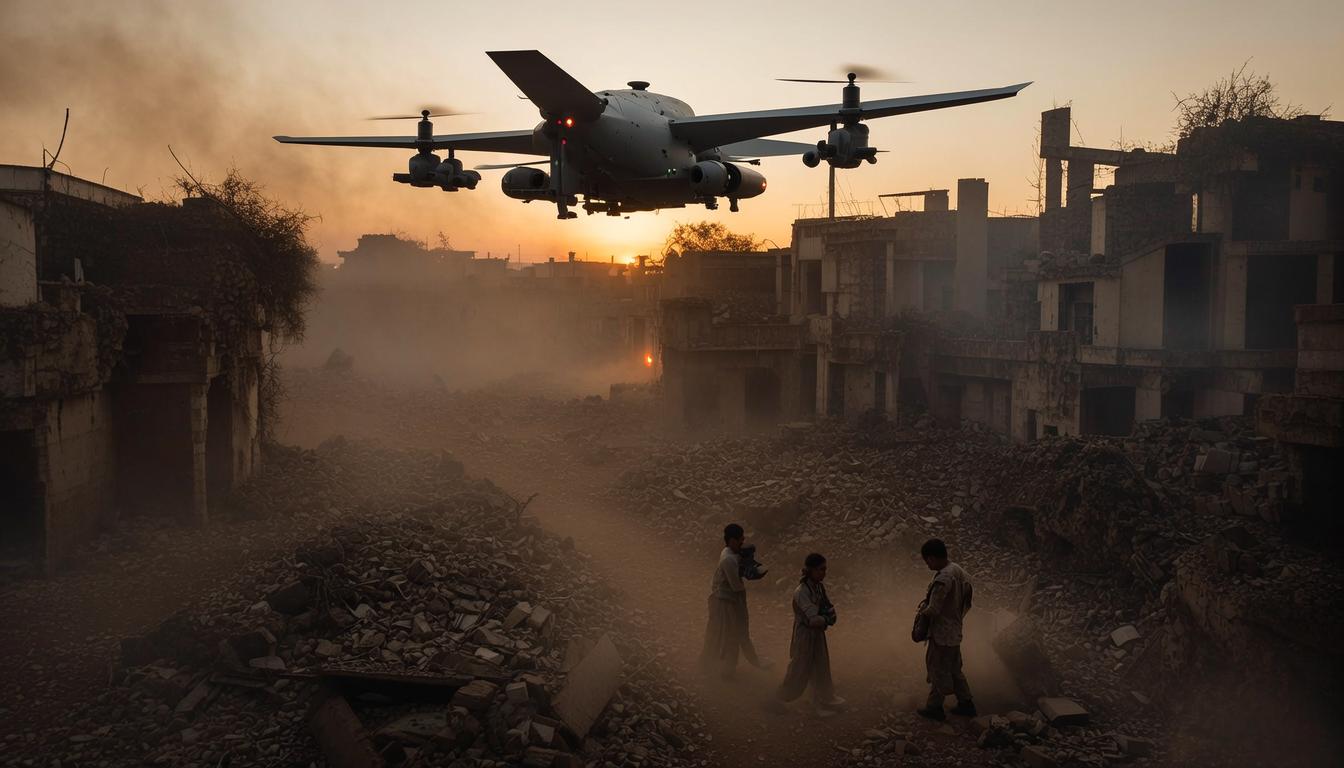
Venezuela Flipped, Iran Struck, Cuba Cornered — And Greenland in the Crosshairs
In a span of barely two months, Donald Trump has done something no American president has attempted in a generation — he has physically redrawn the geopolitical map of the Western Hemisphere and the Middle East, not with diplomacy, not with sanctions alone, but with Delta Force commandos, Tomahawk cruise missiles, and the sheer audacity of a man who genuinely believes the rules of the international order are for other people.
Venezuela’s Nicolás Maduro, the cocaine-dealing socialist who turned the world’s largest oil reserves into a humanitarian catastrophe, is now sitting in a New York holding cell awaiting trial. Iran’s Supreme Leader Ali Khamenei, the man who bankrolled Hezbollah, Hamas, and the Houthis for four decades, is dead — killed in a joint U.S.-Israeli airstrike on his compound in Tehran. Cuba, long propped up by Venezuelan oil it can no longer access, is wobbling on legs that haven’t been this unsteady since the Soviet Union dissolved. And Greenland — the world’s largest island, sitting atop the Arctic’s most strategically critical chokepoint — is at the center of a diplomatic tug-of-war that has rattled the NATO alliance to its core.
Love him or hate him, this is the Trump Doctrine in full bloom. And the real question the world is wrestling with right now isn’t whether he went too far. It’s what comes next — and how Beijing and Moscow respond to watching their carefully constructed networks of influence dismantled, one regime at a time.
Venezuela: The Blueprint
“Venezuela is working.” — President Trump, March 2026, framing it as the model for what comes next.
Let’s start where it all began — Caracas. On January 3rd, 2026, U.S. Army Delta Force commandos swooped into the Venezuelan capital and yanked Nicolás Maduro out of his own residence, bundling him and his wife onto a transport headed for New York to face narco-terrorism charges. The Trump administration framed it as a law enforcement operation, not a military invasion. That distinction matters enormously — legally, diplomatically, and politically. But on the streets of Caracas, the distinction felt a lot like semantics.
The seeds of this moment had been planted months earlier. Operation Southern Spear began in August 2025, officially a counter-narcotics surge in the Caribbean. By September, U.S. military strikes were hitting suspected drug boats off Venezuela’s coast. By December, sanctioned oil tankers were being seized as far away as the North Atlantic. By the time the Delta Force operation went down, it wasn’t a surprise — it was the logical conclusion of a months-long escalation campaign that had already killed over a hundred people at sea.
Trump’s stated rationale evolved almost weekly: fighting drugs, recovering stolen oil, protecting the Venezuelan people. But the strategic logic beneath all of it was consistent. Venezuela sits on the world’s largest proven oil reserves — 17% of the global total, roughly 300 billion barrels. For years, roughly 80% of that oil had been flowing to China. Trump saw that and saw a lever. Pull Maduro out, partner exclusively with U.S. oil companies, and you simultaneously enrich American industry, deprive Beijing of a critical energy supply chain, and eliminate a regime that had become a hub for Iranian agents, Russian intelligence assets, Cuban soldiers, and narco-terror networks. As Interior Secretary Doug Burgum bluntly put it during a visit to Caracas: ‘One of the highest strategic national security threats to any democratic nation right now is China’s control of critical minerals.’ Venezuela, he added, likely has those minerals too.
The results, at least on paper, have been swift. The interim Venezuelan government under Delcy Rodriguez has passed laws making it easier for U.S. oil companies to operate, expelled Chinese, Russian, Iranian, and Cuban agents, and agreed to partner exclusively with Washington on oil production. Trump, never one for understatement, declared ‘Venezuela is working’ and began holding it up as the model — the template — for what regime adjustment looks like in the Trump era. He even floated the idea that a post-war Iran could operate the same way, like a franchise arrangement where the U.S. holds the master lease.
Critics, and there are many, call this neo-imperialism dressed up in law enforcement clothing. The Center for International Policy called it ‘an illegal and reckless act of war.’ Legal scholars have noted that Congress never authorized any of it. Venezuela’s own opposition figures were split — Nobel Peace Prize winner María Corina Machado celebrated and called the operation ‘historic,’ while other opposition voices worried about what kind of country they were inheriting. Analysts at the War on the Rocks website argued that removing Maduro didn’t dissolve the authoritarian pyramid beneath him — it just changed who sat at the top.
All fair points. But Trump wasn’t finished.
Iran: The Headline That Changed Everything
If Venezuela was the test run, Iran was the statement. And it is a statement that will echo through geopolitical history for decades.
On February 28th, 2026, the United States and Israel launched Operation Epic Fury — a coordinated, multi-day assault on Iran’s military infrastructure, nuclear facilities, missile sites, and leadership compound. The operation killed Supreme Leader Ali Khamenei and dozens of senior IRGC commanders. Iran’s navy was effectively annihilated. Its ballistic missile program was set back by years. Its nuclear program, already under intense pressure, was severely disrupted. The 85-year-old supreme leader who had ruled Iran since 1989 was gone.
Trump announced the strikes from Mar-a-Lago in a late-night Truth Social video, framing the operation around three overlapping justifications: Iran’s near-term nuclear capability, its ballistic missile arsenal that could soon reach U.S. bases, and its violent crackdown on massive anti-government protests that had erupted across Iran starting in January 2026. ‘The hour of your freedom is at hand,’ Trump told the Iranian people. Defense Secretary Pete Hegseth tried to walk back the regime-change framing the next morning — ‘This is not a so-called regime change war, but the regime sure did change’ — a line that manages to be simultaneously defensive and triumphant in the same breath.
The backstory is important. Iran and the United States had been engaged in indirect nuclear talks in Oman and Geneva through February, with Iranian Foreign Minister Araghchi publicly calling the diplomatic window ‘a historic opportunity.’ But the third round of talks in Geneva on February 26th fell apart. Trump had issued a 10-day ultimatum. When it expired, so did the diplomatic track. Two days later, the bombs fell.
The fallout has been exactly as chaotic as any regional war in the Middle East tends to be. Iran launched retaliatory strikes against Israel, U.S. bases in the region, and civilian infrastructure in Kuwait, the UAE, Oman, and Azerbaijan. Hezbollah crossed back into Lebanon. Saudi Crown Prince MBS, who reportedly pushed Trump hard to strike, is now watching the neighborhood burn. Turkey’s Erdogan is furious, blaming Netanyahu. A congressional War Powers Resolution to halt the operation failed along mostly party lines. And the question of what exactly ‘winning’ looks like in Iran remains genuinely, troublingly unanswered.
Cuba: On the Brink
“This communist dictatorship in Cuba — their days are numbered.” — Senator Lindsey Graham, March 2, 2026
While Washington absorbs the magnitude of what just happened in Iran, the island nation 90 miles off the coast of Florida is quietly imploding — and everyone in the Trump orbit is watching with barely concealed satisfaction.
Cuba’s lifeline was Venezuela. Venezuelan oil kept the lights on, kept the buses running, kept the hotels stocked with enough jet fuel to land tourists. When Trump captured Maduro and cut off Venezuela’s oil exports to Cuba in January, he effectively put a stranglehold on Havana that decades of American sanctions had never quite achieved. The blackouts are worsening. Airlines are canceling flights. Hotels built at enormous public expense sit empty. Former political prisoners are holding public demonstrations in the streets.
Senator Lindsey Graham put it plainly the Sunday after the Iran strikes: ‘Cuba’s next, they’re gonna fall. This communist dictatorship in Cuba, their days are numbered.’ Trump has been slightly more measured — ‘We want to finish this one [Iran] first’ — but left little ambiguity about direction: ‘That will be just a question of time.’
What makes Cuba different from Venezuela and Iran is the strategic prize. The oil in Venezuela was the obvious target. The nuclear program and proxy networks drove the Iran decision. With Cuba, analysts say the real objective is evicting China and Russia. The White House itself has publicly noted that Cuba hosts Russia’s largest overseas signals intelligence facility — essentially a massive spy station aimed directly at the United States — and has been quietly deepening defense and intelligence cooperation with Beijing. In Trump’s 2025 National Security Strategy, eliminating adversarial ‘forward operating bases’ in the Western Hemisphere is an explicit priority.
Rumors are swirling that Secretary of State Marco Rubio — himself Cuban-American, with a personal score to settle with Havana’s communist government — is in back-channel talks with Raúl Castro’s grandson, feeling out whether a negotiated off-ramp exists. Cuban economists believe the regime’s core military leadership, which controls the economy, may be open to reforms. Release the political prisoners. Allow freedom of expression. Cooperate with U.S. counternarcotics efforts. Kick out the Chinese and Russians. Whether that’s enough for Trump and the Republican hawks in Congress who are calling for the regime to be ‘relegated to the dustbin of history’ is another question entirely.
Greenland: The Wildcard at the Top of the World
And then there’s Greenland. Which is, depending on your perspective, either the most brilliant strategic play in American foreign policy since the Louisiana Purchase, or the most destabilizing threat to the NATO alliance since its founding.
Trump has been making noise about Greenland since his first term, but after the Maduro capture in January, those noises transformed into demands. ‘We are going to do something on Greenland, whether they like it or not,’ Trump told reporters bluntly. ‘I would like to make a deal the easy way. But if we don’t do it the easy way, we’re going to do it the hard way.’
The strategic logic is real, whatever you think of the method. Greenland sits at the center of the GIUK Gap — the chokepoint connecting the Arctic, North Atlantic, and Europe that is increasingly critical as melting ice opens new shipping lanes and military corridors. Russia already considers the Arctic a ‘zone of national interests’ and has the world’s largest ice-capable naval fleet. China declared itself a ‘near-Arctic state’ in 2018 and has been pursuing its ‘Polar Silk Road’ vision ever since. Beijing even holds a financial stake in one of Greenland’s major rare earth mining projects. Trump’s argument — that if the United States doesn’t lock down Greenland, Russia or China will find a way to — is not entirely paranoid. Former NATO Supreme Allied Commander General Philip Breedlove called guaranteeing a western-aligned Greenland ‘extremely important,’ even while criticizing Trump’s approach.
What Trump eventually secured — after threatening tariffs on Denmark, Norway, Sweden, Germany, France, the UK, and Finland — appears to be a framework deal with NATO giving the U.S. total and permanent access to Greenland, along with mineral rights. Whether that morphs into something closer to annexation over time remains an open question. Greenland’s own leaders insist their territory is not for sale. Denmark’s Prime Minister Frederiksen has been explicit: ‘Greenland is not for sale.’ But the Greenlanders themselves are divided. Many prefer independence to being absorbed by either Denmark or the United States. Some see Trump’s interest as leverage to finally wrest real autonomy from Copenhagen. And most of Greenland’s residents, if forced to choose between Washington and Beijing, would pick Washington.
One former Royal Danish Navy Admiral perhaps put it best: ‘Trump’s approach may be wacky, but it does send a serious message to Russia and China — don’t mess with us on Greenland.’
China and Russia: Reading the Room
So what are Beijing and Moscow actually thinking as they watch all of this unfold?
China’s immediate reaction to Maduro’s capture was to call itself ‘deeply shocked.’ Beijing’s foreign ministry condemned the strikes. But analysts noted the measured tone — Venezuela’s oil, while useful, only represented about 4% of China’s total petroleum imports. The real sting was strategic: China had spent years building influence in Venezuela through oil deals, infrastructure investment, and military cooperation, and it was erased in a single morning. The Trump demand that Venezuela sever all ties with Beijing and partner exclusively with U.S. oil companies was a direct shot at China’s Latin American strategy.
On Iran, Beijing faces a more complex calculus. China had been Iran’s largest oil customer and a critical economic lifeline as American sanctions tightened. A post-Khamenei Iran in chaos or under American influence is a significant blow to China’s 25-year strategic partnership deal with Tehran. Chatham House analysts noted something else worth watching: ‘A weaker Iran will allow greater Chinese influence’ — meaning Beijing may actually see opportunity in the rubble, attempting to position itself as the stable economic partner for whatever government eventually emerges. China’s long game in the Middle East has always been about oil access and infrastructure, not ideology.
On Greenland, China’s response has been pointed but measured. Chinese foreign ministry spokesperson Mao Ning noted that ‘China’s activities in the Arctic are aimed at promoting peace, stability and sustainable development in the region and are in accordance with international law,’ adding that ‘the U.S. should not pursue its own interests by using other countries as a pretext.’ It is a careful, diplomatic objection — China knows it can’t militarily contest Greenland, but it is watching Arctic mineral rights very closely.
Russia’s posture is more visceral. Kremlin spokesman Dmitry Peskov declared the Arctic ‘a zone of our national interests’ and indicated Russia’s opposition to any change in Greenland’s status. But Russia, bogged down in Ukraine and under the weight of years of sanctions, has limited tools to push back against American military dominance in the Western Hemisphere or the Middle East. The loss of Iran — a critical node in Russia’s network of anti-Western aligned states — is a genuine strategic setback. Russia and Iran had deepened military cooperation significantly since 2022, with Iran supplying drones for use in Ukraine. That pipeline is now under serious threat.
What both China and Russia are doing, underneath the diplomatic language, is recalibrating. They are updating their models of what Trump is actually willing to do. Both had long assumed American military intervention was constrained by congressional oversight, international law concerns, and political blowback at home. The Venezuela and Iran operations suggest those constraints, while real, are not immovable. That recalibration will shape everything from Taiwan to Ukraine to the South China Sea.
The Trump Doctrine: What It Means Going Forward
Council on Foreign Relations senior fellow Charles Kupchan put it plainly: Trump’s ‘America First’ rhetoric masks what is functionally a neo-imperialist streak — a revival of the Monroe Doctrine combined with a 19th-century instinct for hemispheric dominance and a willingness to use military force as a business tool. The 2025 National Security Strategy explicitly endorses this framing, calling for U.S. ‘preeminence in the Western Hemisphere’ and the elimination of ‘hostile foreign incursion or ownership of key assets.’
Whether this constitutes a coherent grand strategy or a series of bold improvisations driven by the instincts of one singular man depends heavily on who you ask. Trump’s defenders — and there are serious strategic minds among them — argue that decades of diplomatic caution produced a hemisphere increasingly penetrated by Chinese money, Russian intelligence, and Iranian influence. They argue that decisive action, whatever its legal complexities, has achieved in months what years of sanctions and negotiations failed to do.
Trump’s critics argue just as passionately that he has opened a Pandora’s box — that the precedents set in Venezuela and Iran will be used by other powers to justify their own interventions, that the international rules-based order that has maintained relative peace since 1945 is being dismantled piece by piece, and that the chaos that follows regime change is almost always worse than the certainty that preceded it. They point to Iraq. They point to Libya. They warn about history.
Both sides have a point. And the world will be living with the consequences for a very long time.
What is undeniable, standing here on March 7th, 2026, is that Donald Trump has done something genuinely unprecedented. He has taken on the governments of Venezuela, Iran, Cuba, and even NATO itself — simultaneously, within the span of a single presidential year — and he has done it with the conviction of a man who believes the United States is the only power on earth capable of remaking the world order, and that the moment to do it is right now, while the window is open.
Cuba is next, he says. ‘Just a question of time.’ Greenland is ‘an absolute necessity.’ And Iran? He envisions it eventually working like Venezuela — a former adversary’s resources flowing into a U.S.-aligned framework, the old regime replaced by something more transactional and compliant.
Whether that vision becomes reality or a cautionary tale for the history books may well define the second half of the 21st century. But one thing is certain: the chessboard looks nothing like it did twelve months ago. And Donald Trump is the one who moved all the pieces.
NexfinityNews.com The views expressed in this article represent editorial analysis of publicly reported events.