
Two Miles, Two Prices
In Fresno, California, a company-run McDonald’s sold a Big Mac for $5.69 in September. Another company-run store two miles away charged $6.89 for the same sandwich, a 21% premium, according to a Reuters price check of the McDonald’s app.
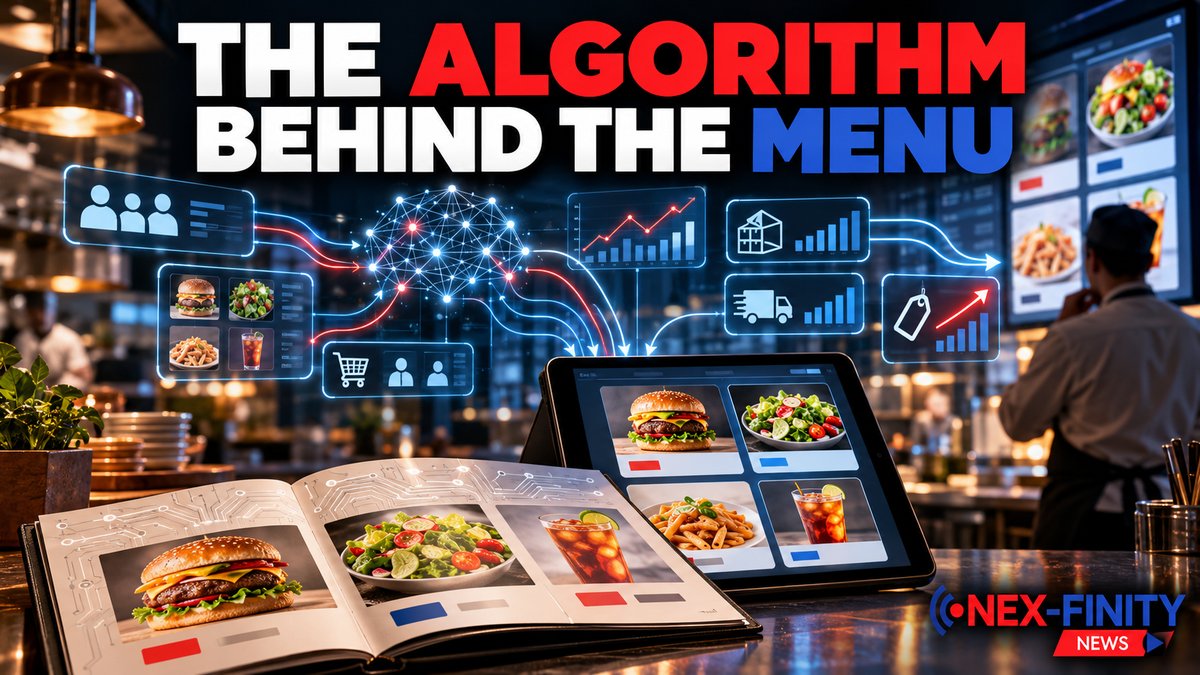
Reuters could not confirm that software caused the gap. But its Sept. 29 investigation found McDonald’s runs a machine-learning engine that generates what the company calls “the optimal price” for each menu item at each of its nearly 14,000 U.S. restaurants.
McDonald’s disputes the framing. The company said costs differ from store to store, that franchisees decide the final price, and that the reporting mischaracterizes a standard business practice.
In simple terms: an AI pricing engine is software that studies sales data and recommends a price for every item, store by store.
The disclosure arrives as the law is moving. Maryland’s limits on data-driven food pricing took effect Oct. 1, and New York’s One Fair Price Act awaits Gov. Kathy Hochul. Both laws target pricing based on who the customer is. Neither is written around where the customer is standing.
Background: The Industry Learned the Word “Surge” the Hard Way
Menu prices have always varied by location. Franchisees set prices to cover local rent, wages and supplies, and those expenses are up 36% since 2019, according to a National Restaurant Association estimate cited by Reuters.
What changed is who does the math. In February 2024, Wendy’s CEO Kirk Tanner told investors the chain would spend about $20 million on digital menu boards at U.S. company-run stores and begin testing dynamic pricing as early as 2025.
The remarks were read as Uber-style surge pricing. Wendy’s said 12 days later that it would not raise prices during peak hours, and Burger King answered with a free-Whopper promotion. Wendy’s told Reuters this year that it never implemented the system.
The backlash reshaped the vendor market. Juicer, a San Francisco startup that adjusted delivery-app prices by demand, discontinued its dynamic pricing product in August 2024 and pivoted to broader revenue management. Its competitive-intelligence tool, which compares menu prices store by store, was already in use at Pizza Hut.
Grocery delivery produced the next flashpoint. A Consumer Reports and Groundwork Collaborative study of 437 shoppers found the same item in the same store priced up to 23% apart on Instacart. Instacart disputed the study’s methodology but ended all item price tests on Dec. 22, 2025.
Adoption has continued under quieter labels. In Toast’s 2025 operator survey of 712 restaurant decision-makers, 26% said they already use AI to optimize menus.
How a Menu Pricing Engine Works
A pricing engine starts with transaction history: what sold, at what price, at which store and hour. From that it estimates price sensitivity for each item at each location.
In simple terms: price sensitivity measures how many customers walk away when a price goes up. A store where demand barely moves can carry a higher price.
McDonald’s system adds two more inputs, according to screenshots reviewed by Reuters. One is an estimate of customer willingness to pay in each store’s area. The other is competitor prices pulled from the online menus of nearby Wendy’s and Burger King locations.
Corporate rules then shape the output. Two former employees of Tiger Analytics, which runs the platform, told Reuters that McDonald’s parameters included:
- Focusing increases on items that had not been raised in at least two years.
- Raising an item only if it had already gone up in at least 30% of stores.
- Excluding ice cream and drinks from summer increases.
McDonald’s sends this guidance to franchisees at least three times a year. That cadence matters: it is store-level pricing, not hour-by-hour surge pricing.
Three distinct practices are often lumped together as “dynamic pricing.” The new state laws treat them very differently.
| Type | What changes the price | Example | Reached by NY / MD laws? |
| Location-based | The store’s market: costs, competitors, local demand | McDonald’s store-level engine | Not directly; laws are written around personal data |
| Time-based (dynamic or surge) | Hour, day or real-time demand | Wendy’s proposed 2024 test | NY bill would require disclosure if prices change more than once a day |
| Personalized (surveillance) | The individual shopper’s data | Instacart’s ended price tests | NY bill would ban; Maryland bans for covered grocers and delivery apps |
Who Is Using It
McDonald’s. The company has used some form of AI pricing tool since at least 2019, Reuters reported. CEO Chris Kempczinski told investors in 2023 that McDonald’s had built proprietary tools to evaluate pricing at individual restaurants.
In January, McDonald’s new business standards began requiring franchisees to engage constructively with its approved pricing consultant and tools, according to an internal communication. A June franchisee document shows the company records deviations from the engine’s recommendations in detail.
Five franchisees told Reuters they felt pressured to adopt the prices; one former owner said she did not. In August, Kempczinski told investors that pricing non-compliance can come up in franchisee business reviews.
The portal’s own terms of service warn that franchisees may be competitors of one another and must comply with antitrust law. McDonald’s said that language is not evidence of anticompetitive conduct.
The best-known flashpoint predates the investigation. A Connecticut franchisee, George Michell, alleges in a lawsuit that the tools suggested about $18 for a Big Mac meal at a turnpike location in 2023. McDonald’s disputes the suit, and Reuters could not verify what the tool recommended.
Yum Brands. The owner of KFC, Taco Bell and Pizza Hut is also turning to AI for pricing and operations, Reuters reported. Yum markets its Byte by Yum! platform to franchisees across all four of its brands. Yum did not respond to Reuters’ request for comment.
Wendy’s and Burger King. Both chains told Reuters they do not use AI in pricing decisions.
Independents. Smaller operators have tested narrower versions. Cali BBQ in San Diego, a former Juicer customer, used demand pricing to adjust prices during slow periods, its founder told Nation’s Restaurant News, describing incremental changes rather than large swings.
The Policy: What the Laws Actually Cover
New York’s disclosure law (in effect). The Algorithmic Pricing Disclosure Act, General Business Law § 349-a, took effect Nov. 10, 2025. Businesses that use a customer’s personal data to set an individual price must post a label near the price reading “THIS PRICE WAS SET BY AN ALGORITHM USING YOUR PERSONAL DATA,” according to the Attorney General’s office.
The law survived a First Amendment challenge from the National Retail Federation. The Attorney General must send a cease-and-desist letter first, then can seek fines of up to $1,000 per violation. On Jan. 8, 2026, Attorney General Letitia James warned Instacart that its disclosures appeared to be buried in fine print.
New York’s One Fair Price Act (awaiting the governor). The Legislature passed S.8623B/A.9349B in June 2026. It would replace the disclosure label with an outright ban on using personal data, such as purchase history, browsing history or real-time location, to set individual prices.
The bill carves out loyalty programs, coupons and standard discounts for groups such as veterans and seniors. It would require businesses that change prices more than once a day based on non-personal factors to disclose that practice. Penalties would reach $5,000 for a first violation and $20,000 for each subsequent one, according to an analysis by Wilson Sonsini. Hochul has until Dec. 31 to act.
Maryland (in effect Oct. 1). The Protection From Predatory Pricing Act, HB 895, signed by Gov. Wes Moore on April 28, bars covered food retailers and third-party delivery services from using a shopper’s personal data to raise prices. It applies to stores of 15,000 square feet or more with substantial grocery operations, and only to tax-exempt food. Restaurants are not named.
Elsewhere. Colorado Gov. Jared Polis vetoed a surveillance-pricing bill in June, citing lost discounts for consumers. Groundwork Collaborative, an advocacy group backing the New York bill, counts at least 40 personalized-pricing bills in 24 states this year.
Antitrust. A separate question is whether one engine recommending prices to many independent owners can facilitate coordination. William Kovacic, a former FTC commissioner, told Reuters the McDonald’s antitrust warning acknowledges a potential problem. Other experts said the risk is low because courts give franchisors wide latitude over franchisee pricing.
Impact: Customers, Franchisees and Headquarters Want Different Prices
Customers. The visible effect is wider gaps between nearby stores. Three franchisees told Reuters the engine has widened existing price differences for the same item, including between neighborhoods in the same area. Most customers never compare two stores’ apps side by side, so the gap goes largely unseen.
Franchisees. The incentives inside the system run in opposite directions. McDonald’s headquarters earns most of its money as a percentage of franchisee sales, so more traffic at lower prices can lift corporate revenue regardless of store margins.
Franchisees keep the margin, so they have stronger reasons to raise prices to cover wages and rent. Some told Reuters the engine recommended steep increases during and after the pandemic, then shifted this year toward more conservative pricing, including some cuts.
In simple terms: the same algorithm can be read as a price-raiser or a price-cutter depending on who set its goals that quarter.
The results so far. Kempczinski said in August that about a third of franchisees had not followed the chain’s under-$3 menu guidance, and that their results were softer. Despite the push toward value pricing, McDonald’s U.S. foot traffic has declined year over year in every complete month since March, according to Placer.ai estimates cited by Reuters.
Analysis: Priced by Place, Not by Person
The new laws draw their line at personal data. The restaurant engine Reuters described draws its line at the store. That leaves location-based menu pricing largely outside both regimes.
Maryland’s law covers grocers and delivery platforms selling tax-exempt food, not restaurants. New York’s current law and the pending One Fair Price Act both turn on the use of an individual’s personal data. An engine that prices a Big Mac by store, updated a few times a year, would not obviously trigger the ban or the once-a-day dynamic-pricing disclosure.
In practice, a New Yorker could pay different prices at two McDonald’s a few miles apart with no label at either counter. Under the reading above, that would be lawful.
The case that this is ordinary. Location pricing is decades old; gas stations, grocers and franchise restaurants have always priced by market. Costs genuinely differ between stores. McDonald’s says its engine has recently pushed prices down, and an algorithm can hold the line on value items that a cost-pressured owner might raise.
The case that it is a gap. An estimate of what customers near a store will pay is built from the behavior of the people who shop there. Critics argue a neighborhood can work as a coarse stand-in for the customer, reaching some of the same outcomes the personal-data bans target without touching a single individual’s record. Whether area-level estimates of this kind count as personal data under New York’s bill has not been tested.
The antitrust question is separate and unresolved: one engine, fed competitor menu prices, recommending prices to thousands of owners who may compete with each other.
Neither question requires deciding whether the tool is good or bad for customers. The record shows it has recommended both increases and cuts. The open issue is that customers cannot see which one they are getting, or why.
Conclusion
AI pricing in restaurants did not arrive as surge pricing at the drive-thru. It arrived as a store-by-store recommendation engine, updated a few times a year, at the largest burger chain in the country.
State lawmakers have spent two years building rules for pricing by person. The McDonald’s disclosures suggest the more common practice is pricing by place, and that is the question New York’s governor, regulators and franchisees have not yet answered.
Key Takeaways
- McDonald’s uses a machine-learning engine to recommend a price for each menu item at each of its nearly 14,000 U.S. restaurants, according to a Sept. 29, 2026 Reuters investigation; the company calls the tool a recommendation, not a mandate.
- Since January, McDonald’s has required franchisees to engage with its approved pricing tools and records deviations; five franchisees described pressure to comply.
- Wendy’s and Burger King say they do not use AI in pricing; Yum Brands is expanding AI across operations including pricing.
- New York requires a label on prices set with personal data and has passed a ban awaiting Gov. Hochul; Maryland’s grocery and delivery law took effect Oct. 1, 2026.
- Those laws target pricing by person. Store-level menu pricing, the practice now documented at McDonald’s, sits largely outside them.
Related coverage: The Right to Privacy Was Never Written Into the Constitution
Sources
- Reuters, Inside McDonald’s push to have AI price your Big Mac, Sept. 29, 2026 (via Yahoo Finance)
- NY Attorney General, Attorney General James Demands Answers from Instacart about Algorithmic Pricing, Jan. 8, 2026
- Wilson Sonsini, New York Legislature Passes Ban on Personalized Pricing, June 10, 2026
- Morgan Lewis, Maryland Enacts HB 895, April 29, 2026
- MultiState, Maryland Bans Surveillance Pricing for Food Retailers, April 30, 2026
- Maryland General Assembly, HB 895 bill page
- Times Union, NY poised to be third state to adopt surveillance pricing laws, June 5, 2026
- ABC News, Wendy’s addresses ‘dynamic pricing’ comments, Feb. 28, 2024
- Food On Demand, Wendy’s Dynamic Pricing Controversy Sparks Industry Shift, April 19, 2024
- Food On Demand, Juicer Parts Ways with Dynamic Pricing Product, Aug. 29, 2024
- Groundwork Collaborative, Instacart Ends Pricing Experiments, Dec. 22, 2025
- CBS News, Instacart to end AI price tests for retailers, Dec. 23, 2025
- Toast, 2025 AI in Restaurants Survey Results
- Business Wire, Introducing Byte by Yum!, Feb. 6, 2025
- Nation’s Restaurant News, Tech Tracker: How tech plays a role in the rise of dynamic pricing