
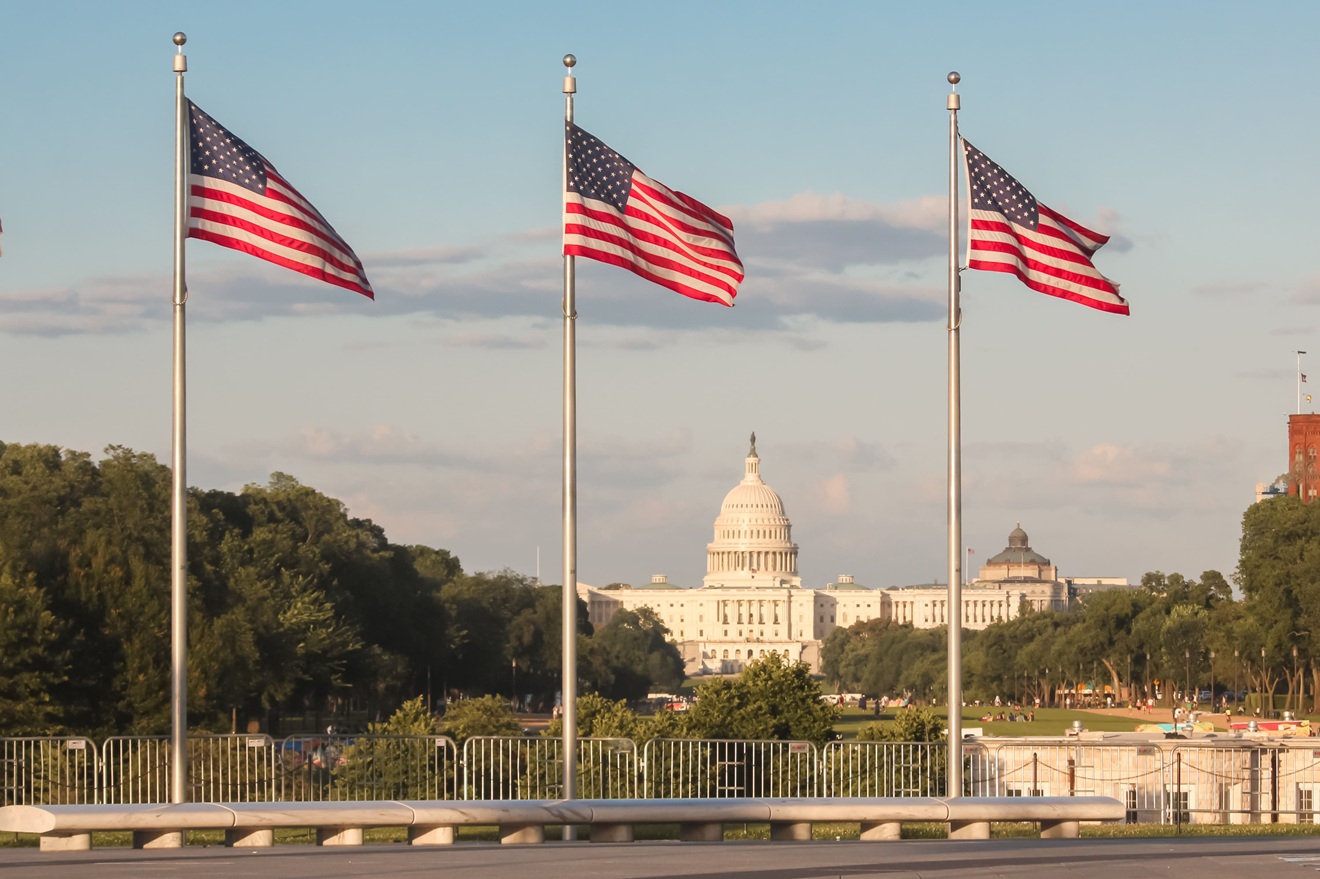
An examination of how identity coalition politics may have drifted from liberal principles to illiberal alliances
The past year has exposed a paradox at the heart of American progressive politics: a coalition that claims to champion liberal values increasingly finds itself aligned with movements and regimes that embody the opposite. From campus protests glorifying Hamas to reflexive support for authoritarian figures abroad, a significant faction of the American left appears to have lost its moral compass—or perhaps revealed that it was pointed in a different direction all along.
The Hamas Contradiction
October 7, 2023 marked a watershed moment. When Hamas terrorists invaded Israel, killing over 1,200 people—including Americans—and taking hostages, the response from segments of progressive America was not universal condemnation but equivocation, contextualization, and in disturbing cases, celebration.
Within days, college campuses saw protests where students didn’t simply advocate for Palestinian rights or criticize Israeli policy—defensible positions within democratic discourse—but openly celebrated the violence. Palestinian flags flew at rallies where speakers justified terrorism as “resistance.” Student groups released statements before the blood had dried, not mourning civilian deaths but framing the massacre as legitimate anti-colonial action.
This wasn’t protest against policy. This was romance with terrorism.
The coalition that claims to stand for women’s rights, LGBTQ+ protections, and religious freedom found itself defending an organization that executes gay people, treats women as property, and explicitly calls for the elimination of Jews. The cognitive dissonance is staggering. Hamas doesn’t just reject Western liberal values—it murders people who embody them.
Yet progressive activists waved Hamas flags in American streets. They chanted “From the river to the sea”—a call for Israel’s elimination—while claiming to support “liberation.” They harassed Jewish students, vandalized synagogues, and created campus environments so hostile that Jewish students required police escorts.
When did the American flag become less visible at these rallies than the Palestinian flag?
The Ukraine Double Standard
The war in Ukraine presents another troubling case study. When Russia invaded in February 2022, progressive America largely rallied behind Ukraine—a defensible position. But that support has evolved into something more troubling: an unwillingness to acknowledge uncomfortable truths about Ukraine’s wartime governance.
President Volodymyr Zelensky, elected democratically in 2019, has suspended elections indefinitely, citing martial law. Opposition parties have been banned. Media has been consolidated under state control. Political rivals have been arrested. By any objective measure, Ukraine has moved toward authoritarian governance—understandable perhaps in wartime, but authoritarian nonetheless.
Yet progressive commentators who scrutinize every American policy decision with microscopic intensity give Zelensky a pass. Those who decried “fascism” in America now ignore actual authoritarian consolidation abroad. The same voices that questioned American democracy now demand unlimited support for a government that has suspended its own democratic processes.
This isn’t to equate Zelensky with Putin—the aggressor bears moral responsibility for the war. But it reveals a troubling pattern: progressive support flows not from consistent principles but from tribal identification. Ukraine is “our side,” so its flaws become invisible.
Meanwhile, billions in American taxpayer dollars flow to Ukraine with minimal oversight and little discussion of diplomatic solutions or off-ramps. The American flag appears at Ukraine rallies, but only as a prop for another country’s war—not as a symbol of American interests or values.
The Iran Accommodation
Perhaps most disturbing is the progressive accommodation of Iran—a theocratic regime that represents the antithesis of liberal values.
Iran executes homosexuals by hanging them from cranes. It enforces mandatory hijab with morality police who beat women to death for showing hair. It imprisons journalists, crushes protests with live ammunition, and funds terrorist organizations throughout the Middle East. The regime shot down a Ukrainian passenger plane and lied about it. It arms Russia in its war against Ukraine. It takes Americans hostage.
Yet segments of progressive America treat Iran as a reasonable negotiating partner and victim of American imperialism. The Biden administration relaxed sanctions, releasing billions in frozen assets. Progressive commentators frame Iranian aggression as understandable response to American policy.
When Iranian women risked their lives protesting mandatory hijab—a feminist cause if ever there was one—American progressives were largely silent. The “Women, Life, Freedom” movement received a fraction of the attention given to far less consequential Western controversies.
The message is clear: feminism applies only when it advances the broader anti-American narrative. Iranian women burning hijabs don’t fit the progressive framework, so they’re ignored.
The Venezuela Blind Spot
Venezuela offers perhaps the clearest example of progressive willful blindness. Once Latin America’s wealthiest nation, Venezuela has collapsed under socialist governance into a humanitarian catastrophe. Hyperinflation destroyed the economy. Shortages of food and medicine became endemic. Over seven million Venezuelans fled—one of the world’s worst refugee crises.
The Maduro regime is unambiguously authoritarian. It rigged elections, imprisoned opposition leaders, and violently suppressed protests. It collaborated with drug cartels and hostile foreign powers. By any measure, Venezuela is a failed state run by a dictator.
Yet progressive politicians and commentators spent years defending or making excuses for Venezuela. Bernie Sanders praised aspects of Chávez’s Venezuela. Progressive commentators blamed U.S. sanctions (imposed only after the collapse began) rather than socialist policies. Even as Venezuelans starved, segments of the American left couldn’t admit that their ideological model had failed catastrophically.
Now, many of those Venezuelan refugees flee to America—the country progressives describe as uniquely oppressive. They wave American flags, grateful for opportunity, while American progressives wave flags of failed socialist states.
The Pattern: Anti-Americanism as Organizing Principle
These aren’t isolated contradictions. They reveal a pattern: much of progressive activism isn’t driven by consistent liberal principles but by opposition to America and the West.
The organizing principle isn’t freedom, equality, or human rights—values that would require condemning Hamas, acknowledging Ukraine’s authoritarian drift, opposing Iranian theocracy, and recognizing Venezuela’s collapse. The principle is anti-Americanism. Any movement, regime, or cause opposing American power receives support or benefit of doubt, regardless of its values.
This explains the otherwise inexplicable:
- Supporting Hamas despite its treatment of women and LGBTQ+ people, because it opposes Israel (America’s ally)
- Ignoring Zelensky’s authoritarianism because Ukraine opposes Russia (America’s adversary)
- Accommodating Iran despite its theocracy, because it challenges American regional influence
- Defending Venezuela despite its humanitarian catastrophe, because it represents socialist resistance to American capitalism
The common thread isn’t liberal values. It’s anti-Western ideology.
The Coalition Fracture
This ideological drift has begun fracturing the progressive coalition itself. Muslim Americans and LGBTQ+ activists find themselves in awkward alliance despite radically incompatible values. Jewish progressives, long part of the coalition, face open hostility on campuses. Working-class minorities question why progressives prioritize international causes over domestic issues affecting their communities.
The white liberal women who anchor much of progressive organizing increasingly find themselves navigating impossible contradictions. How do you support women’s rights while defending cultures that treat women as property? How do you champion LGBTQ+ equality while supporting regimes that execute gay people? How do you claim to oppose authoritarianism while making excuses for dictators who happen to oppose America?
These contradictions are unsustainable. Identity coalition politics works only when member groups share values. When the only shared value is opposition to America, the coalition becomes inherently unstable.
When Will They Wave the American Flag Again?
The title question presumes they want to. The evidence suggests otherwise.
For much of the progressive movement, American patriotism isn’t something temporarily set aside—it’s fundamentally suspect. The American flag represents not an imperfect nation striving toward ideals but an irredeemable force for oppression. American history isn’t a complex story of progress and failure but a simple narrative of exploitation.
This isn’t liberalism. Classical liberalism championed individual rights, free speech, democratic governance, and equality before law—values embodied, however imperfectly, in the American experiment. Modern progressivism increasingly rejects these foundations.
The flag might return to progressive rallies only when progressives rediscover actual liberal values:
- Universal human rights that apply to Palestinians and Israelis, Ukrainians and Russians, Iranians and Americans—not selectively based on identity politics
- Democratic principles that condemn authoritarianism consistently, whether in Florida or Ukraine, Texas or Venezuela
- Free speech that protects offensive ideas, not just approved perspectives
- Individual dignity that transcends group identity
- American interests that can be distinguished from mere imperialism
Until then, expect more Palestinian flags at American protests. More excuses for foreign dictators. More hostility toward American symbols and values.
The Path Forward
This isn’t sustainable. A political movement that can’t distinguish between liberal democracies and terrorist organizations, that supports authoritarian regimes while condemning its own country, that champions oppressed groups selectively based on ideology—such a movement has lost its way.
The coalition will fracture, or it will evolve. Either progressives will rediscover actual liberalism—with its messy commitment to freedom, debate, and universal values—or they’ll fully embrace the anti-Western ideology already evident in their actions.
The question isn’t just when they’ll wave the American flag again. It’s whether they remember why that flag once mattered to the American left: because it represented, however imperfectly, the liberal values they claimed to champion.
Those values—freedom, equality, democracy, human rights—aren’t uniquely American. But America, for all its flaws, has been their most powerful institutional defender. When progressives can’t distinguish between that defense and imperialism, between liberalism and oppression, between America and its enemies, they’ve lost more than patriotism.
They’ve lost their principles.
The question remains open: Will American progressives rediscover liberal values and American patriotism, or will identity politics and anti-Western ideology continue driving their coalition toward increasingly illiberal alliances? The answer will shape not just progressive politics but American democracy itself.