
Something extraordinary happened in American politics over the past year, and it all started with a phone call from the White House to Texas.
President Trump, looking at Republicans’ razor-thin House majority, decided he needed insurance. So last summer, he personally urged Texas lawmakers to do something states almost never do: redraw their congressional maps in the middle of the decade, years before the next census would require it. The goal? Five more Republican seats to protect his legislative agenda.
Texas Republicans obliged. And that’s when things got interesting.
California Fires Back
Governor Gavin Newsom wasn’t about to sit back and watch. “Donald Trump said he was ‘entitled’ to five more congressional seats in Texas,” Newsom declared after the Supreme Court ruled this week. “He started this redistricting war.”
California Democrats crafted their own counter-map, designed to flip five currently Republican seats to Democrats. They put it on the ballot as Proposition 50, branding it the “Election Rigging Response Act.” Voters approved it in November 2025 by a 2-to-1 margin.
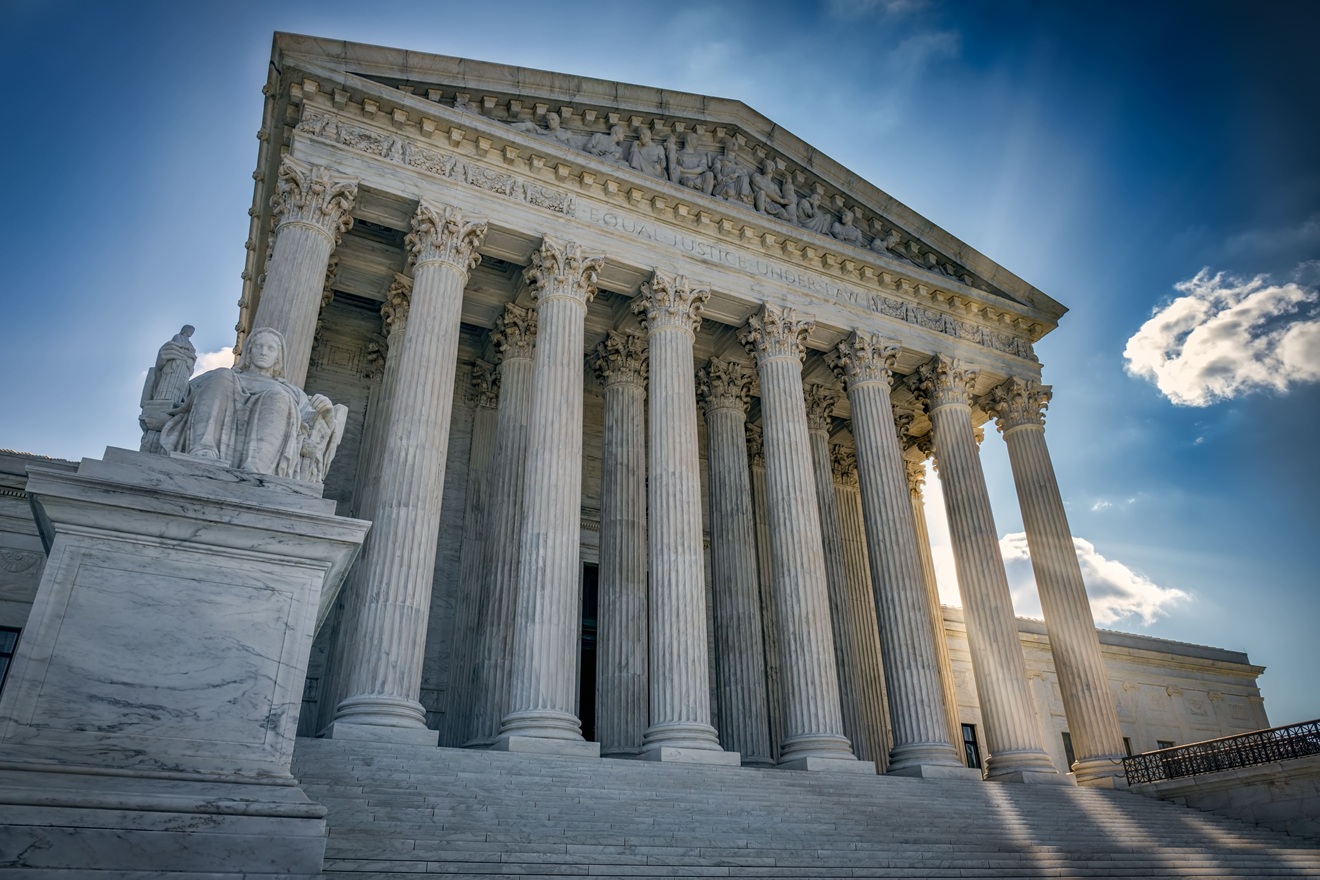
The Supreme Court, in a one-sentence order issued just yesterday, allowed California to use its new map for the 2026 midterms. No dissents. No explanation. Just: the application “is denied.”
The Legal Foundation: Why This Is All Perfectly Legal
Here’s where it gets fascinating from a legal perspective. Both parties tried to block each other’s maps by claiming they were racial gerrymanders, which are illegal. But both courts found the evidence overwhelming that these maps were drawn for partisan advantage, not racial discrimination.
And here’s the kicker: partisan gerrymandering, as much as people hate it, is completely legal under federal law.
That precedent comes from the 2019 landmark case Rucho v. Common Cause. Chief Justice John Roberts, writing for a 5-4 majority, ruled that partisan gerrymandering claims present “political questions beyond the reach of the federal courts.” The Court acknowledged that extreme partisan gerrymandering may be “incompatible with democratic principles,” but said federal judges simply have no manageable standards to determine when partisanship in redistricting crosses the line.
As Justice Samuel Alito noted in his concurring opinion about the Texas and California maps: “The impetus for the adoption of the Texas map (like the map subsequently adopted in California) was partisan advantage pure and simple.”
Both parties are playing the same game. The Supreme Court’s message? We’re staying out of it.
What This Means for November 2026
The practical effect is that Texas and California essentially cancel each other out—each state potentially netting their party five House seats. But the ripple effects are spreading.
Other states are jumping into the fray. North Carolina and Missouri passed Republican-friendly maps. Maryland and Virginia Democrats are pursuing their own redistricting efforts (though a Virginia judge recently blocked the Democratic plan there). Florida Republicans are reportedly considering joining the redistricting wave.
Meanwhile, a New York state judge ordered new lines for a Republican-held district that could flip to Democrats, finding it illegally diluted minority voting power.
All of this is happening with one thing in mind: control of the House in the 2026 midterms. Republicans currently hold slim majorities in both chambers, and if Democrats flip either one, they could launch investigations into Trump’s second term and block his legislative agenda.
The Death of the Political Middle
But here’s the part that doesn’t get talked about enough: gerrymandering isn’t just about which party wins. It’s about who wins within each party—and that’s where the real damage to American democracy happens.
When you draw a district to be safely Republican or safely Democratic, you eliminate competition in the general election. The real contest becomes the primary. And primaries attract a very different kind of voter than general elections.
Primary voters tend to be more ideologically committed, more partisan, more engaged with the base issues of their party. They’re the activists, the true believers, the people who show up no matter what. And if you’re a politician in a gerrymandered district, these are the only voters you need to worry about.
A moderate Republican in a safely conservative district? They’re vulnerable to a primary challenge from the right. A centrist Democrat in a safely liberal district? They risk getting knocked off by a progressive challenger.
The incentive structure is clear: move toward the extreme or risk losing your job.
This is how gerrymandering has systematically eliminated the political middle in Congress. It’s not that moderate voters disappeared—they’re still out there. It’s that moderate politicians can’t survive in districts designed to be partisan fortresses.
Think about it: if you’re representing a district that went 65% Republican, why would you ever work with Democrats on a compromise bill? That’s just asking for a primary challenger to attack you as a RINO—Republican In Name Only. The same logic applies to Democrats in heavily blue districts.
A Legislature That Can’t Legislate
And here’s where the dysfunction really kicks in: when you eliminate the moderates, you eliminate the people who actually make Congress work.
The moderate Republicans and Democrats used to be the bridge-builders, the dealmakers, the members who could sit down over lunch and hash out compromises on everything from infrastructure spending to immigration reform. They could vote with the other party without committing career suicide because their districts had enough voters from both parties that governing competence actually mattered.
Those days are largely gone.
Now we have a legislative branch that increasingly can’t legislate. Finding common ground on basic policy issues has become nearly impossible. Even routine budget negotiations turn into existential crises, with government shutdowns and debt ceiling standoffs becoming regular features of American governance.
It’s not that individual members of Congress have become less capable or less intelligent. It’s that the system now punishes anyone who tries to find middle ground. Cross the aisle to work on a bipartisan bill? Prepare for attack ads funded by your own party’s activists. Vote for a compromise budget that doesn’t give your side everything it wants? Your primary opponent will use it against you.
The result is paralysis. Bills that would have broad public support—infrastructure improvements, budget reforms, even some aspects of healthcare policy—die because neither party can afford to be seen cooperating with the other.
Congress can barely pass the most basic functions of government. Annual budgets? We’re lucky if we get continuing resolutions to keep the lights on. Major policy initiatives? They only pass when one party has unified control, and even then, barely. Anything requiring actual cross-party cooperation is dead on arrival.
The Bigger Picture
What makes this moment so unusual is the timing. Normally, states redraw congressional maps once every ten years after the census. That’s why we had redistricting after the 2010 and 2020 censuses. Mid-decade redistricting is rare and typically happens only to comply with court orders.
But Rucho created a new reality. Since federal courts won’t police partisan gerrymandering, there’s nothing stopping state legislatures controlled by one party from redrawing maps whenever they think they can gain an advantage—as long as they can pass the laws to do it.
Some states have protections against this. About a third use independent commissions to draw districts. Others have state constitutional provisions against partisan gerrymandering that state courts can enforce. After Rucho, we’ve seen state supreme courts in Alaska, Maryland, New Mexico, and Pennsylvania strike down partisan gerrymanders under their own state constitutions.
But many states, including Texas and California, don’t have those protections.
Democracy by Tit-for-Tat
There’s something almost grimly amusing about this whole showdown. Both parties are essentially saying: “They started it!”Texas Republicans: “We’re just protecting our legitimate interests.”California Democrats: “We’re just responding to what Texas did.”
And both are technically right. Both are also engaged in the same practice that frustrates voters across the spectrum: politicians choosing their voters instead of voters choosing their politicians.
The Supreme Court’s decisions this week—allowing both the Texas map in December and the California map yesterday—send a clear signal. This is the new normal. Unless Congress acts (which seems unlikely, given that Congress can barely act on anything) or more states adopt independent redistricting commissions, expect this kind of partisan map-drawing to continue.
And with it, expect the continued erosion of the political center. When districts are drawn to be uncompetitive, politicians optimize for primary voters, not general election voters. The moderates who used to bridge the partisan divide? They’re becoming an endangered species.
And when the moderates go extinct, so does the ability to govern.
The Stakes
With candidate filing deadlines approaching in both states (California’s primary is June 2, Texas held its primary in March), these maps are now locked in for November.
For voters, the question becomes: Will your district even be competitive? Many of these newly drawn districts are designed to be safe for one party or the other. That means the real election happens in the primary, not the general. And if you’re not aligned with the party that dominates your district, your vote in November matters less and less.
For the candidates, it means playing to the base. Moderate positions become liabilities. Compromise becomes a dirty word. The path to victory runs through appealing to the most committed partisans, not the persuadable middle.
For the country, the stakes are existential. We’ve created a system where elected officials are rewarded for obstruction and punished for cooperation. Where passing a budget becomes a heroic achievement rather than basic governance. Where solving actual problems takes a back seat to positioning for the next primary election.
This isn’t just about Republicans versus Democrats. It’s about whether our system of government can actually function when the people we elect are incentivized to be warriors rather than legislators.
The Supreme Court, for its part, has washed its hands of the whole thing. Chief Justice Roberts made that clear in Rucho: “We conclude that partisan gerrymandering claims present political questions beyond the reach of the federal courts.”
Translation? This is your problem now, America. Good luck fixing a Congress that can’t fix itself.
The Vicious Cycle
And here’s the really depressing part: it’s a self-reinforcing cycle. The more dysfunctional Congress becomes, the more disgusted voters get with “Washington.” The more disgusted voters get, the more they gravitate toward candidates who promise to “shake things up” or “fight the establishment.” Those candidates tend to be more extreme, more combative, less interested in compromise.
Which leads to more dysfunction. Which leads to more voter disgust. Which leads to more extreme candidates winning primaries.
Rinse and repeat.
Meanwhile, the actual problems facing the country—infrastructure decay, healthcare costs, national debt, climate policy, immigration reform—don’t get solved because solving them would require the exact kind of bipartisan cooperation that gerrymandered districts make politically fatal.
The bottom line: California and Texas have essentially fought to a draw in their redistricting war, with the Supreme Court blessing both sides’ partisan maps. But the real casualties of this battle aren’t just the five seats each side hoped to gain—it’s the moderate voices from both parties who can’t survive in districts designed to reward extremism. When politicians only need to appeal to their party’s base to win, compromise becomes political suicide. The result? A legislative branch that can’t legislate, that can’t pass budgets without crisis, that can’t find common ground on anything meaningful. Both parties are winning the gerrymandering game, but the American people are losing the ability to have a functioning government.