
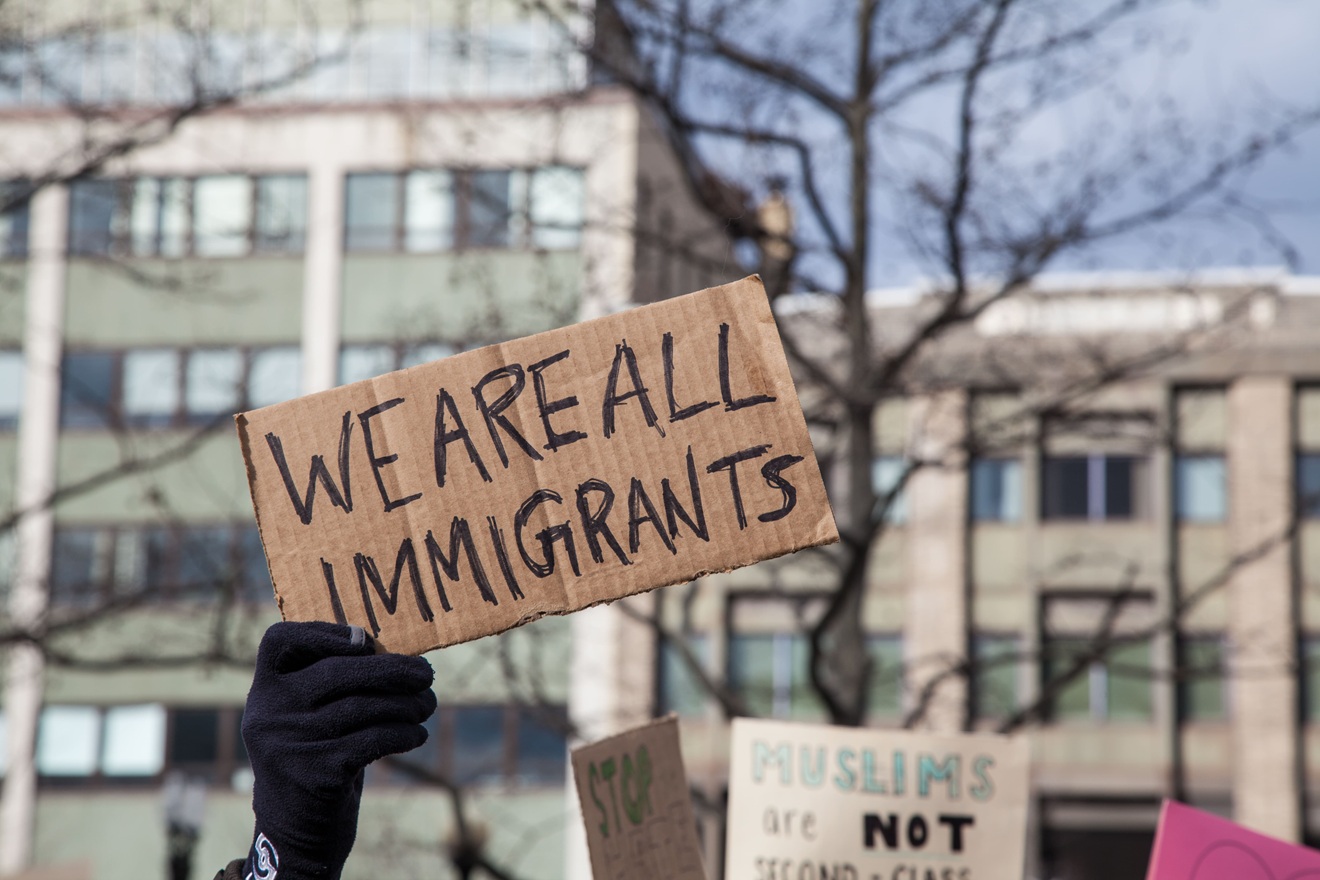
Trump’s Immigration Gamble: How Aggressive Enforcement Could Backfire in the Midterms
As the administration doubles down on deportation operations, political strategists warn of a growing disconnect with the suburban swing voters who decide elections
By Dominick Bianco, Editor-in-Chief NexfinityNews.com
President Donald Trump won the 2024 election on a clear mandate: secure the border and restore order to America’s immigration system. Exit polls showed that even many Democrats agreed the situation had spiraled out of control under Biden. The American people voted for enforcement—but they may not have voted for what they’re getting.
Six weeks into his second term, Trump’s immigration crackdown has moved beyond targeting criminal aliens and cartel operatives to sweeping operations that appear indiscriminate in scope. The resulting images—families separated at workplaces, longtime business owners detained during routine operations, community members with decades of residency being rounded up—are creating a political problem that could haunt Republicans in the 2026 midterms.
And with only 10 months until voters head to the polls, the window for course correction is rapidly closing.
Minneapolis: When Enforcement Turns Deadly
The political calculus changed dramatically last week in Minneapolis. What began as a routine ICE operation in the city’s Cedar-Riverside neighborhood erupted into violent protests that left two people dead and dozens injured. The images that followed—burning vehicles, clashes between protesters and federal agents, a community in chaos—dominated news cycles for days.
The mainstream media’s coverage has been relentlessly one-sided. CNN led with “Trump’s Deportation Force Sparks Deadly Riots.” MSNBC featured tearful interviews with family members of those detained. The New York Times ran a front-page story focusing entirely on the community impact, with barely a mention of the criminal records of some those targeted in the operation.
Were there MS-13 gang members arrested in that Minneapolis operation? Yes. Were there individuals with violent criminal histories removed from the streets? Absolutely. Did the operation target cartel associates operating in the area? According to ICE, that was the primary objective.
But that’s not the story America is seeing.
Instead, the coverage focuses on the Somali community leaders denouncing “gestapo tactics.” The viral footage of a grandmother being detained. The interviews with local business owners describing a “climate of terror.” The deaths during the protests—which appear to have resulted from the chaos itself rather than direct federal action—are being framed as martyrdom in the cause of resistance.
The Professional Protest Machine
What’s being sold as “organic community outrage” in Minneapolis and other cities is anything but spontaneous. This is a coordinated, well-funded operation designed to manufacture crisis and create compelling media content—and it’s working.
Follow the money. Within hours of the Minneapolis operation, professional organizers from various progressive groups were on the ground. Not community members shocked by sudden enforcement—trained activists with printed signs, media talking points, and tactical plans for maximum disruption and camera-friendly confrontation.
Organizations like United We Dream, CHIRLA (Coalition for Humane Immigrant Rights), and Movimiento Cosecha have received tens of millions in funding from progressive donor networks. Their playbook is sophisticated: deploy “rapid response teams” to ICE operations, ensure compelling footage reaches media outlets within hours, coordinate sympathetic victim interviews, and escalate confrontations to generate newsworthy content.
The signs are professionally printed—all with the same fonts, same messaging, distributed en masse. The chants are coordinated. The media interviews follow prepared scripts. Local news crews are often notified before community members, ensuring cameras are positioned for maximum emotional impact.
In Minneapolis, video evidence shows buses arriving with protesters hours before local residents even knew about the ICE operation. Text message chains later obtained show organizers discussing “optics” and “making this a national story.” One message explicitly stated: “We need footage of families being separated. That’s what moves suburban voters.”
This isn’t grassroots activism. This is a political operation masquerading as community response, funded by progressive organizations with explicit goals of creating electoral consequences for Republicans.
The Media-Activist Feedback Loop
Here’s what makes this so effective: the mainstream media knows exactly what’s happening, and they don’t care. They’re willing participants in the narrative construction.
The coordination is blatant. Protest organizers send media alerts. News crews show up. Activists stage confrontations designed for maximum emotional impact. Cameras roll. The footage runs on loop for 72 hours. Democrats cite the coverage in fundraising emails. Progressive organizations use the clips in social media campaigns. The cycle repeats.
CNN doesn’t ask why professional activists arrived in Minneapolis before the community knew what was happening. MSNBC doesn’t investigate the funding sources behind the protest organizations. The New York Times doesn’t mention that the “spontaneous vigil” was organized by paid staffers from three different progressive groups.
Instead, they present it all as authentic community reaction. The grandmother crying on camera? She was located and coached by organizers who knew her story would resonate. The small business owner talking about “fear in the community”? He’s on the advisory board of an immigration advocacy organization. The “random protesters” giving impassioned speeches? Check their social media—many have been to a dozen similar events in different cities.
This isn’t journalism. This is stenography for political operatives.
Manufacturing Consent for the Counter-Narrative
The sophistication of the operation is impressive, if Machiavellian. Progressive organizations have essentially created a turnkey system for turning any enforcement operation into a national news event that damages Republicans.
Step 1: Monitor ICE activities through networks of informants and cooperative local officials.
Step 2: Deploy rapid response teams to the location within hours.
Step 3: Stage confrontations designed for cameras—human chains blocking vehicles, families clutching children, emotional testimonials.
Step 4: Ensure friendly media outlets receive footage and pre-packaged storylines.
Step 5: Amplify through social media using coordinated hashtag campaigns and influencer networks.
Step 6: Democrats and progressive politicians issue statements condemning the “brutality” within hours, before facts are established.
Step 7: Mainstream media runs with the narrative for days, ensuring maximum penetration to swing voters.
The Minneapolis deaths turned this formula nuclear. Now the operation includes: martyrology (the “Minneapolis Two”), vigils in major cities, coordinated “days of action,” celebrity endorsements, and legislative theater where Democratic lawmakers demand investigations and hearings.
And it’s all happening with 10 months until the midterms—perfectly timed for maximum electoral impact.
The Paid Protester Reality
Let’s be direct about what’s happening: many of the “protesters” showing up at enforcement operations are literally on someone’s payroll. Not all of them, certainly—there are genuine community members with real concerns. But the core organizers, the people orchestrating the confrontations, the activists giving media interviews? They’re professionals doing this as their job.
Organizations are paying people $15-20 per hour to attend protests. Transportation is provided. Signs and t-shirts are distributed. Talking points are rehearsed. Media training is conducted. The most photogenic participants are positioned where cameras can capture them.
This isn’t conspiracy theory—it’s standard community organizing practice that progressive groups openly discuss in internal documents. The problem isn’t that they’re doing it. The problem is that the media presents this manufactured spectacle as authentic community outrage.
A leaked internal memo from one organization explicitly stated the goal: “Create 50 Minneapolis-style events before November. Each event should generate minimum 48 hours of national coverage. Target: 7-point swing among suburban women in swing districts.”
That’s not activism. That’s electoral strategy using immigration enforcement as the vehicle.
The Media’s Selective Lens
The mainstream media’s complicity makes this strategy devastatingly effective. They’re not just covering events—they’re actively constructing a narrative in coordination with progressive organizations.
Every deportation story becomes about the valedictorian being sent back to a country she doesn’t remember. The small business owner who employs Americans and pays taxes through an ITIN. The military spouse caught in bureaucratic limbo. The mother separated from her American-citizen children.
Are these cases representative of the broader enforcement effort? Absolutely not. ICE reports that over 75% of those detained have criminal records or outstanding warrants. But that statistic gets a single paragraph on page A14, while the human-interest stories—often identified and packaged by activist organizations—dominate prime time and social media feeds.
The administration’s response—insisting they’re following the law and enforcing immigration statutes equally—is technically correct but politically tone-deaf. When CNN is running B-roll of families crying at detention centers (footage often provided by activist organizations), responding with “we’re just enforcing the law” doesn’t move swing voters. It makes Republicans look heartless.
Meanwhile, the criminal records of those deported, the gang affiliations, the violent histories—all of that gets buried or ignored entirely. When it is mentioned, it’s framed as “allegations” or “according to ICE” with skeptical tone, while the sympathetic narratives are presented as unquestioned fact.
The Optics Problem
The Minneapolis protests highlighted another uncomfortable reality: immigration enforcement, even when legally justified and properly targeted, often looks ugly on camera—especially when professional activists are staging confrontations designed to look as ugly as possible.
Federal agents in tactical gear entering neighborhoods at dawn. Families screaming as parents are taken into custody. Community members forming human chains to block ICE vehicles. Children asking where their parents went. These images create visceral emotional reactions that override rational policy discussions.
The media knows this. The activist organizations know this. They’re collaborating to ensure these images dominate the news cycle.
They’re not showing the gang member with a sheet of violent offenses being deported. They’re showing his wife and children crying—after activists located the family and brought media crews to the scene. They’re not highlighting the cartel operative being removed. They’re interviewing his employer talking about what a good worker he was—an employer often located by activist organizations specifically for this purpose.
Is this media manipulation? Absolutely. Is it coordination between progressive organizations and mainstream media? Undeniably. Is it effective? Devastatingly so.
The Narrative Cascade
Here’s how the media-activist narrative machine is metastasizing with just 10 months to the midterms:
Week One: Initial enforcement operations. Activists mobilize. Media covers them as “Trump’s deportation blitz begins.”
Week Two: First sympathetic cases emerge—identified and packaged by activist organizations. Extended profiles of longtime residents being deported. “Is this who we are as a nation?” headlines proliferate.
Week Three: Community resistance stories, all coordinated through progressive networks. Churches offering sanctuary. Local officials refusing cooperation. “American values vs. Trump’s agenda” framing.
Week Four: Minneapolis protests turn deadly. Now the coverage includes words like “violence,” “resistance,” and comparisons to civil rights era protests. Activist organizations coordinate vigils in 40 cities simultaneously.
Week Five and beyond: Every subsequent enforcement action gets covered through the lens established by these early stories. Context collapses. Nuance disappears. It’s just “Trump’s cruel deportation machine” in the media narrative.
With only 10 months until voters decide control of Congress, this narrative is being systematically constructed and reinforced daily. By November, low-information voters won’t remember that most deportations involved criminals. They’ll remember the crying children, the protests, the deaths, and the narrative that Trump went too far—all of it carefully curated and amplified by the media-activist complex.
The Minneapolis Aftermath
The deaths in Minneapolis, regardless of the specific circumstances, have given Democrats, activist organizations, and the media exactly what they needed: martyrs and a moral framework.
Progressive activists are already calling them the “Minneapolis Two,” drawing explicit parallels to George Floyd. Never mind that these deaths occurred during riots, not during the enforcement operation itself. Never mind the complexity of what actually transpired. The narrative is set: Trump’s policies led to deaths in American streets.
Within 24 hours, a professionally-produced memorial website was live. Candlelight vigils were coordinated in 35 cities. A GoFundMe for the families raised $2 million in 48 hours. Celebrity activists posted tribute videos. Democratic lawmakers gave emotional floor speeches.
This level of coordination doesn’t happen organically. This is organizational infrastructure that’s been built, funded, and activated for exactly this purpose.
The symbolism is particularly potent in Minnesota—a swing state Biden won narrowly, that Trump lost by even less in 2024. The Somali community there is politically engaged and well-organized. This incident just activated every progressive organization in the state and potentially across the upper Midwest.
Republican Senate candidates in Minnesota, Wisconsin, and Michigan are now being asked in every interview to defend the Minneapolis operation. Do they support enforcement that leads to deaths? Do they think the administration went too far? There’s no good answer. Supporting the operation looks callous. Criticizing it alienates the base.
And with only 10 months to election day, there’s barely time to change the narrative before voters make their decisions.
The Mandate Versus The Method
There’s no question Trump has authorization to enforce immigration law. He won decisively, and immigration was issue number one. But electoral mandates come with nuance that this administration seems determined to ignore.
Voters wanted criminals deported. They wanted gang members removed. They wanted an end to sanctuary city policies that shield violent offenders. What’s less clear is whether they voted for enforcement operations that lead to deadly riots—or more accurately, that create conditions activist organizations can exploit to stage riots. Whether they endorsed the current scale and scope of actions that make national news for the wrong reasons.
The administration’s approach appears to be: deport first, worry about the politics later. That’s a strategy that works in deep-red districts. It’s a disaster in the suburbs where midterms are won and lost—especially when facing a coordinated media-activist campaign designed to exploit every enforcement action for maximum political damage.
The Independent Voter Problem
Trump’s 2024 victory came partly from peeling off traditionally Democratic constituencies—Latino men, working-class voters in swing states, even some suburban women concerned about inflation and disorder. These weren’t MAGA diehards. They were pragmatic voters who thought Democrats had lost the plot on basic governance.
These same voters are now watching footage—carefully curated and distributed by activist organizations—that makes them uncomfortable. A restaurant owner in Milwaukee—been here 20 years, employs a dozen Americans, pays taxes through an ITIN—detained in front of his customers (with media conveniently present). A nurse in Phoenix, came illegally at age seven, working the COVID ICU throughout the pandemic, now facing deportation (after activists found her story and pitched it to news outlets). A construction supervisor in North Carolina whose crew built half the new subdivisions in his county, suddenly disappeared after a traffic stop (his emotional family interviewed by media within hours).
Independent voters can hold two thoughts simultaneously: borders should be enforced AND enforcement should be proportional and humane. The current approach, as filtered through coordinated media-activist coverage, feels like collective punishment rather than targeted law enforcement.
Recent polling tells the story. A Quinnipiac poll from last week shows Trump’s overall approval has dropped to 42%, down from 49% at inauguration—a 7-point slide in just six weeks. On immigration specifically, the numbers are even worse: only 38% of Americans approve of how Trump is handling immigration enforcement, down from 52% in early January—a stunning 14-point collapse.
Among independents, the crater is even more dramatic. Just 34% of independent voters now approve of Trump’s immigration approach, compared to 51% at inauguration. That’s a 17-point swing in the wrong direction. More troubling: 61% of independents now say the administration is “going too far” on deportations, compared to just 29% who say enforcement is “about right.”
Post-Minneapolis, a CBS/YouGov poll showed an additional 9-point drop in approval among suburban women—from 41% supporting Trump’s immigration policies before the incident to just 32% after. That’s the exact demographic Republicans need to hold the House, and they’re hemorrhaging support at an alarming rate.
With 10 months until the midterms, that’s a catastrophic trajectory.
The Midterm Mobilization Machine
Perhaps more dangerous for Republicans is what this coordinated media-activist campaign is doing to Democratic voter enthusiasm. After the 2024 loss, progressive activists were demoralized, the Democratic base fractured, and turnout looked like it would crater in 2026.
Then came the deportation images. Then came Minneapolis. Then came the coordinated resistance campaign.
Nothing unifies and energizes a dispirited political coalition like a common enemy executing policies that feel cruel—especially when those policies are presented through carefully constructed media narratives designed to maximize emotional impact. Democratic organizing groups report donation spikes, volunteer sign-ups are exceeding 2022 levels, and voter registration drives in Latino and immigrant communities are seeing unprecedented engagement.
A recent Navigator Research poll shows Democratic enthusiasm for the 2026 midterms has jumped to 68%—higher than it was even in the 2018 blue wave year. Meanwhile, Republican enthusiasm, while still high at 71%, has dropped 8 points since January as suburban moderates grow uncomfortable with the direction of immigration policy.
The “Minneapolis Two” have become rallying cries. Vigils are being held in major cities—all coordinated through centralized activist networks. Progressive organizations are running a national day of action every week. The imagery—candles, protest signs, emotional testimonials—is tailor-made for social media mobilization and generated through professional content creation.
The administration is essentially running the Democratic get-out-the-vote operation for them, with activist organizations and mainstream media amplifying every misstep into a national crisis. Every viral video of enforcement operations, every story of a family torn apart, every interview with a deported veteran, and now every reference to Minneapolis becomes a fundraising email, an organizing tool, a reason for discouraged Democrats to show up in November 2026.
And the Democrats only need to sustain this for 10 more months.
The Suburban Battleground
The midterms will be decided in places like Pennsylvania’s collar counties, Michigan’s outer suburbs, Arizona’s growing metro areas, and North Carolina’s research triangle. These are educated, diverse, economically comfortable districts that voted for Biden in 2020, shifted toward Trump in 2024 on economic concerns, but remain fundamentally moderate.
These voters don’t want open borders. But they also don’t want to see enforcement that leads to riots and deaths—or at least, they don’t want to see coverage of enforcement that looks like it leads to riots and deaths. They support border security but blanch at the media coverage they’re seeing nightly, coverage carefully constructed by activist organizations and amplified by sympathetic media.
The generic congressional ballot tells the concerning story for Republicans. A recent CNN poll shows Democrats leading 49-44 on the question of which party voters would support for Congress—a 5-point Democratic advantage. That’s a significant swing from November, when Republicans held a 2-point edge. In swing districts specifically, Democrats now lead by 8 points, according to DCCC internal polling leaked to Politico.
The current enforcement climate, as presented by the media-activist complex, is making these voters reconsider their 2024 Trump vote. In focus groups conducted across swing districts, the most common phrase is some variation of “this isn’t what I thought I was voting for.”
One focus group participant in suburban Philadelphia captured the sentiment: “I voted for Trump because I thought he’d secure the border and deport the criminals. I didn’t vote for what I’m seeing on the news every night. This feels excessive.”
The fact that what she’s “seeing on the news every night” is a carefully curated and often misleading narrative doesn’t change its political impact. Perception is reality in elections.
The Economic Messaging Vacuum
Here’s the deeper problem: the administration is spending all its political capital on an issue that’s now generating negative returns—thanks to coordinated opposition—while ignoring the economic agenda that won them the election.
Where’s the middle-class tax cut? What happened to bringing down grocery prices? When does the infrastructure boom that was supposed to create millions of jobs begin?
Instead of owning the economic recovery narrative, Republicans are defending enforcement operations that ended in deaths. Instead of touting job creation, they’re explaining why deporting restaurant workers won’t hurt local businesses. Instead of talking about the future, they’re litigating the most inflammatory aspects of immigration policy.
Democrats are salivating at this messaging environment. They get to run on “Republicans’ cruel immigration policies are literally killing people” while avoiding any responsibility for inflation, crime, or the border chaos that led to Trump’s victory in the first place.
The media-activist complex is giving them exactly the footage they need. Republicans, meanwhile, have no compelling counter-narrative that works in 30-second ads.
With 10 months to go, every day spent playing defense on immigration is a day not spent on offense on the economy. That’s a losing strategy.
The Historical Parallel
There’s a recent precedent for this dynamic. In 2006, Republicans controlled Congress and the White House under George W. Bush. House Republicans, led by hardliners, pushed aggressive immigration enforcement bills that included criminalizing undocumented presence and building extensive border barriers.
The result? Massive protests—many coordinated by the same organizations active today. Energized Latino turnout. A Democratic wave that flipped both chambers of Congress. Republicans lost 31 House seats and 6 Senate seats. The immigration hardline stance, which seemed smart in the base, proved toxic in purple districts.
Trump isn’t Bush—his political skills and base loyalty are stronger. But the fundamentals are similar: an immigration crackdown that excites the base while alienating the marginal voters who decide close elections. And now, with Minneapolis, Republicans have given Democrats and their activist allies a rallying point that 2006 never provided.
The difference is that in 2006, the opposition was less organized, less well-funded, and faced a less cooperative media environment. Today’s progressive organizations have learned from that experience. They’re better funded, more sophisticated, and operating in a media landscape that’s exponentially more receptive to their narratives.
And they have 10 months to run this playbook before voters decide.
The Path Forward
The administration still has time to recalibrate—but barely. With only 10 months until the midterms, every week of bad coverage becomes harder to overcome. A smarter approach would be:
Visible prioritization: Make it crystal clear that violent criminals and cartel operatives are the priority. When 90% of deportation stories are about the worst of the worst, even coordinated activist-media campaigns can’t completely obscure the justification. Lead every press conference with the criminal records of those deported. Make the first 100 deportation stories about rapists, gang members, and drug traffickers. Flood the zone with stories that even the mainstream media can’t ignore.
Control the narrative proactively: Stop letting activist organizations and their media allies define enforcement operations. Embed friendly reporters and independent journalists. Release body camera footage showing the threats being addressed. Create compelling content that shows why these operations protect communities. The administration has the facts on their side regarding criminal removals—they’re just terrible at communicating them. Launch a sustained communications campaign that gets ahead of the activist-media narrative machine.
Expose the coordination: Make the public aware of the organized, funded nature of the “resistance.” Release information about the money flows, the coordination, the professional nature of the protests. When Americans realize that “spontaneous community outrage” is actually orchestrated political theater funded by progressive billionaires, the narrative loses power. The media won’t cover this story—so create content directly and distribute it through alternative channels.
Avoid unnecessary confrontations: Minneapolis became a national story partly because of the scale and visibility of the operation, which gave activist organizations the spectacle they needed. Smaller, more targeted actions achieve the same enforcement goals without creating protest flashpoints. Every large-scale operation is an opportunity for professional organizers to manufacture crisis. Don’t give them the opening.
Grandfather provisions: Create a path for longtime residents with clean records, American children, and community ties. This doesn’t have to mean citizenship—even a renewable status that removes the fear of sudden separation would defuse much of the tension and eliminate the most sympathetic media stories that activist organizations depend on.
Economic focus: Return messaging to the kitchen-table issues that won 2024. Every day spent defending enforcement tactics and responding to Minneapolis coverage is a day not spent on tax cuts, job creation, or lowering costs. With only 10 months left, Republicans can’t afford to spend the entire period on defense.
Proportionality in enforcement: Traffic stops for minor violations shouldn’t end in deportation for otherwise law-abiding residents. Save the aggressive tactics for actual public safety threats. This removes the fuel for sympathetic media coverage and deprives activist organizations of the cases they use to construct their narrative.
The goal of immigration enforcement should be security and order, not maximizing deportation numbers or proving toughness. If the administration can’t make that distinction—and can’t recognize they’re in an information war against a coordinated opposition—they’ll pay for it in November 2026.
The Bottom Line
Trump won on a mandate to restore order and enforce the law. That’s legitimate. But mandates aren’t blank checks, and enforcement without strategic wisdom becomes a political liability—especially when facing coordinated opposition from activist organizations and mainstream media working in concert.
The current approach is alienating the very voters Republicans need to hold Congress. The Minneapolis deaths, regardless of the specific circumstances, have given Democrats, activist organizations, and their media allies exactly the narrative they needed. It’s energizing a demoralized Democratic base and consuming political capital that should be spent on the economic agenda that could actually cement a Republican majority for years.
More fundamentally, Republicans are losing a coordinated information war. Yes, the media is biased—everyone knows that. Yes, progressive organizations are manufacturing outrage and staging confrontations—that’s their job. But knowing the opposition’s playbook doesn’t excuse walking into obvious traps repeatedly.
When your enforcement operations generate footage of riots and deaths that activist organizations immediately weaponize and media outlets run on loop, you’re giving your opponents ammunition. When professional organizers can turn any enforcement action into a national news event within hours, you need a different strategy. When the nightly news shows protests and violence associated with your policies—carefully curated by political operatives but effective nonetheless—swing voters get nervous.
The polling shows the damage: Trump’s approval on immigration down 14 points. Independent support down 17 points. Suburban women fleeing in double digits. Generic ballot swinging 7 points toward Democrats. Democratic enthusiasm surging while Republican advantages erode.
With only 10 months until the midterms, there’s barely time to change the trajectory. Every week of bad coverage makes November harder. Every Minneapolis-style event (and activist organizations are planning many more) drives another few points of swing voters away from Republicans.
Winning elections isn’t just about pleasing your base or being technically correct about the law. It’s about understanding which 5-10% of voters in purple districts will decide the outcome and recognizing when you’re being outmaneuvered in the information space. Right now, those voters are watching coordinated media coverage that makes them uncomfortable, seeing deaths in American cities tied to federal operations, and consuming narratives carefully constructed to make Republicans look cruel.
If Trump doesn’t course-correct in the next few weeks, Democrats won’t even need a positive agenda in 2026. They’ll just run ads showing the Minneapolis protests, enforcement operations, and families being separated—all wrapped in professionally produced content funded by progressive organizations and validated by mainstream media—then ask: “Is this what you voted for? Is this who we are?”
For an administration that prides itself on political savvy, failing to recognize a coordinated information warfare campaign and continuing to provide ammunition to that campaign seems like a historic miscalculation. The question is whether they’ll recognize they’re being played before it’s too late.
The 2026 midterms are 10 months away. The window for changing this narrative is measured in weeks, not months. The activist-media complex is already executing a sophisticated electoral strategy with Trump’s immigration enforcement as the vehicle. Unless Republicans develop an equally sophisticated counter-strategy immediately, they’re heading for a bloodbath in November.